
Cast iron: Naturally nonstick
Pandowdy is an early American breakfast that was baked in a cast-iron skillet using seasonal fruit and a pie-crust top that sinks into the fruit juices when cooked.
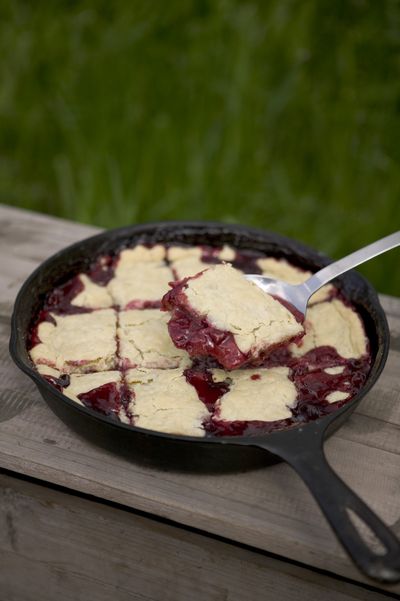
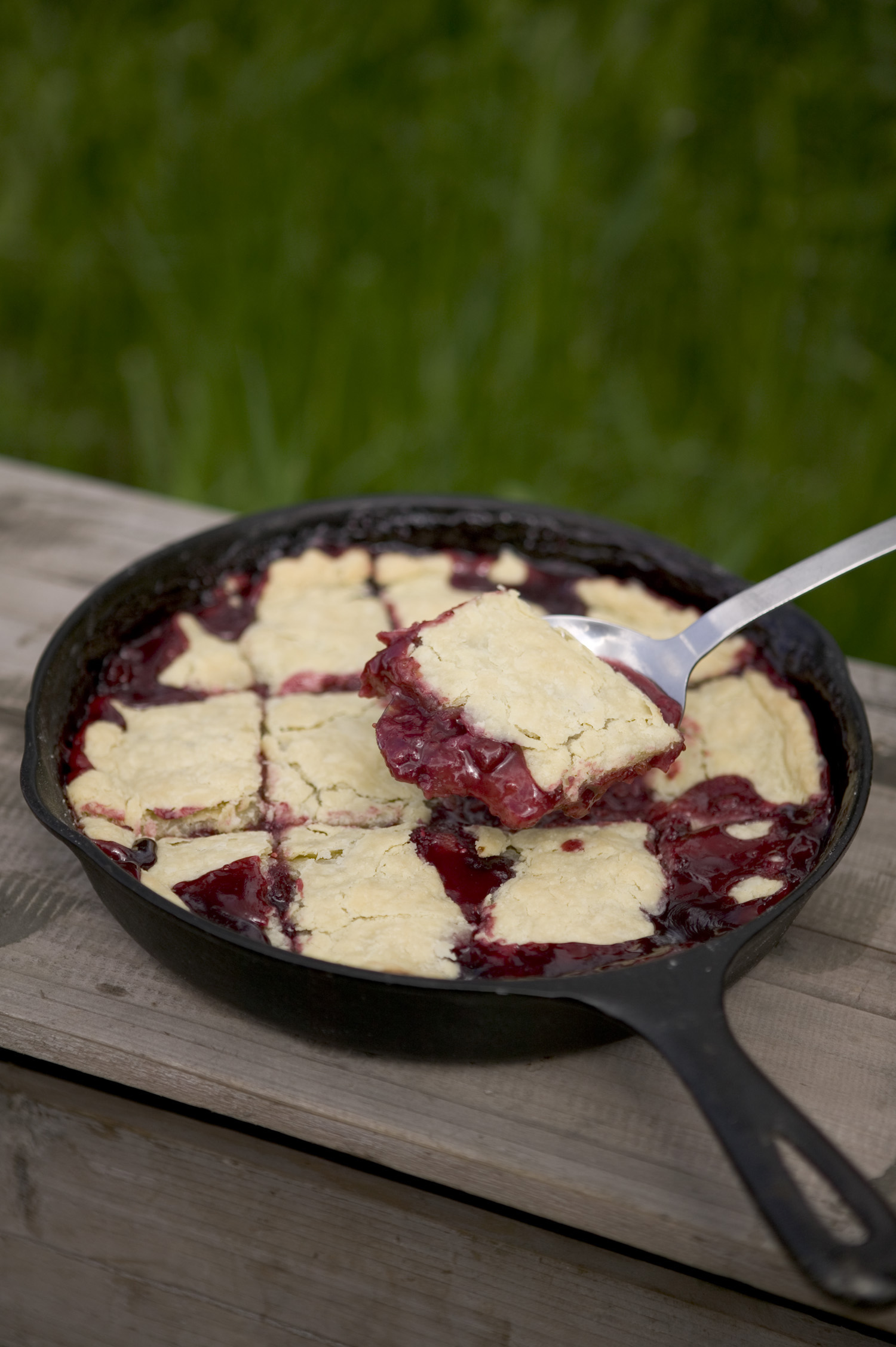
Cooking with cast iron is no longer just a distant memory of days spent in Grandmother’s kitchen. Cast iron is re-emerging as chic cookware because its attributes are truly timeless. It heats evenly and is incredibly versatile. Whether you want to bake a casserole in the oven or fry up a pan of trout over a campfire, cast iron can handle it. And it doesn’t leach harmful stuff into your food like so many of the “new and improved” pans made with unstable metals and nonstick coatings.
Don’t be intimidated by the weight of cast iron; you’ll come to love the feel of it in your hands, substantial and robust. It’ll kindle a whole new passion in you for cookware. You’ll relish seasoning your skillet to elicit the glossy black sheen of its naturally nonstick surface-gorgeous! But it’s so much more than just a pretty face. Cast iron is ready for long-term commitment. With a little love and care, it’ll serve you faithfully for a lifetime.
So what does your cast iron need from you? Seasoning. Just like any good relationship, it only gets better with time and TLC. When cast iron is well seasoned, food doesn’t stick to it, it cleans up easily, and it won’t rust.
Think of seasoning as a massage-a bit of warm oil and your bare hands will keep your cast iron in tip-top shape. The very first time you season, you’ve got to exfoliate the pan to expose raw gray metal. New cast iron that’s not “pre-seasoned” is often sold with a waxy coating that must be removed by scouring. Rusty old pans, which possess all the potential of brand-new ones, need a good strip down, too. Use gritty salt, steel wool, or even sandpaper to scour the surface. Then wash the pan in hot, soapy water. (Use soap this one time only, because once your pan is seasoned, you don’t want soap to break down the lovely smooth “cure” you’ve created.) Rinse and dry completely.
Now rub a thin layer of high-fat oil over the warm iron, both inside and outside the pan. Organic shortening and edible coconut oil both work like a charm. Good quality salt-free lard works also.
Once it’s oiled up, place the pan upside down on the top shelf of your oven with a foil-covered baking sheet on the bottom shelf to catch any drippings. Bake for one hour at 350 degrees, then turn the oven off and leave the pan inside till it’s cool. When you pull it out, the surface will shine.
While you’re getting to know your pan, there are a couple simple rules of courtship. The first six or seven times you use it, treat it to fatty foods to deepen the seasoning and enhance its nonstick surface-and don’t cook beans during these first few meals because they’ll strip the cure. Also, try not to scrape the pan with utensils while cooking.
To keep your pan fit for life, clean it with very hot water and a plastic scrubbie after each use. Then dry it thoroughly, re-apply a light coat of organic vegetable oil (you can even use the spray variety), wipe with a paper towel, and store without a lid to prevent moisture build-up.
That’s all you need to know in order to enjoy a long and fruitful partnership with cast iron cookware!
SIDEBAR: Raspberry-Rhubarb Pandowdy
Pandowdy is an early American cooked fruit dish with a biscuit or pie-crust top, originally eaten for breakfast because it was easily cooked on hot coals left over from the night before. It was most commonly made with apples, but the recipe passed down by word of mouth using whatever ingredients were available or common to an area.
PREP TIME: 30 minutes
COOK TIME: 55 minutes
MAKES: 8 servings
(For use with a standard 10 3/4-inch cast iron skillet.)
For the crust:
1-1/4 cups flour
1/4 teaspoon salt
8 tablespoons butter, cold, chopped into 1/2-inch cubes
4-5 tablespoons ice water
Combine flour and salt in food processor or medium bowl. Cut in butter using the pulse action (or a pastry blender if doing by hand) until crumbly with some larger pieces of butter still remaining. Drizzle in water a little at a time just until you can form a clump in your hand that holds together, being careful not to over mix. Form into a ball, wrap in wax paper, or put into a covered bowl and refrigerate for 15 minutes.
For the filling:
3 cups raspberries, fresh or frozen (but not thawed)
2 cups rhubarb, finely chopped
3/4 cup sugar
1/4 cup flour
1/2 teaspoon cinnamon
1/4 teaspoon grated nutmeg
1/4 teaspoon salt
2 tablespoons butter, cut into pieces
Preheat oven to 400 F. Combine all ingredients except butter in a large bowl and toss until fruit is coated. Put fruit into a buttered cast iron skillet. Dot with the rest of the butter. Roll out dough and transfer to skillet. Tuck the edges of dough in, pressing on the fruit. Bake for 30 minutes. Reduce heat to 350 F and continue to bake for 15 more minutes. Pull the skillet out and slice the pie crust into squares (as you would a bar cookie) and return skillet to oven for 10 more minutes. The crust then submerges into the fruit juices — the trademark of a “pandowdy”! Serve warm by the big spoonful with some freshly whipped cream or a scoop of vanilla ice cream.
MaryJane Butters is an organic lifestyle expert from the Inland Northwest and the editor of MaryJanesFarm magazine. Write to her care of United Feature Syndicate, 200 Madison Ave., New York, NY 10016, or e-mail everydayorganic@maryjanesfarm.org.