
Solution to Global Woes Could be Local
We are all suffering from the recession, but some communities are suffering less than others. In communities with a strong localized economy, there is less fluctuation, and more money flowing from local business to local business. These communities tend to have a higher quality of life, lower crime rates, and a friendlier and more neighborly attitude. What makes these towns different? They think local.
Many towns are realizing that local independent businesses return more money to the local economy than do national chain stores. Towns that are able to grow a good amount of their food, and source many of their consumer goods and services through local manufacturing and businesses are more financially stable in uncertain times. They are also more sustainable and have a lower carbon footprint.
Local businesses are not shipping goods over thousands of miles and paying higher fuel costs, also they tend to bank locally, advertise in local newspapers, purchase local, use local contractors, and pay good wages and benefits to local people. That keeps money bouncing around longer in the local community. Each time that money passes through another pair of local hands, it improves the local economy a little more.
A recent study revealed that $1 earned by a local farmer had the impact of $2 on the farmer’s community because it changed hands so many times locally.
“About 42 percent of our economy is ‘place based’ or created through small, locally owned businesses,” notes economist and author Michael Shuman. He estimates that communities could expand this figure to 70 percent or more by localizing some of their main expenditures. In the process, communities would boost their local economies and save money at the same time.
Local Food: Most urban areas are surrounded by farms that produce lots of local foods, which are then shipped thousands of miles away. Ironically, 75 percent of fresh apples eaten in New York City come from Washington State, and foreign countries. Meanwhile, a few miles upstate in New York farmers grow 10 times more apples than the Big Apple consumes. If we all started eating closer to home; say within a 100 mile radius, eating in season, and lower on the food chain, we could localize our food system.
Local Electricity: Electricity for our homes and businesses most often flows through hundreds of miles of power lines from the source to our home. Imagine if cul-de-sac residents teamed up and purchased a communal wind turbine, or set up solar panels on all the south-facing garage roofs. We could create a series of small-scale energy providers that could potentially meet our own power needs.
In my community, a waste-recycling entrepreneur has found a way to generate electricity from bagged household garbage. Also, a farmer has developed a way to turn old hay and agricultural waste into pellets for home heating. Two huge leaks in my local economy could be met locally if we were to use heat and power more efficiently.
Suburban Renewal: If we re-localized our towns so residents would be able to walk to the farmers’ markets, hardware store, library, and post office all in the same area, we wouldn’t have to drive as much. Driving is expensive, and environmentally devastating. When we walk or bicycle, we go slower, appreciate local architecture and history, wave to neighbors, and possibly engage in conversation. This kind of walkable downtown encourages local spending and reinforces community bonds.
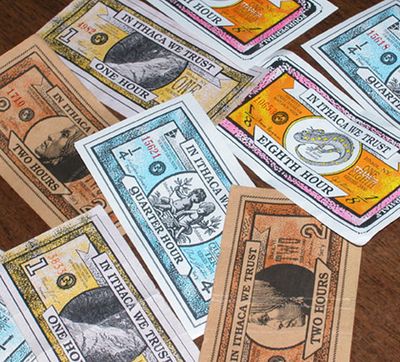
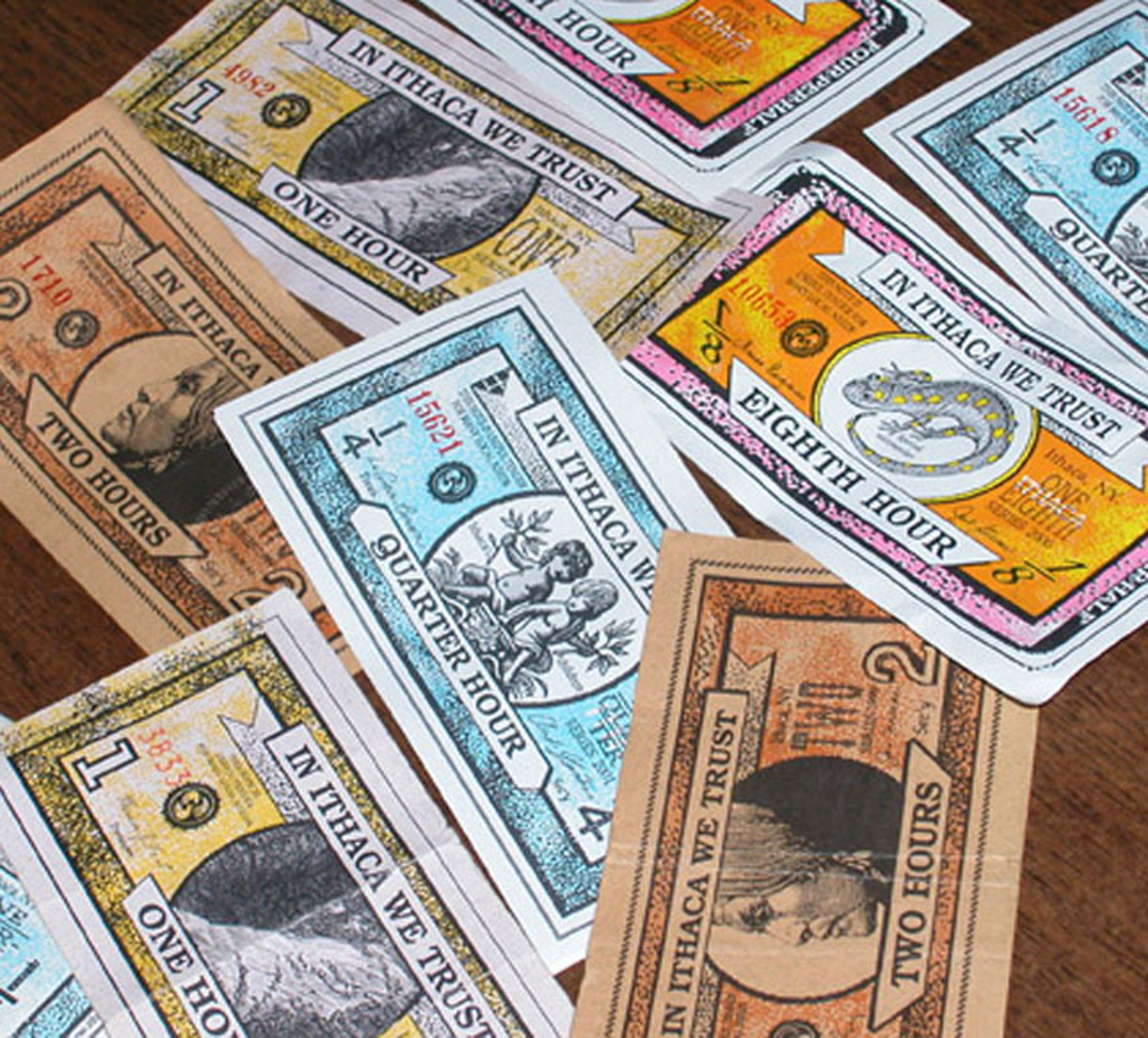
Local Currency: If you want to stimulate economic growth in a geographic region, one tried-and-true method is to generate a local currency. It functions like the good old dollar, but is not legal tender; instead it is more like a local barter. The people who use local currency make a conscious commitment to buy local first. They are taking personal responsibility for the health and well-being of their community. This also distinguishes local businesses that accept the currency as those that have made the same commitment.
Vermont recently issued its own currency, Vermont Freedom Currency, which is a silver coin worth 10 credits. Vermonters can use the coin for any service, fee or tax throughout the state, or as barter currency accepted by certain individuals and businesses. These coins circulate in Vermont and have proven to be a real economic stimulus as people have fewer qualms about spending the Vermont currency freely.
While you may not be able to buy everything you want locally, chances are if you can’t find it in a local store, at a yard sale, or in the print or online classified pages, you could probably do without it.