
Bolivia kicks out U.S. ambassador
Morales says Goldberg foments divisions
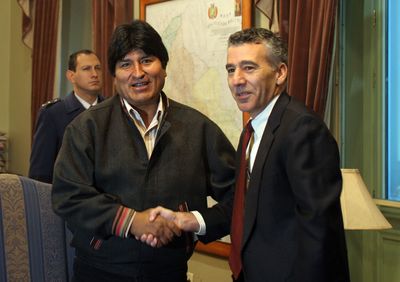
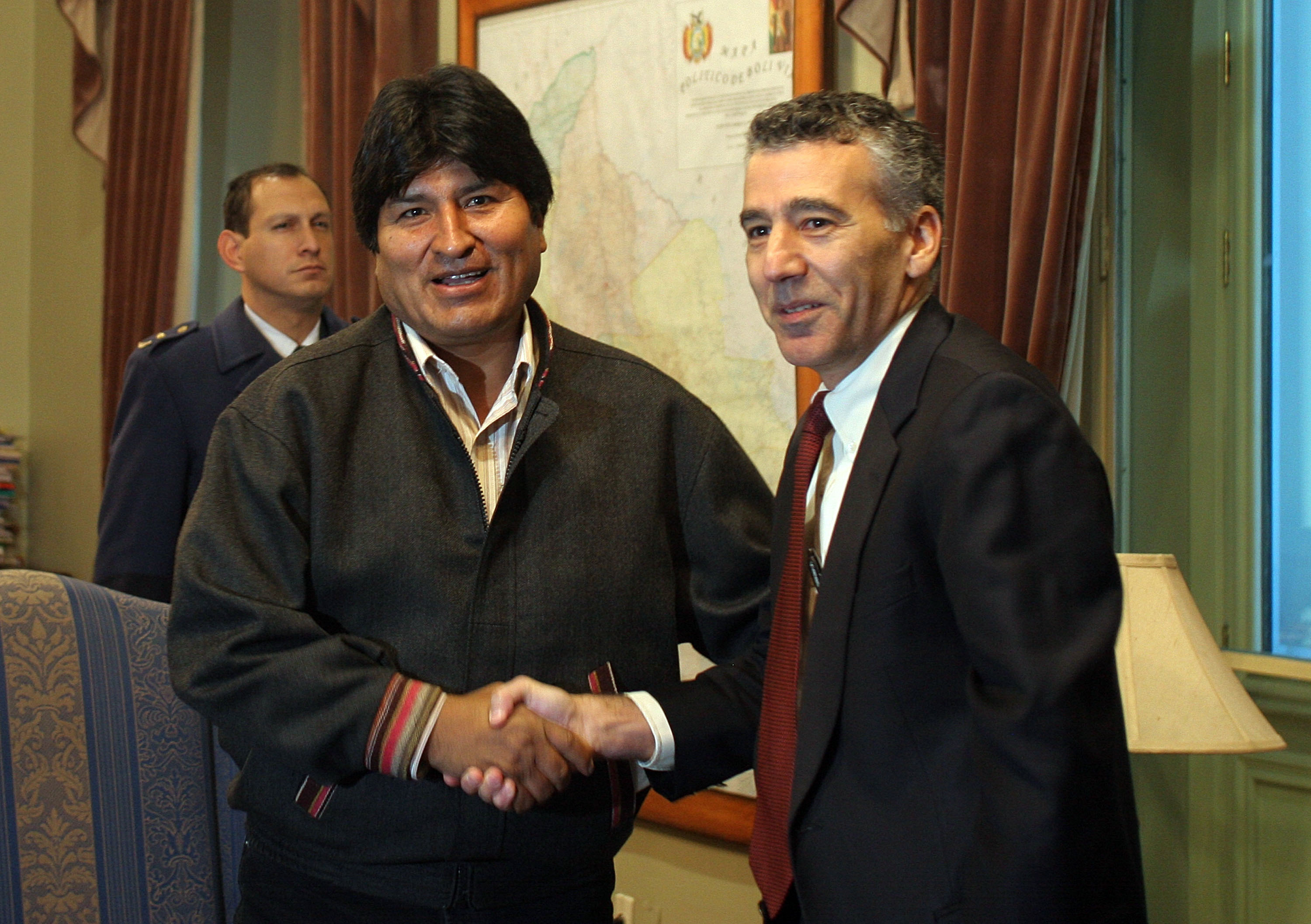
BUENOS AIRES, Argentina – Bolivian President Evo Morales ordered the expulsion Wednesday of the U.S. ambassador to his country, accusing him of fomenting divisions in the Andean nation.
The move comes as tensions rise and violence increases in provinces opposed to the leftist policies of Morales. The president has regularly accused the United States and its ambassador of plotting against him.
“The one who conspires against democracy and above all seeks the division of Bolivia is the ambassador of the United States,” Morales said during a speech at the presidential palace.
Ambassador Philip S. Goldberg, who has served more than two years in Bolivia, was declared “persona non grata” and will have to leave, probably within 48 to 72 hours.
“We don’t want people who are separatists, who foment divisions, who conspire against unity,” Morales said, referring to Goldberg.
U.S. officials in La Paz, the capital, said that Goldberg was surprised by the decision, and that the embassy was awaiting an official diplomatic statement from the Bolivian government.
The expulsion order is the culmination of tension between Morales and Goldberg that mirrors the deteriorating state of U.S.-Bolivian relations.
Morales, who took office in January 2006 as Bolivia’s first Indian president, is an ally of Venezuelan President Hugo Chavez, the region’s pre-eminent U.S. critic.
Despite Morales’ frequent assaults on U.S. policy, Bolivia receives more than $100 million a year in U.S. aid, much of it to fight the drug trade. Bolivia is the world’s third-largest producer of the coca leaf, the raw ingredient in cocaine. Morales, even though he is president, is the leader of a major federation of coca-leaf producers. He has defended farmers’ rights to plant coca but also cooperated with U.S.-backed efforts to block trafficking.
Goldberg heard of Morales’ decision Wednesday during a meeting with Bolivian Foreign Minister David Choquehuanca, the embassy said. Goldberg had asked for the meeting to discuss Bolivia’s decision to expel agents of the U.S. Drug Enforcement Administration from the Chapare region, a major coca-producing zone and Morales’ home base.
U.S. State Department spokesman Gordon Duguid called the accusations against Goldberg “baseless,” the Associated Press reported from Washington. There was no immediate word on what reciprocal steps the United States might take.
Violent anti-government protests have convulsed Bolivia in recent days. Demonstrators on Tuesday sacked and burned government offices in the eastern city of Santa Cruz, the epicenter of opposition to Chavez.
A pipeline blast reportedly forced the country to reduce exports of natural gas to Brazil.