
Bomber kills Sunni campaign manager
Tensions rise as elections draw near
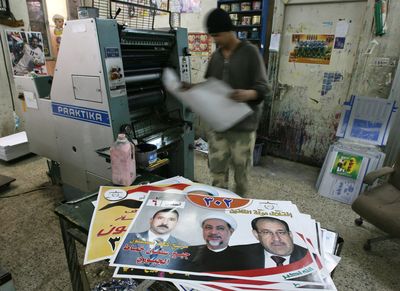
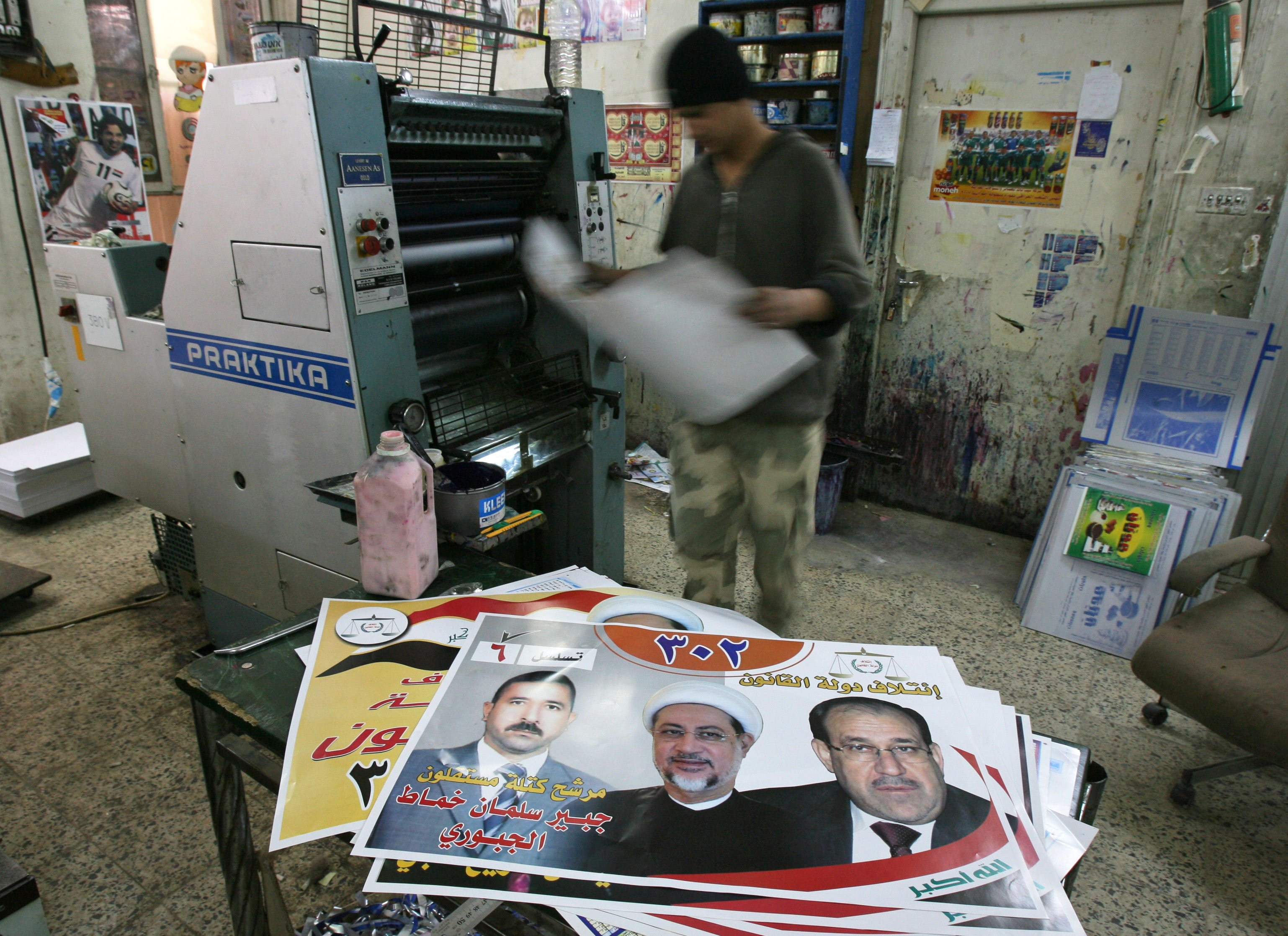
BAGHDAD – A suicide bomber killed a campaign manager for a major Sunni party near Iraq’s northern city of Mosul on Sunday, the latest sign that ethnic and sectarian tensions are rising ahead of this month’s provincial elections.
Police said the attacker detonated his explosives inside the reception area of Hassan al-Luheibi’s home in Qayara, 40 miles south of Mosul, after saying he had pressing business to discuss.
Bodyguards kept the bomber from going inside, but al-Luheibi emerged from the inner rooms to investigate the commotion and was killed in the blast, according to Col. Safaa Abdul-Razzaq. Two guards also were wounded, he said.
However, a police officer at the scene later said a fellow policeman was also killed in the attack and three others – including two policemen – were wounded. The officer spoke on condition of anonymity because he was not authorized to release the information to news media.
Al-Luheibi was the deputy of prominent Sunni Arab lawmaker Saleh al-Mutlaq, who confirmed the attack. He also was the campaign manager for al-Mutlaq’s National Dialogue Front in the northern provinces of Ninevah, of which Mosul is the capital, and Salahuddin.
Al-Luheibi was a general in Saddam Hussein’s army and a veteran of the 1980-88 Iraq-Iran war, according to al-Mutlaq, who also told Iraq’s Dubai-based Al-Sharqiya television that the attacker looked 15 or 16 years old and that he opened fire on guards before he blew himself up.
Al-Luheibi had planned to hold an election rally in Qayara today, according to police.
“We cannot accuse any party for the time being, but apparently this is part of schemes to target patriotic figures and projects and to disrupt the elections campaign and undermine security before elections,” al-Mutlaq said.
Nobody claimed responsibility for the attack, but the competition in the run-up to the Jan. 31 vote for provincial councils is expected to be fierce in Mosul, with Sunni Arab politicians and their rival Kurds jockeying for power.
The city also remains one of the most dangerous in Iraq despite recent security gains. Al-Qaida in Iraq and other militant Sunni insurgents retain influence there.
U.S. and Iraqi officials have pinned great hopes on the elections to promote unity among Iraq’s fractured ethnic and sectarian groups and stem support for the insurgency. But they also have warned that militants are likely to stage attacks in a bid to disrupt the vote.
In its first report of problems with the elections process, the commission overseeing the vote said about 30 of the more than 14,000 candidates have been disqualified for violating rules ranging from submitting forged documents to being members of the former ruling Baath Party or the Iraqi security forces.
Iraq’s independent electoral commission also said it was investigating allegations that nearly 60 candidates have lied about their level of education due to a requirement that they have at least a high school degree.
Commission chief Faraj al-Haidari said the names of the disqualified candidates would be posted on a list at polling stations.
He added that disqualified candidates will not be allowed to take the seats even if they receive enough votes.
In another political development, Iraqi lawmakers moved to break the deadlock over the choice of a new speaker Sunday by agreeing to form a committee to choose a candidate after Sunnis failed to reach consensus on a nominee, the deputy speaker said.