
Recession reshaping drinking strategies
Imbibers switch to happy hour
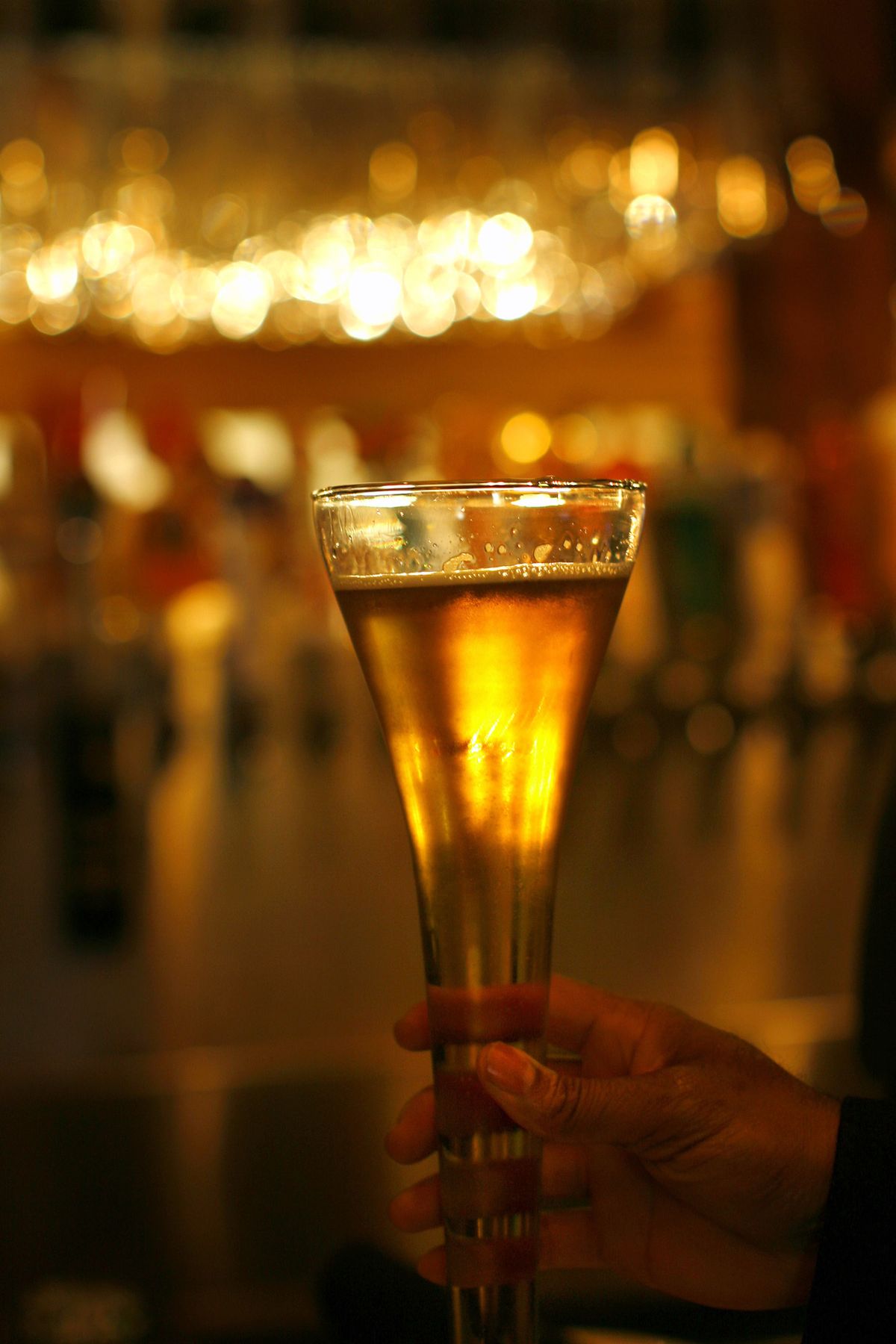
Happy hour is getting happier, and that’s making restaurants sadder.
As the recession drags on, drinkers such as Luis Romero, of Anaheim, Calif., are gravitating to happy hour – that late-afternoon period when bars and restaurants sell discounted drinks and food to attract customers during what otherwise would be a slow time.
“You start watching your pennies a bit more,” Romero said as he sipped a $3.75 pint of Honey Blond Ale one recent afternoon in the Yard House restaurant in Long Beach. Just a few hours later, the same beer would sell for $6.
Typically, alcoholic beverages are recession-resistant, if not immune to economic downturns. This current recession, however, is hurting alcohol sales more than previous slumps have.
People are trading down from premium vodka brands to whatever is good enough to still make the martini work. Others are giving up Napa Valley cabernet sauvignons for budget reds. Some are ordering a soft drink or just consuming water when they dine out.
“This is far worse than anything we have seen,” said Eric Schmidt, an analyst at research company Adams Beverage Group.
The trend started to appear as far back as summer, although no monthly index exists for national restaurant and bar sales of alcoholic beverages.
In July, trade publication Wine & Spirits Daily reported that more than 40 percent of bar managers, bar owners and bartenders surveyed said they had seen a decrease in consumer traffic, while 25 percent noted a decrease in the number of drinks ordered and 22 percent said that customers were ordering less expensive drinks.
“We don’t see a change in what people are drinking as much as seeing a change in the time they are drinking,” said Kip Snider, beverage director for the Yard House chain of restaurants.
Still, a growing reliance on happy hour – as well as a “reverse” happy hour with the same specials from 10 p.m. to midnight Sundays to Wednesdays – is not a bad strategy.
“In times like this, the bar business should take on more of a focal point for restaurants because of the incremental profit that comes with each sale,” Henkes said.
Restaurants net about 15 cents for every dollar of food purchased but 38 cents for alcohol, Henkes said. So it makes sense for casual dining spots, in particular, to pitch booze.
For the third quarter – the latest period for which Technomic has data – about 57 percent of the customers at a full-service restaurant purchased an alcoholic drink. That’s down from 63 percent in the same period a year earlier.
The consensus among wine and spirits companies is that people are shifting from buying drinks at restaurants and bars to buying packaged alcohol for home consumption, said Megan Metcalf, editor of Wine & Spirits Daily.
But the volume of imported beer sold by supermarkets, drugstores, big chain liquor stores and convenience stores has slid as well, down 4.4 percent during the four weeks that ended Nov. 15, compared with the same period a year earlier, according to Nielsen. That contrasts with a 0.8 percent drop for all beer in the same period.
The volume of “ultra-priced” spirits, which typically cost at least $35 for a fifth, plunged 4.8 percent in the four weeks ended Nov. 15, while the market for all distilled spirits grew 1.2 percent during that time, according to Nielsen.