
California has budget deal
Cuts in services will close gap
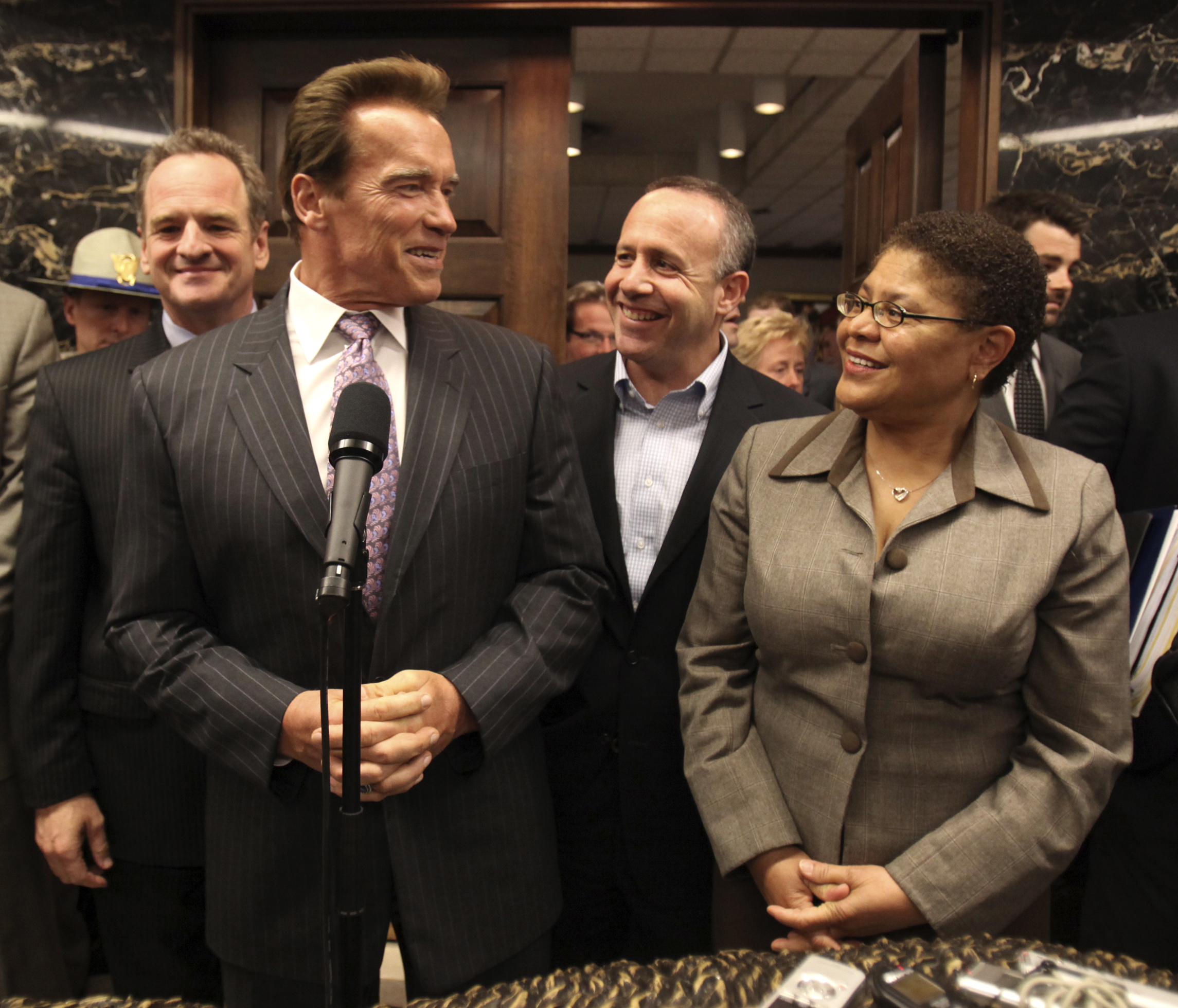
SACRAMENTO, Calif. – Gov. Arnold Schwarzenegger and legislative leaders announced Monday that they had reached a deal to close California’s $26.3-billion deficit and begin paying the state’s bills again.
The agreement does not include any broad-based tax increases, they said, and relies largely on deep cuts in government services to wipe out the deficit.
Most of the details have yet to be released. But interviews with lawmakers and staff involved in the negotiations suggest that the plan would reshape government in California, significantly scaling back many services that have been offered to residents – particularly the elderly and poor – for years.
In addition, tens of thousands of senior citizens and children would lose access to health care, local governments would sacrifice billions of dollars in state assistance this year and large numbers of state prisoners would have their sentences scaled back. Welfare checks would go to fewer residents, state workers would be forced to take unpaid days off and new drilling for oil would be permitted off the Santa Barbara coast.
“There isn’t a whole lot of good news in this budget,” said Democratic Senate leader Darrell Steinberg, of Sacramento.
But the agreement does not “eliminate the safety net for California,” said Democratic Assembly Speaker Karen Bass, of Los Angeles.
The compromise followed several weeks of meetings in the governor’s office. The talks broke down repeatedly and the public was largely kept in the dark about the fine points of the negotiations.
The accord comes amid one of the worst cash crises in history.
Finance officials have been sending out hundreds of millions of dollars in IOUs because the state does not have enough cash to pay its bills; it is only the second time that has happened since the Great Depression.
California’s credit rating has dropped to its lowest level in many years, teetering just above junk status.