
Farm plastic finds new use
Moxee company recycles used pesticide containers

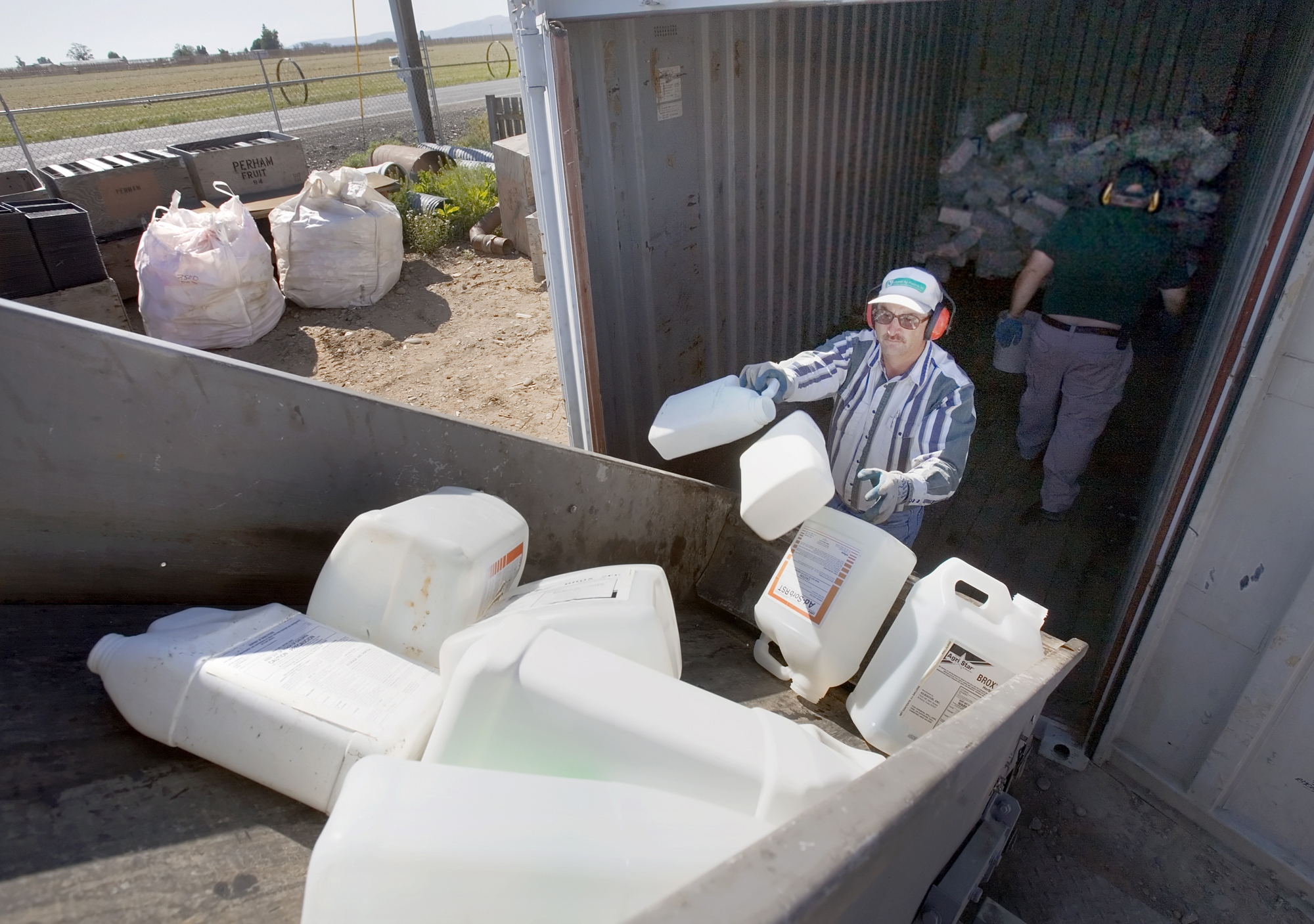
TOPPENISH, Wash. – Out on the farm, the plastic containers used to ship and hold pesticides can really pile up.
Take Matt Sealock, who makes his living spraying pesticides and other chemicals for farmers. He empties enough containers to fill four semitrailers a year.
Rather than send them to a landfill, however, he’s part of a broad effort to recycle the plastics into new uses, such as drain pipes, decking, even railroad ties.
“It’s a huge benefit to us,” said the 35-year-old Sealock, who owns a farm of his own west of Toppenish.
The system not only prevents headaches for Sealock and other business owners, it keeps plastics and potential pesticide residue out of landfills.
The program has operated since 1992 and has recycled more than 100 million pounds of plastic nationally.
In much of the Pacific Northwest, it’s the job of Steve George and his four-man company, Northwest Ag Plastics in Moxee, to pick up and grind the polyethylene containers into coin-size chips and haul them away for reprocessing.
And there’s no direct cost to farmers or businesses. The companies that make the chemicals finance the collection program. George’s crews handle the job in Washington and northeastern Oregon, but he subcontracts the work in Idaho and other parts of Oregon. His crew visits 200 sites each year in Washington alone.
George keeps the profits after he sells the ground material to companies that melt it and make new products.
Northwest Ag Plastics works for the Ag Container Recycling Council, which estimates its contractors recycle about one-third of the plastic chemical containers in the country.
Washington’s rate is most likely higher than that, said Ron Perkins, executive director of the council in Lexington, Va. It’s hard to know for sure because participating companies don’t report their sales by state.
Before the recycling program, farmers either sent their containers to landfills, buried them or burned them, said Joye Redfield-Wilder, a spokeswoman for the state Department of Ecology.
None of those options is as ecologically sound as recycling, Redfield-Wilder said. And burning or burying them on your own is against the law.
Contamination isn’t the problem at landfills. Federal law requires all pesticide containers to be triple rinsed, whether farmers throw them away or recycle them. Once cleaned, the plastic is not considered hazardous waste. Most landfills accept them – Yakima County’s Cheyne and Terrace Heights included.
But the county is a client of Northwest Ag Plastics, too. Both landfills have green bins that store the containers. When they’re full, George’s company stops by.
“All we have to do is feed his hopper and they’ll take care of it,” said Dan Sharlow, environmental supervisor for the Yakima County Solid Waste division.