
Stimulus dollars smooth transit companies’ path
For bus builders, cash provides stabilizer rather than big boost
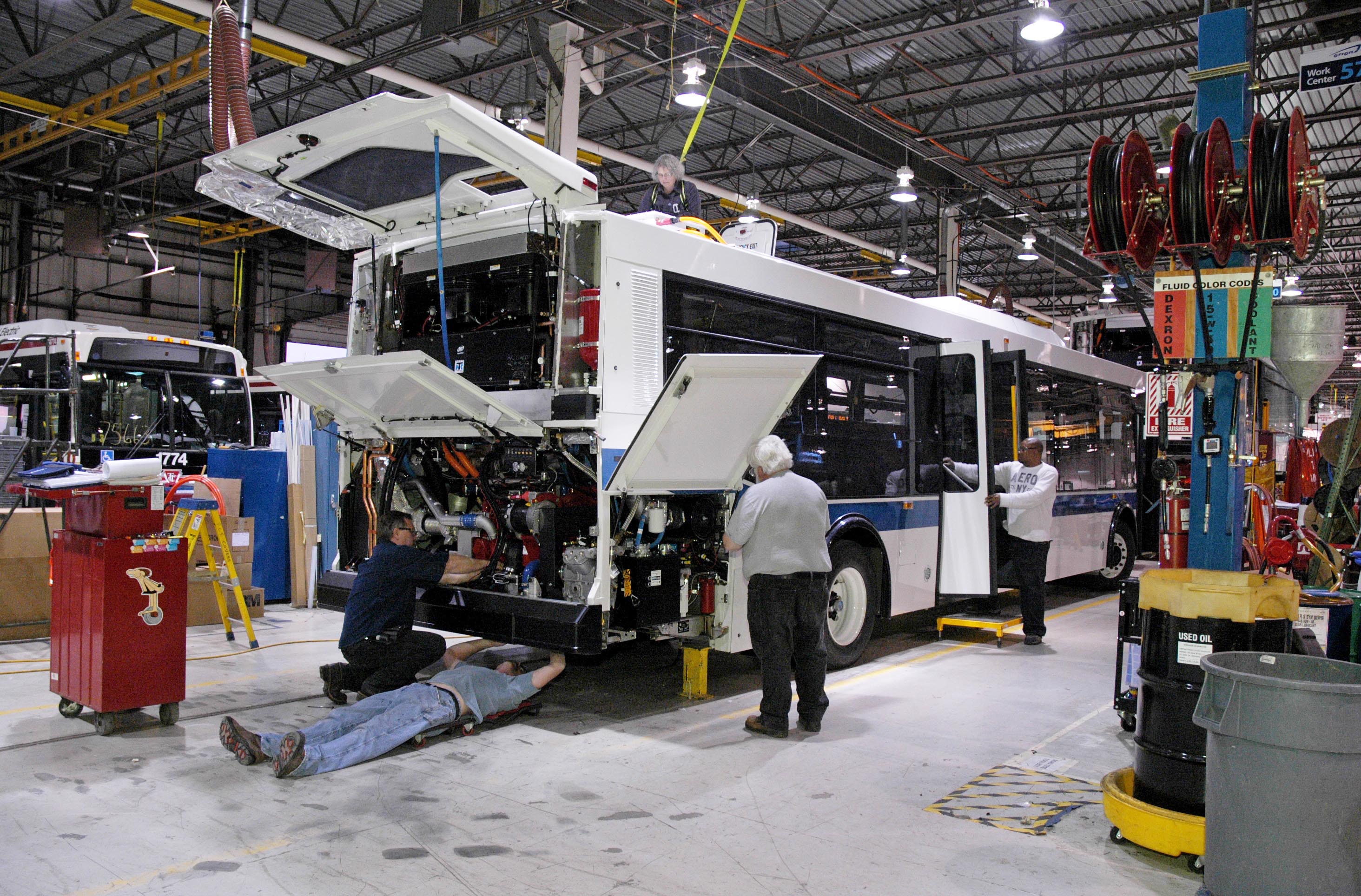
WASHINGTON, D.C. – Washington is paying hundreds of millions of dollars to build new, cleaner-burning buses, but don’t scour the want ads looking for a burst of job openings soon at major manufacturers or suppliers.
The bus money, like many other programs in the $787 billion stimulus plan, is having the less glamorous and harder-to-quantify effect of keeping workers employed, providing a slight buffer from the recession to some in the auto industry.
At the White House, where saving jobs always was as much a priority as creating jobs, the bus industry is a success story. But it also shows how hard it is to account for that success, especially in an industry that keeps shedding jobs despite the stimulus.
“The stimulus has been a plus, but it’s just, how do you do the math?” said Patrick Scully, chief commercial officer at Daimler Buses North America Inc., which operates plants in New York and North Carolina. “You could say, without it things would be worse.”
The dollar signs in the stimulus law seem to foreshadow a bull market for companies that build buses, engines, transmissions and axles. Connecticut has budgeted $71 million to buy hybrid buses. New Jersey will spend $35 million to rehabilitate its fleet. Rural Oklahoma counties and Cape Cod, Mass., vacation spots have bus projects in the works.
Because local governments are strapped for cash, some companies braced for a slowdown in transit spending. The stimulus is more likely to keep things stable than send sales booming, industry executives said.
“The initial forecasts from a number of customers looked pretty bad,” said Jack Schimenti, vice president of Lincoln Composites, of Lincoln, Neb., which makes fuel systems for bus manufacturers.
Thanks to the stimulus law, forecasts are more stable now. Schimenti expects stimulus-related orders to begin late this year.
At North American Bus Industries of Anniston, Ala., it’s the same story.
“It helps preserve the jobs that we have,” said Joseph Gibson, senior vice president for sales. “We don’t have plans for any massive hiring. Right now we’re just trying to maintain stability.”
The White House says it has already created or saved 150,000 jobs, a number that is impossible to verify.
But even in industries where the stimulus is working, White House job estimates will be overshadowed until the economy turns around.
For example, engine-maker Cummins Inc. stands to benefit from bus spending.
The Columbus, Ind., company hopes to benefit from stimulus money to reduce pollution from old diesel engines.
But the slowdown in the auto market has been devastating. A major customer, Chrysler, is in bankruptcy. The trucking industry has fallen dramatically, with thousands of companies going out of business last year and others scaling back their fleets.
So companies such as Cummins can benefit from the stimulus and still predict significant revenue declines this year.
“It will certainly help, but we’re not talking about hundreds of thousands of engines here,” Land said.