
Firefighters prep for busy summer
With the arrival of summerlike weather, wildfires may not be far behind, and Spokane Valley firefighters plan to be ready.
They spent three days recently honing their skills and making one portion of the city less susceptible to fires like the Valley View fire that destroyed 11 homes last July.
“Live-fire” exercises cleared out low-lying vegetation that could fuel a large wildfire. Battalion Chief Wayne Howerton said the department’s controlled burning in the White Tail Ridge area, near state Route 27 and 40th Avenue, was “a huge tool for keeping what happened in Valley View from happening here.”
The goal was to reduce fuels on four to five acres of undeveloped land where owner Johnny Humphreys plans to build houses.
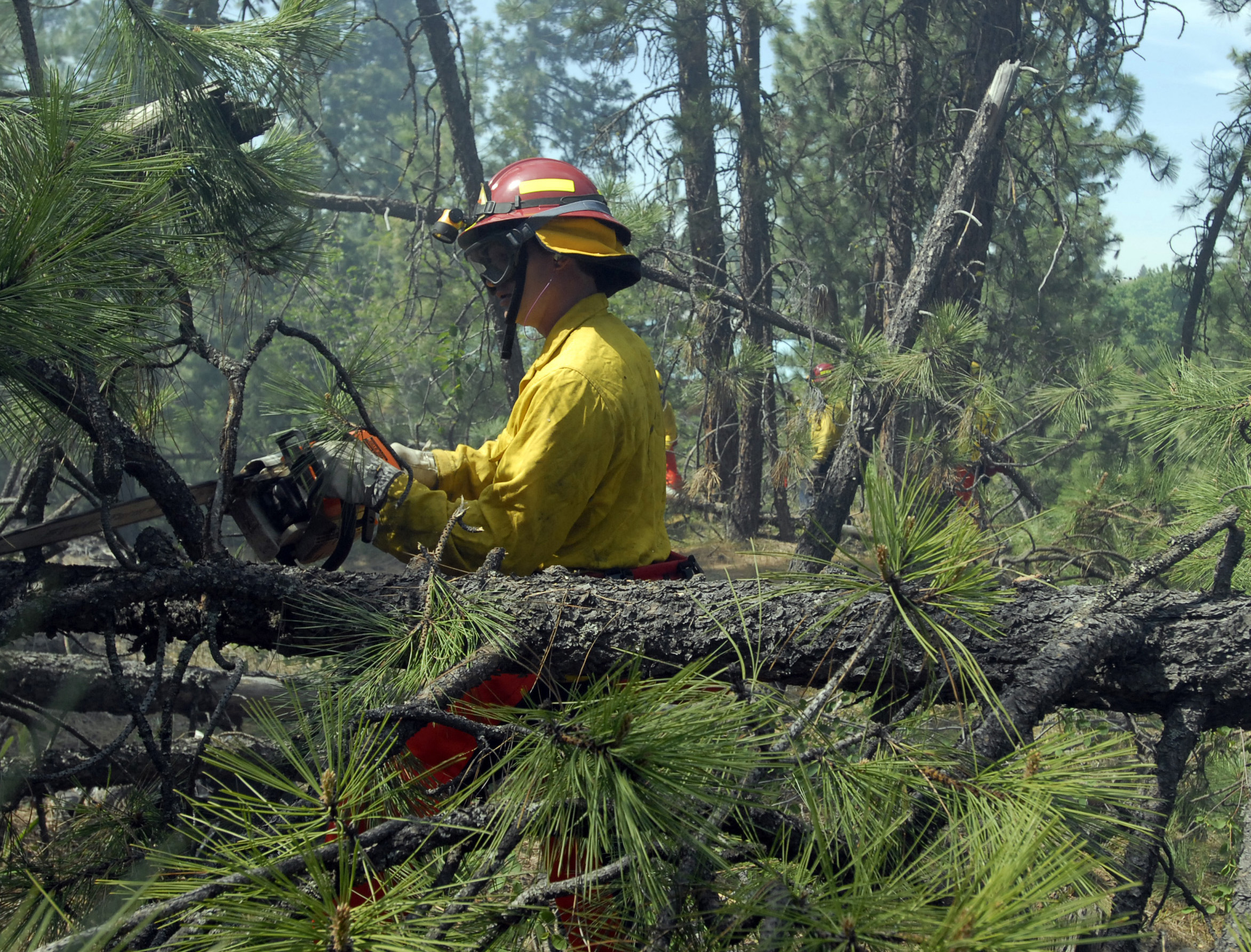
To ensure the practice fires didn’t get out of hand, firefighters kept in touch with the National Weather Service and used portable meters to monitor temperature, humidity, wind speed and direction. They lopped off low-hanging tree limbs and chopped down trees that created special hazards.
Firefighters also dug fire lines before starting their practice fires, and set the fires at the top of hills. Fires tend to race uphill, but they go slowly on their way down.
The drills satisfied state and federal requirements for annual refresher courses on wildfire-fighting techniques, proper behavior and use of emergency shelters. Special emphasis was given to chain saw safety, Howerton said.
John Craig
Changes proposed for U.S. Highway 2
More traffic lights, improvements to crosswalks and a possible roundabout at the Craig Road intersection are among proposals for a stretch of U.S. Highway 2 through Airway Heights.
The Washington State Department of Transportation has recommended several improvements on Highway 2 after completing a route development plan from the Lincoln County line to Interstate 90 near Spokane.
WSDOT engineer Dave Dean said rapid growth of Airway Heights and ongoing safety issues prompted a look at the route.
“It’s really a 20-year look at what’s happening in the corridor. … It acts as a decision-making tool for some of the jurisdictions involved,” he said.
According to a WSDOT study, there were 1,400 vehicles per peak hour in 2007, which will increase to 2,600 by 2015 and 3,500 by 2030 if growth remains constant.
Dean said the route could in time see as much traffic as Division Street in Spokane: about 50,000 vehicles per day.
New traffic lights are proposed at multiple crossroads, but Flint Road and Spotted Road could see more controls in the next few years.
In the long term, several alternate corridors were considered to deal with future high traffic flows along Highway 2, including 21st Avenue.
Jerry Compton, another WSDOT engineer who worked on the route plan, said that instead of a signal at the Craig Road intersection, a multilane roundabout could lead to fewer accidents, less idling time and increased flow of traffic.
Ryan Lancaster
Appleway talks could enter new round
The Spokane Valley City Council plans to act Tuesday on City Attorney Mike Connelly’s initiative to reopen negotiations for county-owned land to extend Appleway Boulevard.
Connelly’s plan calls for the city, Spokane County commissioners and the Spokane Transit Authority each to appoint a representative in mediated negotiations. The council had been poised at this Tuesday’s meeting to schedule a vote on June 30, but Councilman Bill Gothmann called for faster action because the issue is “urgent.”
Extension of Appleway Boulevard east from University Road is a major factor in the Sprague-Appleway Revitalization Plan that is scheduled for final action Tuesday.
Several council members have expressed concerns about proposed zoning that assumes Appleway will be extended – first to Evergreen Road, and eventually to Sullivan Road.
The city and the county have been at loggerheads over the right of way since the city’s incorporation in 2003.
Spokane County acquired the former Chicago, Milwaukee, St. Paul and Pacific Railroad Co. right of way in 1980 for $3.5 million and built Appleway on the portion between the Sprague exit of Interstate 90 and University Road.
The county was legally obligated to give the city the developed portion of the right of way, but in February the state Supreme Court agreed with two lower courts that city officials were wrong to insist the county had to give them the remainder of the right-of-way.
All along, county commissioners had offered to donate the right of way if city officials would help pay for additional land needed to ensure a light rail corridor in areas where the right of way is too narrow.
“We all seem to want the same thing,” Connelly said. “So why don’t we sit down and resolve it?”
John Craig