
Unpaid fines, fees can add up
Counties seek ways to collect millions owed them
YAKIMA – If everybody paid their traffic tickets and court fines today, Yakima County would be $19 million richer.
Accumulated over the past 20 years, the unpaid tickets and fines would be enough to finance the county’s District Court budget for almost 10 years.
Instead, people lose tickets, forget about fines, move or just flat-out refuse to pay up.
“When it comes to a person’s money, people can get a little cranky,” said Paula Davis, accounting supervisor for Yakima County courts.
A special amnesty period offered last month collected $31,000 and settled 108 cases. That amnesty has since been extended until the end of this month.
Officials say there’s no ready answer to how many tickets go unpaid, but Yakima County is far from unique.
Nearby Grant County – with a population roughly one third of Yakima – accumulated $500,000 in unpaid tickets in just four years.
And the city of Lynwood’s municipal court is owed $15 million for a decade’s worth of outstanding tickets.
Court fines, it seems, are part of life across the state. Yakima County commissioners play a guessing game every year when writing the District Court budget.
Based on history, Yakima County commissioners count on about $2 million in revenue from District Court fines per year, roughly the amount of the District Court’s $2.1 million budget.
“If everybody paid up, you’re right, I would make a profit,” said Harold Delia, the Yakima County court administrator.
Delia said Yakima is the only county its size to keep its costs about the same as revenue. Kitsap and Thurston counties, which have roughly the same population, have to subsidize their courts to a larger degree than here, Delia said.
Delia, who has worked in a number of court systems across the state, estimates Yakima County’s unpaid fine rate runs about the same as other counties on a per capita basis.
Technically, not paying your fines could land you in jail for however long a judge decides. Few courts do that. Yakima County hasn’t jailed people for unpaid fines in 15 years, Delia.
If it did, the county would need three more jails, Delia said.
Instead, court collectors – “I like to call them financial investigators,” Davis said – send out notices and make phone calls to remind people of their fines. If they can’t pay in full, they set up payment plans.
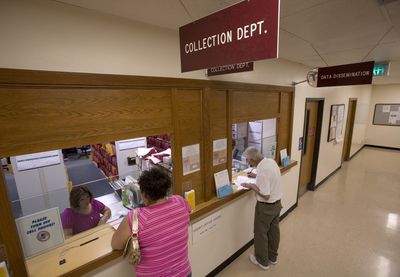
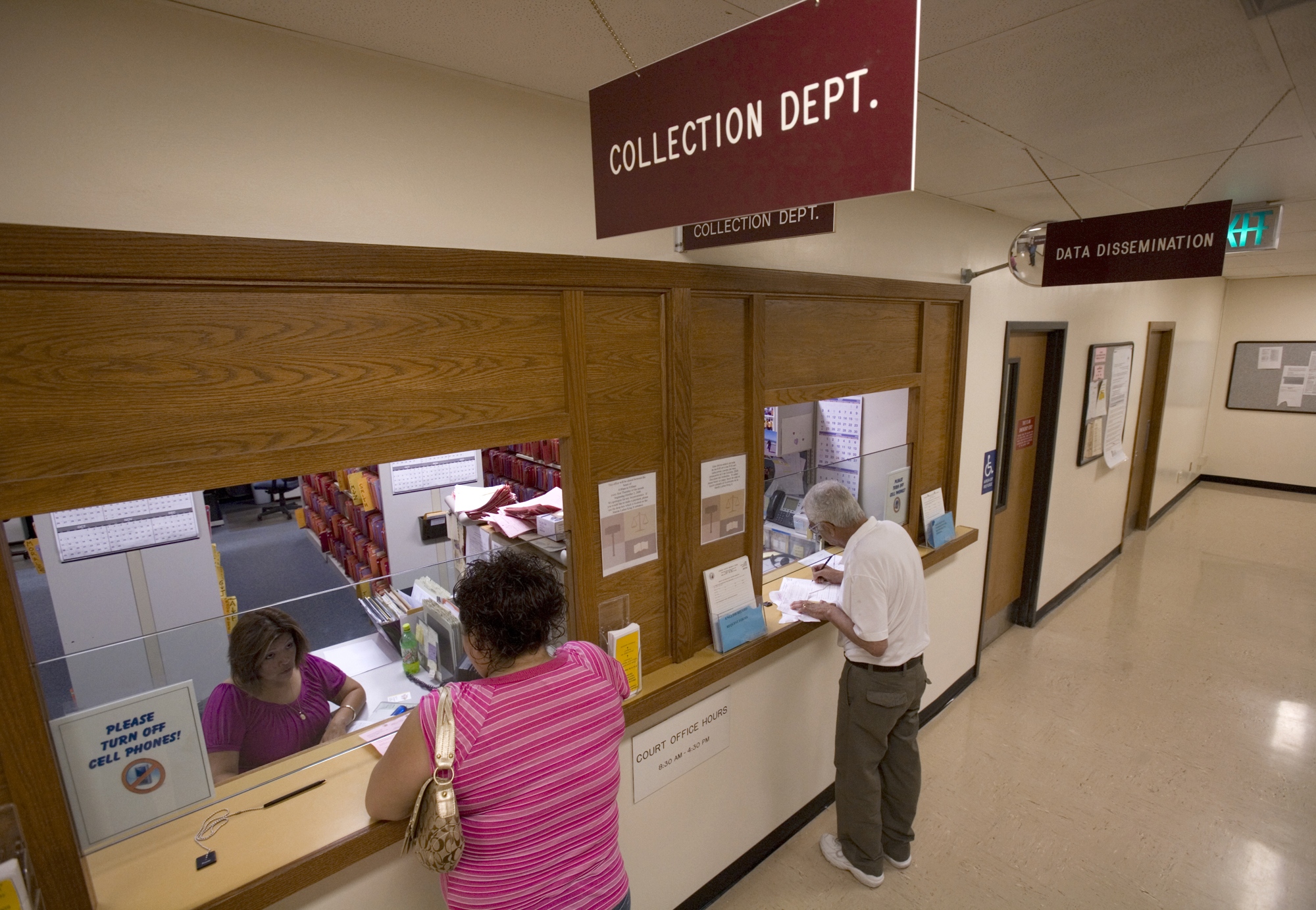
Those who work at the collection window on the second floor of the Yakima County courthouse have heard the excuses: people move, they didn’t receive their notice, they lost their job.
While they can work out a payment program, they can’t decide whether a ticket was issued fairly.
Unpaid bills get turned over to YCCS, a Yakima collection agency. That’s when interest and collection fees begin piling up. It’s possible a small traffic ticket can end up costing several times its original fine.
Between the court employees and the collection agency, courts can pursue fines for up to 20 years.
“We don’t give up,” Davis said.
That’s where the current amnesty program can help.
Pay the original fine in full by the end of June and you can avoid most of the interest and late fees.
“I would say that’s a pretty generous offer,” Davis said.
You also could get your driver’s license reinstated. Many unpaid traffic tickets result in suspension of driving privileges and the state-imposed $52 late fee.
The amnesty applies to traffic tickets, fishing violations and most varieties of misdemeanors such as driving without a license, shoplifting and fourth-degree assault – all charges levied by district or municipal courts. Superior Court fines don’t count.
More than 100 county and municipal courts across the state offered an amnesty program in May.