
Wagoner’s sudden departure ends turbulent career
Victories include Volt, sales overseas

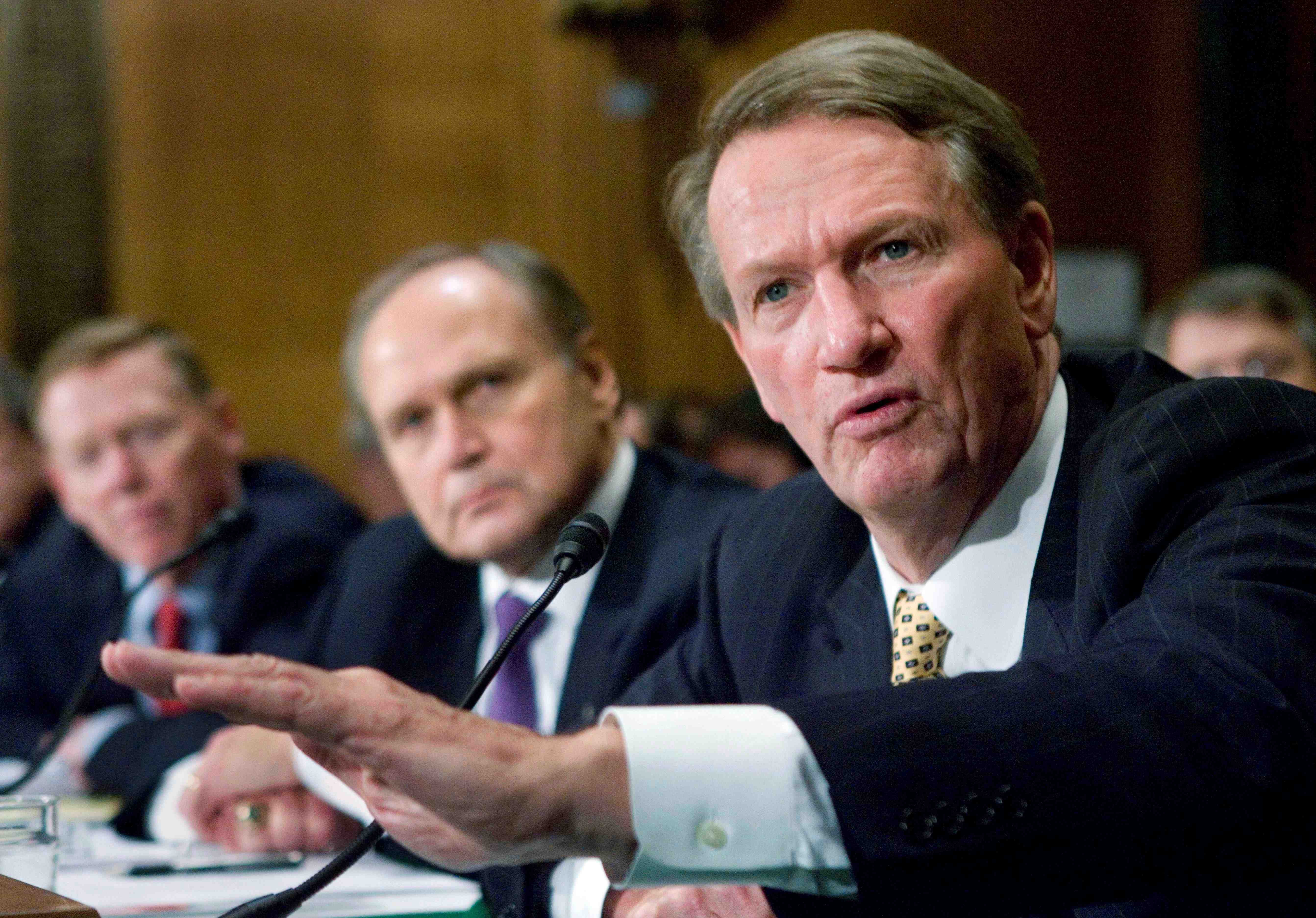
DETROIT – Six years ago, Rick Wagoner laid out a vision of a booming market for General Motors vehicles around the world and defended an aggressive campaign of rebates that spurred GM’s sales.
“It’s time to stop whining and play the game,” he said.
Sunday, Wagoner’s resignation put an abrupt close to his 31-year career with the automaker.
Even though Wagoner had overseen a company that has lost $82 billion over the past four years, he had faced few serious challenges to his leadership, the exception being a drive in 2006 by billionaire investor Kirk Kerkorian for an alliance with Renault-Nissan than Wagoner blunted.
“I’m disappointed but not surprised,” said David Cole, chairman of the Center for Automotive Research. “One of the things we recognize is that any kind of aid for industry, whether it is the financial or the auto industry, is quite politically unpopular. If you are in the government’s position, you need to be able to show the heads that have come from this.”
News of Wagoner’s departure caught many in Detroit off guard, especially after his determination to stay in office despite what seemed like continuous pressure from some corners of Wall Street and Washington to step down.
Asked about the development late Sunday, one top GM executive confided: “You know as much as we do.”
The change comes as GM is undergoing sweeping restructuring efforts, which include cutting 47,000 jobs by the end of the year, scaling back its dealer network by about 25 percent by 2012 and eliminating brands and models.
“I’m not necessarily sure it’s the best idea” for Wagoner to leave now, said Aaron Bragman, an industry analyst from IHS Global Insight. “You’re changing captains in the middle of the rapids here.”
It wasn’t clear Sunday who would replace Wagoner, or why the government had asked him to leave. The most obvious candidate to step into his roles would be Chief Operating Officer Fritz Henderson, with Chief Financial Officer Ray Young also possibly moving up.
The news sent new rounds of anxiety through the work force. GM hourly worker Randy Halazon, 51, of Vassar, Mich., near Flint, has spent a combined 31 years at GM and the automaker’s parts spinoff Delphi. He said he is more concerned than ever about GM’s future, fearing the change in leadership might mean a greater likelihood of bankruptcy.
“I think it would be a bad deal,” Halazon said.
While Wagoner will likely be remembered as the CEO at the helm when GM required at least $13.4 billion in government aid to stay alive, some successes under his watch include development of the Chevrolet Volt, an electric-drive vehicle slated for the market in late 2010, and a renewed partnership with the UAW that brought about a 2007 labor agreement that significantly changed the company’s cost structure.
Early in his tenure as chief executive, Wagoner outlined a strategy for GM to focus on developing countries where the auto industry still had large growth potential, such as Brazil, Russia and China. By 2005, GM was selling more vehicles overseas than in North America and GM was the No. 1 car company in China, with the Buick brand in China outselling its U.S. base.
But Wagoner could never halt the steady decline of GM’s market share in the U.S., fueled by rising foreign competition and GM’s higher costs, which eventually allowed Toyota Motor Co. to surpass GM as the world’s largest automaker last year.
When he took over as chief of GM North America in 1994, the company held 33 percent of the U.S. market. Last year, GM’s sales held 22 percent of the market.
The declining market share foretold of GM’s bleak future. The company last made money on an annual basis in 2004, and recorded a $38.7 billion loss in 2007.