
‘Masters of light’ awarded Nobel
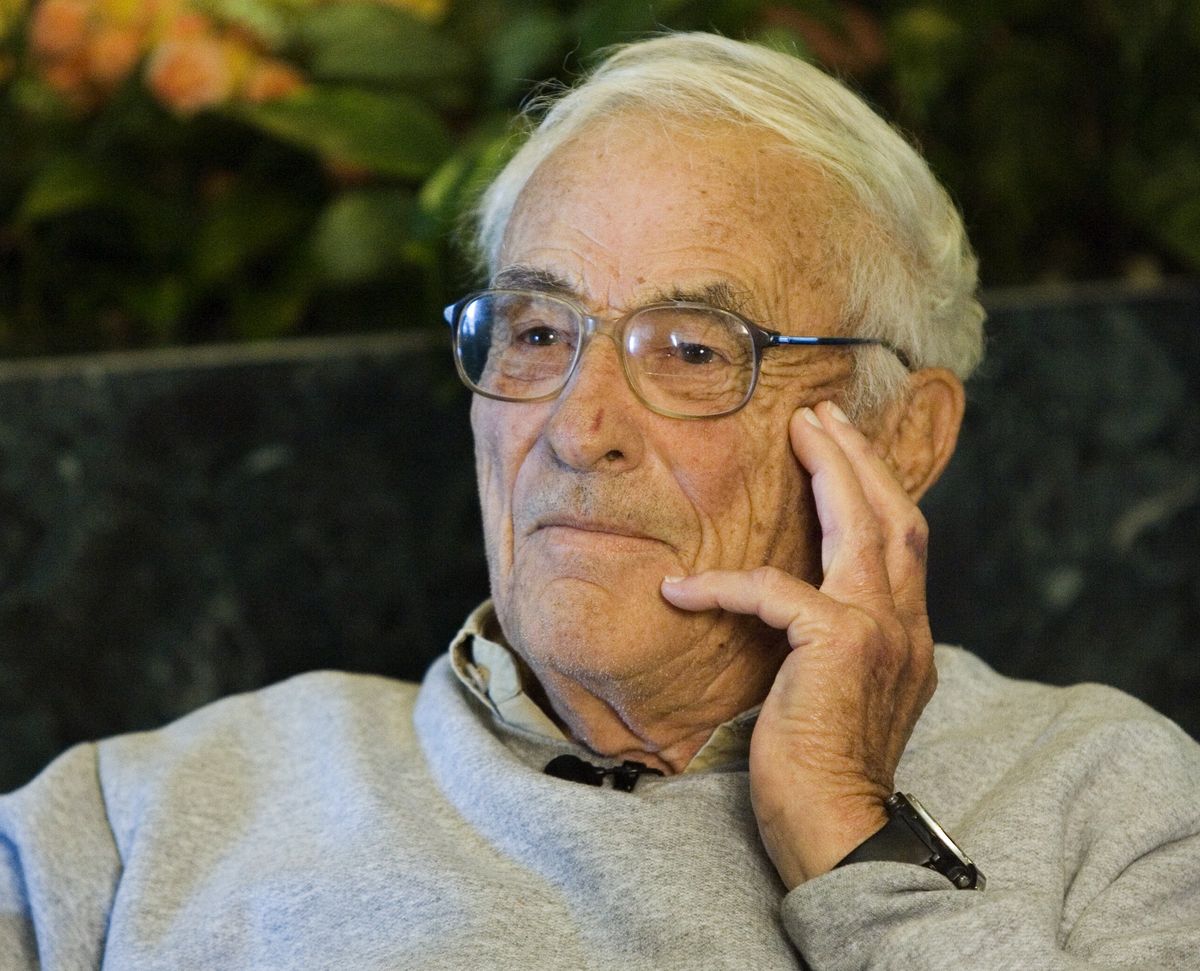
NEW YORK – The next time you snap a digital photo and post it to Facebook, you can probably thank the three men who won the Nobel Prize in physics Tuesday.
They helped develop fiber-optic cable and invented the “eye” in digital cameras – technology that has given rise to film-free photography and high-speed Internet service, revolutionized communications and science, and utterly transformed the way we live, work and amuse ourselves.
Half the $1.4 million prize will go to Charles Kao, 75, for discovering how to transmit light signals long distance through hair-thin glass fibers. That led to fiber-optic communication networks that zip voice, video and high-speed Internet data worldwide in a split-second.
The other half will go to Willard Boyle, 85, and George Smith, 79, for opening the door to digital cameras by inventing a sensor that turns light into electrical signals.
These three Americans, the Royal Swedish Academy of Sciences declared, are “the masters of light” whose work “helped to shape the foundations of today’s networked societies.”
“What the wheel did for transport, the optical fiber did for telecommunications,” said Richard Epworth, who worked with Kao in the 1960s.