
Toyota offers fix
Company ‘doing everything we can as fast as we can,’ spokesman says
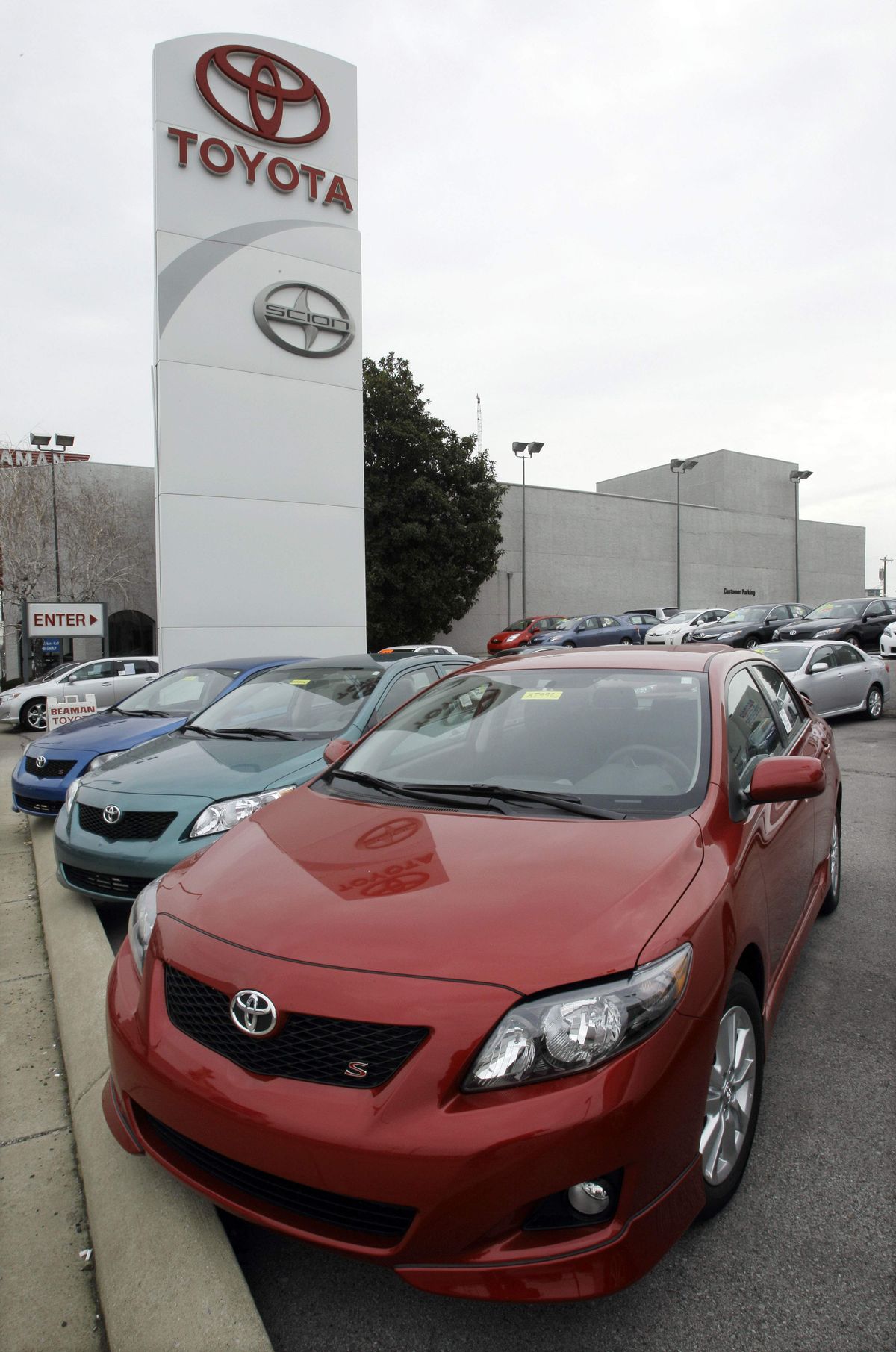
WASHINGTON – Toyota said Monday it would start shipping parts to dealers for repairing accelerator pedals in 2.3 million cars and trucks this week, vowing to move as quickly as possible while admitting the problem was an embarrassment.
The Japanese automaker said it had quickly designed a steel reinforcement bar for the pedals to keep them from sticking in certain situations, and that the repair would take about 30 minutes per vehicle. Toyota had already planned to shut down or curtail production at six North American assembly plants this week, and said its supplier was shipping a revised design to its factories.
“Nothing is more important to us than the safety and reliability of the vehicles our customers drive,” said Jim Lentz, president and chief operating officer of Toyota’s U.S. sales arm. “We deeply regret the concern that our recalls have caused for our customers and we are doing everything we can as fast as we can to make things right.”
Lentz defended the company’s actions, saying the two recalls would solve any problems Toyota was aware of that could lead to sudden acceleration.
“This is embarrassing for us, to have this kind of recall situation,” Lentz said in a conference call. “But it doesn’t necessarily mean we have lost our edge on quality.”
Safety advocates and attorneys say Toyota has yet to fully explain why its vehicles appear to have far more complaints of sudden acceleration than any other automaker. The issue has been linked by one advocate to 19 deaths and 341 injuries stemming from 815 separate crashes, with more than 2,000 complaints.
Lentz said Toyota moved as soon as it knew of a problem with its pedals in October of last year, although he admitted Toyota was aware of complaints of sticking pedals on the Tundra pickup dating back to 2007.
“The number of deaths, number of accidents, whether it’s one or whether it’s 2,000, doesn’t really make a difference,” he told the “Today” show. “We’ve been investigating this for a long time.”
The decision to recall vehicles for faulty gas pedals reversed calls Toyota made in 2007 and 2008 in response to consumer complaints in the United States and Europe that the pedals didn’t pose a safety threat. Lentz said the recall was spurred by three complaints the automaker received in October.
The Japanese automaker made several similar decisions in earlier investigations involving sudden acceleration, and had to be pressured by federal regulators into a recall of floor mats that could trap gas pedals. That recall has grown to cover 5.4 million vehicles, and as part of the repair Toyota has vowed to install software in some models that would override the gas pedal if it and the brakes are pressed at the same time, and make it standard on all models by the end of the year.
Lentz said Toyota had tested its electronics “thoroughly” and found no problems.
“I drive Toyotas, my family members drive Toyotas, my friends and neighbors drive Toyotas,” Lentz said. “I would not have them in products that I knew were not safe.”
Lentz said dealers should be getting parts over the next few days, and after training mechanics should be able to start repairs this weekend. He said Toyota would tell dealers to repair customers first before fixing vehicles in stock, but it was up to individual dealers to apply their own schedules.
While Toyota issued a “stop sale” order on eight models nationwide, Lentz said dealers could resume sales once they fix any particular vehicle. It plans to restart production Feb. 8.