
Homegrown learning
Teens follow food from farm to fork
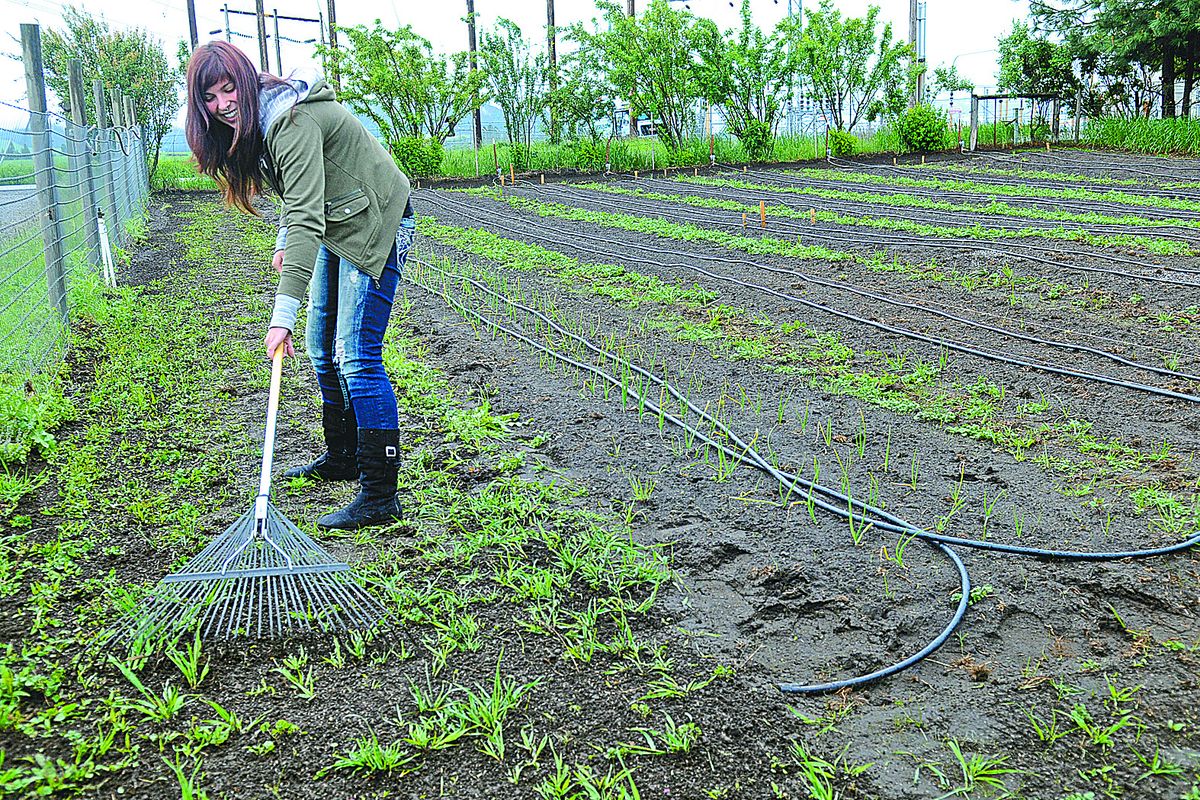
On a little patch of land just north of Bigelow Gulch, students from Spokane Valley High School are learning the basics about farming.
It’s a new class at the alternative school, part of the West Valley School District, and students are learning about growing their own food from start to finish.
The idea for the class started last fall during the school’s annual Thanksgiving dinner.
“(We asked) Can we grow crops that can be used in a way that is beneficial to the community?” said Valley grower and SVHS horticulture teacher Scott Carver.
Mary Collins, a GED coordinator at the school, said she and her husband, Dale, used to have a garden on their property, but they hadn’t planted one in recent years. She offered the spot up for the students.
The students tilled the land in mid-March, drew up an irrigation plan for it using an AutoCAD program and tested the soil and water.
They found the soil was rich in phosphorous, nitrogen and potassium and discovered the pH balance as well.
“The water was really rich, too,” said Austin Tressel, a sophomore in the class. “It tasted pretty good.”
The class worked with local businesses such as Dew Drop Sprinklers and Landscaping, which helped them figure out what they would need for their irrigation system, and other local companies for seeds.
“It was a neat connection between the school (and business community),” Carver said.
Carver said the program is funded through the Career and Technical Education budget of the school, which enables the class to purchase items for the garden without searching for donations.
“We want to support the local businesses,” Carver said.
The students planted squash, beets, pumpkins, onions, carrots and potatoes.
“Those are all keeper crops that we can store,” Carver said. The class plans to use the food during Thanksgiving dinner, take home food themselves and even put together gift bags of food for four or five needy families in the area. Mary Collins said the garden can produce enough food for around 25 families.
The pumpkins, however, didn’t make it. A late-season frost killed those plants.
“I was so sad having to dig up the pumpkins,” said Cassandra Hundeby, another sophomore at the school.
Carver said it was a lesson in how fickle Mother Nature can be – not every crop survives.
They also planted a mixture of hard, creeping red and sheep fescue around the crops to prevent weeds from growing in the area. Since summer vacation is here, the students probably won’t be able to tend the crops as often as they have been during school – they travel by school van to the garden once a week. The fescue and an automatic drip sprinkler system will help keep the garden low maintenance.
They are working through the Washington Department of Agriculture to become Certified Organic, which Carver said is part of the curriculum of the class.
The students seem to enjoy growing their own food.
“Hands-on is a lot more fun than sitting in a classroom,” said Shelby Birnel, a sophomore.
Hundeby agreed with Birnel and added that the class was more of a challenge than she expected.
“It’s actually a pretty hard class,” Hundeby said.
“I think that the work was worth it,” Birnel said.
Next year, Carver plans to expand the garden to another patch of land on the Collins’ property. They want to put in a trellis system to grow blueberries, blackberries, fall blackberries and grapes.
The students probably won’t harvest this crop until this fall, and Carver said the second year of a garden turns out better than the first.
Although the students probably won’t be farmers when they grow up, they are planning to make gardening a part of their lives in the future.
Birnel said she wants to have her own garden someday.
“When I become a mother (someday) I’m never going to the store,” she said.
Carver is proud of the students’ work this spring.
“It’s turned into something much more than originally planned,” Carver said.