
Shrinking Violets
Building a sustainable community
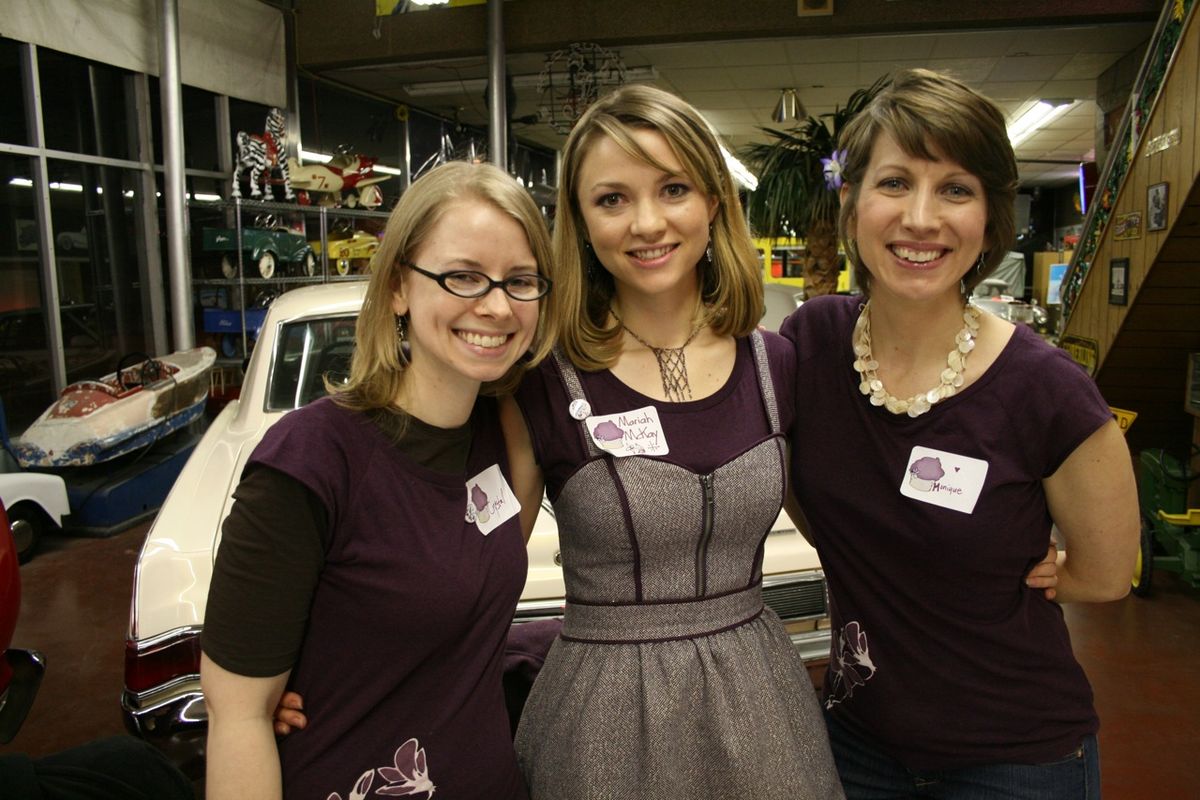
Mariah McKay could see women walking down the street when she looked out the window of her South Hill apartment, but who were they and where did they live?
The Mead native had moved back to Spokane after attending Reed College in Portland, Ore. She was working full time—the only young woman in the office—and longed for the social interaction and sense of community she’d experience in school and during what was an unconventional upbringing.
But women seemed to marry and have children at a younger age in Spokane than elsewhere, and “we don’t have a lot of welcoming, accessible third spaces where people can congregate,” McKay says, so she had a difficult time finding her peers.
McKay, 26, wanted women to get out of their cars, get out of the espresso lane and start talking to one another. Literally.
“I see (drive-through coffee) as a problem,” she says. “It allows people to live their lives in their vehicles and avoid interaction.”
It was those thoughts that planted the seeds for the Spokane Shrinking Violets Society, a year-old group of women who gather once a month for breakfast and engage in community-building activities.
The group started meeting informally in 2008 after McKay sent invitations handmade by friend and artist Mariko Sullivan to a “Ladies Who Lunch” clothing swap. The invites were delivered to just about every young woman McKay knew. (She’d unabashedly add people to a spreadsheet when she came across someone new.)
“They were these pop, surrealist, gothic-looking invitations,” McKay recalls. “We wanted to make it feel special, and about half the people we invited actually showed.”
McKay began hosting the Ladies Who Lunch gatherings in her apartment once a month, with a different artist designing the flier each time. Eventually, she moved the get-togethers to One World Café, a local, organic-foods restaurant at 1804 E. Sprague Ave.
By late December 2008, McKay was ready to formalize the group. She announced on her popular blog, The Spovangelist, the inception of The Spokane Shrinking Violets Society.
The Violets continue to gather for breakfast at One World Café every month, as well as hold craft parties, book clubs, clothing swaps and other activities.
McKay says they plan to get more involved in traditional community service projects this year, such as river cleanups, helping at women’s shelters and running or walking for causes.
More than anything, they encourage each other and share a love of Spokane.
“We lift each other up,” says McKay, explaining that when participants suggest a new idea, they’re met by a room full of (mostly) women who believe “this could work.”
Sometimes that means encouraging each other to pursue a new business.
“A lot of the Violets have craft projects they do on the side, and they’re helping people pursue and professionalize those interests,” McKay says. “We’re bootstrapping ourselves into creating our own jobs.”
In more ways than one, the Violets are anything but shrinking.
First, their numbers are growing. After an article appeared in the now defunct Inland Northwest Homes & Lifestyles magazine late last fall, their Ladies Who Lunch attendance doubled. On Facebook, almost 500 people consider themselves members and events usually draw about 50 attendees. More than 300 celebrated the group’s first anniversary with a birthday bash that included speeches, live music, an art gallery and information booths on Feb. 27.
Men are more than welcome to participate—and several do—and all ages are welcome, although the bulk of the members are in their 20s and 30s.
And to say that the Violets are shy and “shrinking” is a tongue-in-cheek reference to a T-shirt worn by a group of feminists in Spokane who criticized the police department in the 1970s for offensive comments McKay says were made about rape victims. There was a backlash against the women, who were ridiculed for being “Amazon feminists,” but instead of fading away they printed T-shirts that referred to their group as a “Ladies Sewing Circle and Terrorist Society.” In the center of the shirt was a flower that looks like a shrinking violet, hence the modern-day club’s name.
McKay was raised to speak up for her beliefs and accept others, despite their differences. Her family owned a traveling carnival operation, so from birth through age 14 she spent up to five months every year on the road. When they were old enough, she and her brother worked the button-making booth and haunted house and “ate too much cotton candy.”
The rest of the year, the carnival rides wintered on the family’s 25 acres in North Spokane.
“A lot of our hands would squat on the property,” McKay says. “We would play out in the yard all day, and come in just for breakfast, lunch and dinner. There’d be two dozen carnies in greasy overalls, and we’d all be eating a communal meal together.”
For many of the workers, “the carnival was all they had,” she says. “I grew up in a massive network of people that were banded together for their survival.”
Today, McKay says she likes to surround herself with people who “feel compassion and act on it.”
“Life is tough. How do we create a respite for that?” she says.
McKay, who now works part time for Community Minded Enterprises and Greater Spokane Progress, says she’s surprised and happy to see how far the Violets have come in a year. She doesn’t think the same format would work in a larger city, where there are large clubs just for knitters or musicians or specific types of artists.
“In Spokane, we’re not big enough to sustain things at that level,” McKay says. “I think it’s actually healthier and more human (than to be) an inch wide and a mile deep.”
Spokane resident Monique Kovalenko, who joined the Violets last February, says the group has helped her find a sense of community after missing the one she left behind in Bellingham four years ago.
“There’s something so easy (about the Violets),” says Kovalenko, 40. “There’s space for people to say how they feel, and everyone’s point of view is valid.”
The Violets have helped Kovalenko appreciate living in Spokane.
“I can see the bus stop from my front door. Fresh Abundance delivers groceries. I can ride my bike to work in summer and hang my clothes on the line,” she says. “All these values that are really important to me are easier to manifest here.”
Most of all, Kovalenko likes the Violets’ optimistic outlook.
“It feels so great to be with a bunch of other women who are so positive and supportive,” she says. “It’s about nurturing relationships.”