
Three die in riots over austerity cuts
ATHENS, Greece – Rioting over harsh austerity measures left three people dead in a torched Athens bank and clouds of tear gas drifting past parliament, in an outburst of anger that underlined the long and difficult struggle Greece faces to stick with painful cutbacks that come with an international bailout.
The deaths were the first during a protest in Greece in nearly 20 years.
Fear that the bailout won’t stop the debt crisis from spreading to other financially troubled EU countries like Portugal and Spain intensified amid the violence Wednesday, as credit ratings agency Moody’s put Portugal on watch for a possible downgrade.
The euro sank, dipping below $1.29 for the first time in over a year, on fears of crisis contagion and concerns that political upheaval might keep Greece from keeping its end of the bailout bargain.
Greece faces a May 19 due date on debt it says it can’t repay without the help. The new government cutbacks, which slash salaries and pensions for civil servants and hike consumer taxes, are being imposed as a condition of getting a $142 billion package of rescue loans from the International Monetary Fund and the other 15 European Union countries that use the euro as their currency.
An estimated 100,000 people took to the streets during a nationwide general strike that grounded flights, shut all services and pulled news broadcasts off the air.
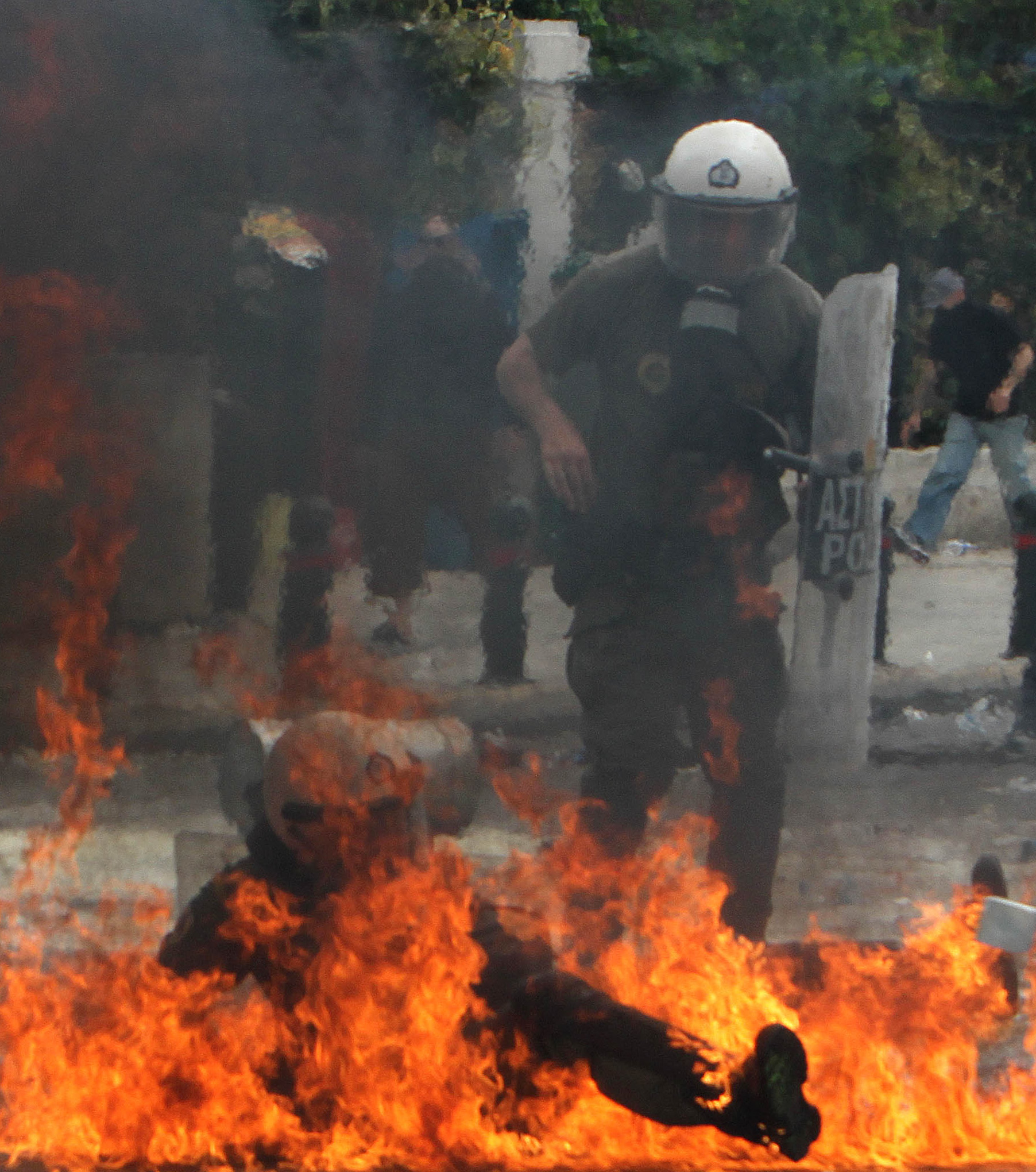
Hundreds of demonstrators – including far right wing supporters – broke away from the marches and tried to storm parliament, shouting “thieves, traitors.” At the opposite end of the political spectrum, groups of anarchists hurled Molotov cocktails and ripped-up paving stones at buildings and police.
Three bank workers – a man and two women all aged between 32 and 36 – died of smoke inhalation after demonstrators torched their bank, trapping them.
Fifteen civilians and 29 police were injured in what Civil Protection Minister Michalis Chrisohoides called “a black day for democracy.” Twelve people were arrested in Athens and another two in the northern city of Thessaloniki.