
Quakes different in East vs. West
Older, colder rocks send shakes farther afield
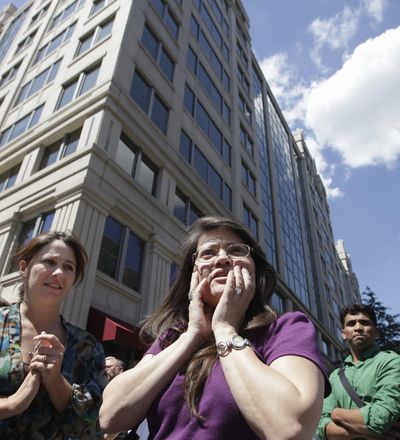
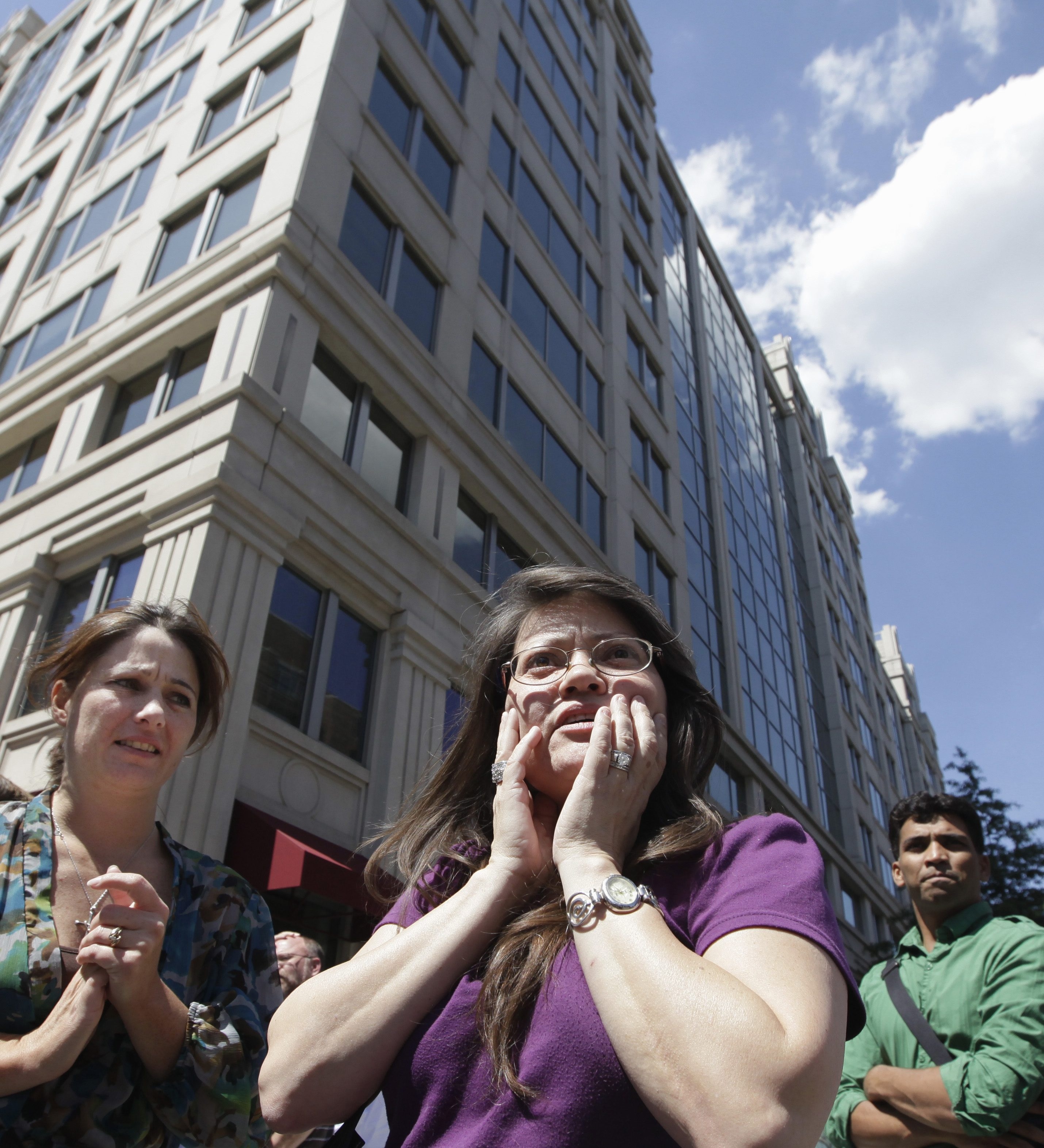
WASHINGTON – The East Coast doesn’t get earthquakes often but when they do strike, there’s a whole lot more shaking going on.
The ground in the East is older, colder and more intact than the West Coast or the famous Pacific Ring of Fire. So East Coast quakes rattle an area up to 10 times larger than a similar-sized West Coast temblor.
“They tend to be more bang for the buck as far as shaking goes,” said Virginia Tech geology professor James Spotila.
Tuesday’s 5.8-magnitude quake was centered in Virginia and was felt up and down the Eastern Seaboard for more than 1,000 miles. There hasn’t been a quake that large on the East Coast since 1944 in New York.
While this was a rarity for the East, a 5.8 quake isn’t unusual for California, Oregon, Washington and Alaska, where one occurs about once a year. Those states have had 103 quakes 5.8 or bigger since 1900, compared to now two in the East.
Because of geology, earthquakes on the coasts have different triggers and act differently in some ways. And they definitely are felt differently.
One glaring East versus West disparity: When a quake happens in California, geologists usually know what fault ruptured. Tuesday’s quake happened on an unknown fault, and it is likely to remain a mystery.
Because the quake didn’t break the surface “we may never actually map this fault from this earthquake,” Earle said.
The only thing that will help scientists figure out where the break truly occurred are the aftershocks which could help highlight or outline the fault line, said Cornell University seismologist Rowena Lohman.
Most times, quakes occur when Earth’s floating giant plates shift, rub against or slip past each other. That’s what happens along California’s San Andreas fault when quakes happen there.
Tuesday’s thrust earthquake was far from the edge of a plate – the nearest are thousands of miles away in the mid-Atlantic or California, said seismologist David Applegate, associate director of natural hazards for the USGS in Reston, Va.
The stresses that cause these kinds of quakes come from far away and mount ever so slowly over time, even building up from the retreat of glaciers at the end of the Ice Age, he said.
Another East versus West contrast: The ground is different in the East in a way that makes the shaking travel much farther, allowing people to feel the quake several states and hundreds of miles away.
The rocks in the Earth’s crust in the East are colder, older and harder, which means seismic waves travel more efficiently and over greater distances. Rocks on the West Coast are relatively young and broken up by faults.
“An intact bell rings more loudly than a cracked bell and that’s essentially what the crust is on the East Coast,” USGS seismologist Lucy Jones told a news conference in Pasadena, Calif.