
Gridlock taking hold in Wisconsin standoff
Both sides harden stance in budget-reform battle
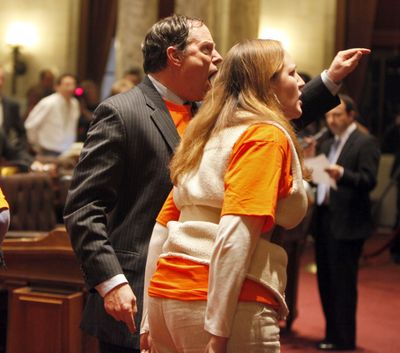
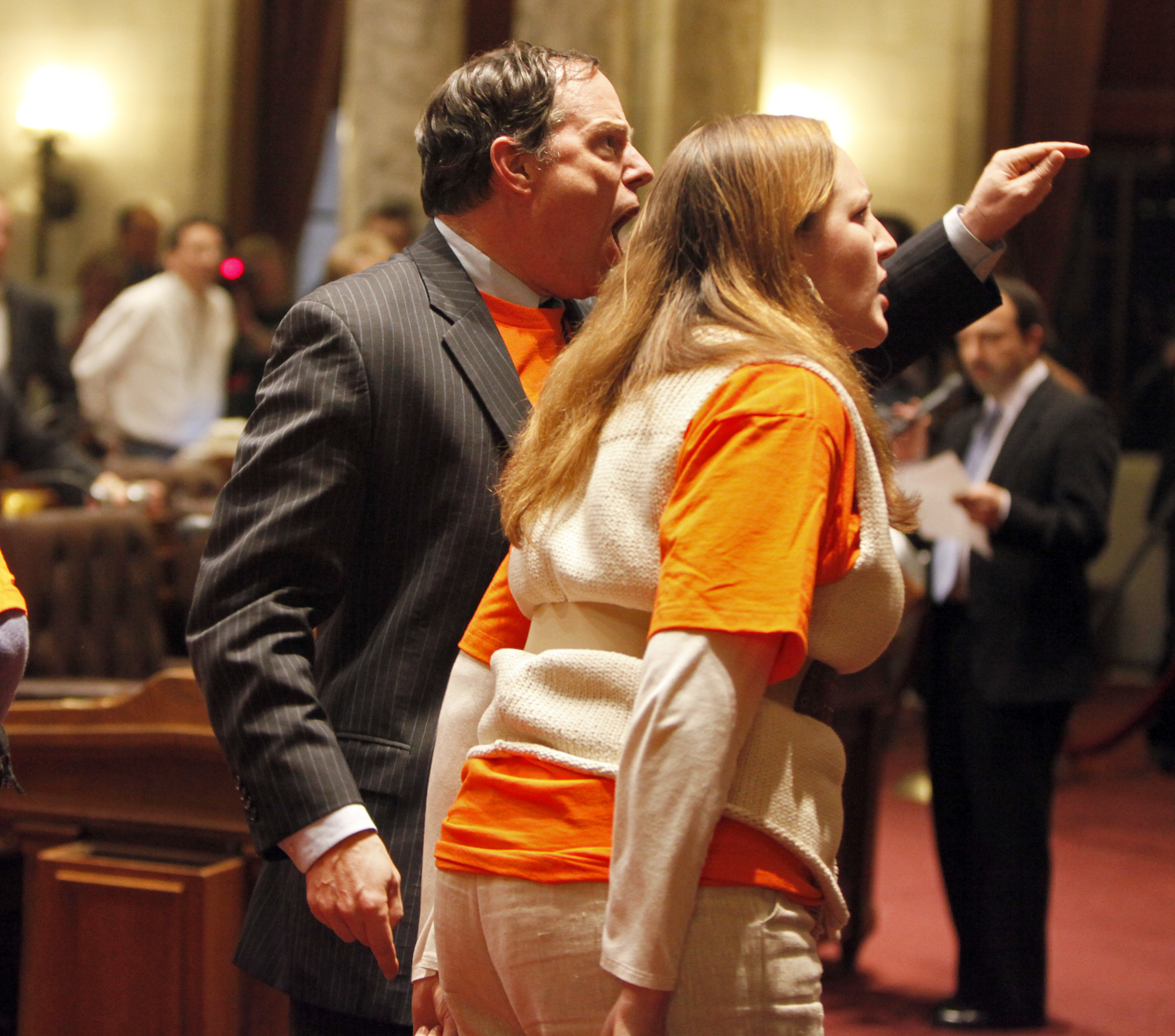
MADISON, Wis. – Only two months into his term, Republican Gov. Scott Walker is facing the bane of all elected leaders: Political gridlock.
Both Republicans and Democrats have dug in on the issue of union rights for public workers, which has riven the Wisconsin Capitol for two weeks. One of the only ideas for compromise has received so little support that the proponent of the plan declined to introduce it Friday in the Senate.
The proposal by GOP Sen. Dale Schultz would require deeper concessions from public employees than Walker’s budget plan, but preserve more of workers’ collective bargaining rights. Walker and legislative leaders dismissed the plan and said they are unwilling to concede on any point.
Senate Democrats are just as recalcitrant and show no sign of returning from Illinois, where they have stayed since Feb. 17 to prevent passage of the bill.
Walker and Republican legislative leaders say the measure must pass by Tuesday to avoid the layoffs of thousands of employees as early as April 1.
“This isn’t some game of chicken,” said Senate Majority Leader Scott Fitzgerald, a Republican.
Democrats argue Tuesday’s deadline – for a $165 million bond restructuring – is false.
Walker’s bill would fill a $137 million hole in the fiscal year that ends June 30; require public workers to pay more for their pensions and health care; eliminate most collective bargaining among public employee unions; and give Walker’s administration broad powers to reshape health programs covering 1 million low-income Wisconsin residents.
Public workers have said they could accept the concessions, but thousands of them have filled the Capitol since mid-February to fight to retain the collective bargaining they now have.
After 61 hours of debate in the Assembly – the longest in living memory – Republicans abruptly called for a vote just after 1 a.m. Friday that touched off accusations from Democrats that the vote was invalid. The measure passed 51-17 and in the confusion nearly one third of the sleep-starved representatives – including 25 Democrats, two Republicans and an independent – did not vote on the bill.
In the Senate later Friday, Republicans gave preliminary approval to Walker’s bill but could not vote on final passage because of the Democrats’ absence. Twenty senators must be present to pass the measure, and Republicans have just 19 seats in the 33-seat house.