
Montana Coffee Traders recognized for its eco-friendly efforts
Whitefish roaster began in 1981
What started out 25 years ago as a way to drink freshly roasted coffee in the wilds of Montana has grown into an award-winning enterprise recently recognized for its “tasty, authentic and responsible” brew.
Scott Brant and R.C. Beall began roasting coffee beans in an old farmhouse on the forested edge of Whitefish, Montana, in 1981. Admittedly, the early roasting sessions had a sizeable learning curve after the duo purchased a used roaster that had languished in a Whitefish garage alongside bags of raw Ethiopian coffee beans.
Today, Brant, Beall and current staff of 100 roasters, brewers, baristas, deli crew and administrators have been able to filter out the challenges and successfully create coffees that please the palate and the planet.
“We’ve always had a good market for organic coffee in Montana, a demand for environmentally sustainable grown coffees,” says Brant, Montana Coffee Traders’ roaster and Green coffee buyer. “We’ve always supported organic because it’s good for the earth and good for the coffee workers who don’t have to handle chemicals.”
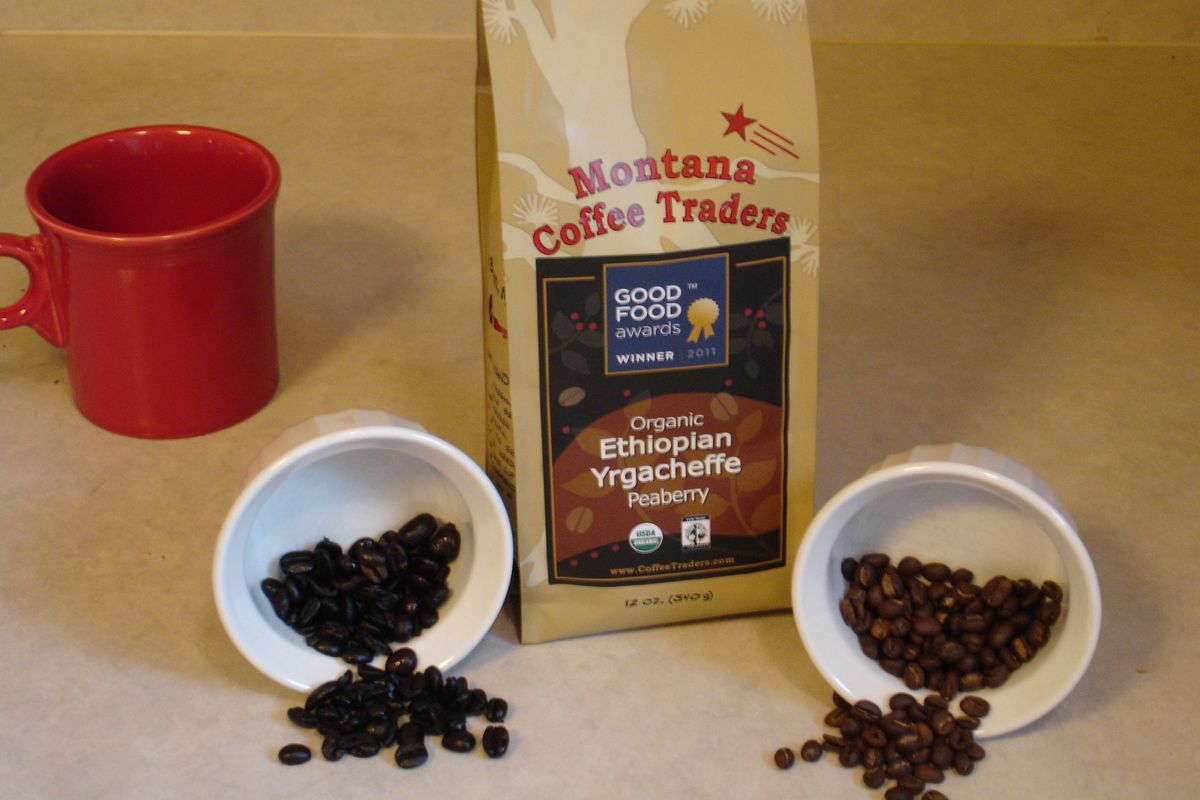
This year, Montana Coffee Traders received word that the San Francisco-based The Good Food Awards honored them with the “Best Coffee” distinction for its Ethiopian Peaberry roast.
Its beans beat out 130 other roasts in a blind taste test conducted in Bay Area by national coffee-roasting experts. The Good Food event is the result of Slow Food Nation, a food festival in 2008 in San Francisco in which 85,000 people celebrated artisanal foods. The San Francisco Seedling Projects organized The Good Food Awards to recognize good food and the outstanding food producers and farmers who provide the ingredients.
Montana Coffee Traders entered one of its organic coffees, much to the delight of event organizers who sought to recognize sound farming practices and great coffee.
Not only is the Organic Ethiopian Yrgacheffe Peaberry intensely aromatic with sweet floral flavor and a spicy chocolate finish, but the beans are from the Yrgacheffe Farmers Union in southern Ethiopia. The Ethiopian farmers work as a co-op to produce sustainable products of Indigenous Ethiopian cultivars. The coffee is a certified Fair Trade product and USDA Organic.
Brant said peaberries are not a variety but a small, roundish bean that occurs naturally when the coffee fruit develops only a single, oval bean rather than the usual pair of flat-sided beans, “like two nuts in a peanut shell,” and occasionally finding only one.
“Peaberries occur about 5 percent in a normal harvest; they are smaller, yet the best coffee in the past few years from Africa are from peaberries,” he said.
Ethiopia is the home of the Arabica plant, and there’s evidence of human consumption of it dating back several centuries in east Africa. Ethiopia’s coffee grows in the shade of generations-old native trees like giant sycamores which allow the coffee cherries to ripen red yet hold moisture necessary to retain complex flavors.
Yet when small family coffee plots are deforested for expected higher yields, ultimately, the plants produce lower-grade coffee. Deforestation, pesticide pollution, water and soil degradation often result from full-sun cultivation—which also uses significantly more water per yield than shade-grown coffee.
Montana Coffee Traders buys the Ethiopian coffee because of excellent flavor and, notes Brant, “whenever possible, we buy organic, Fair Trade and shade-grown certified coffees and strive to operate in a manner that respects, supports and profits the people, the communities and the land that sustains us.”
According to Oxfam International, which works on a global scale to find lasting solutions to poverty and injustice on the community level, “by utilizing eco-friendly coffee processing, the (coffee) cooperatives will not only increase their income as a result of selling washed coffee but also address environmental pollution related to the conventional coffee processing method.”
Oxfam offers financial support to the Yrgacheffe Farmers Union cooperative noting that “the eco-friendly method of processing reduces the amount of organic waste from the washing process and cuts water usage by 98.5 percent.”
Montana Coffee Traders also works locally to assist worthy nonprofits through its Partnership Coffee program in which a portion of the proceeds for the coffees are directed back to the nonprofit group.
For example, they label a special Grizzly Blend, for Vital Ground, an organization that has helped to protect and enhance 604,000 acres of wildlife habitat in Montana, Idaho, Wyoming and British Columbia. The dark roast’s label is the “Great Bear” painting by Montana artist Monte Dolack. Other organizations benefiting include Montana Public Radio, Glacier National Park Fund, the American Indian College Fund and others.
Montana Coffee Traders received a big tip of the hat for its sharp focus on sustainability and transparency. The Good Food Awards are granted by region in order to focus on those specificities that make artisanal products just that: artisanal. While creating guidelines that consumers can trust, The Good Food Awards focus on the spirit of food made thoughtfully, passionately and deliciously.
Montana Coffee Traders’ Organic Ethiopian Yrgacheffe Peaberry is carried by some Williams and Sonoma stores as well as online at www.coffeetraders.com, or available in Montana grocery and natural-food stores. The roasters handle about a half-million pounds of beans a year from the growing regions of Indonesia, Central and South America, Hawaii and Africa.