
Tribe finds new way to preserve tradition
OMAK, Wash. – For each of the past few summers, the Colville Tribes have caught thousands of salmon using a commercial boat and a purse seine net, and distributed the fresh fish to tribal members.
This summer – as their ancestors before them did – they’ll put some of their catch away for the lean winter months.
But instead of setting up drying racks on the river banks, the Colvilles will freeze the fish and offer it to elders and tribal members long after the salmon fishing is over.
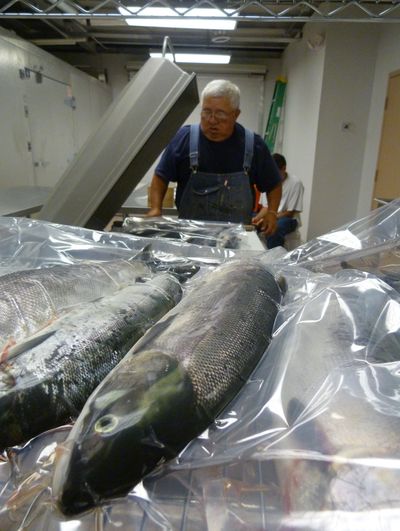
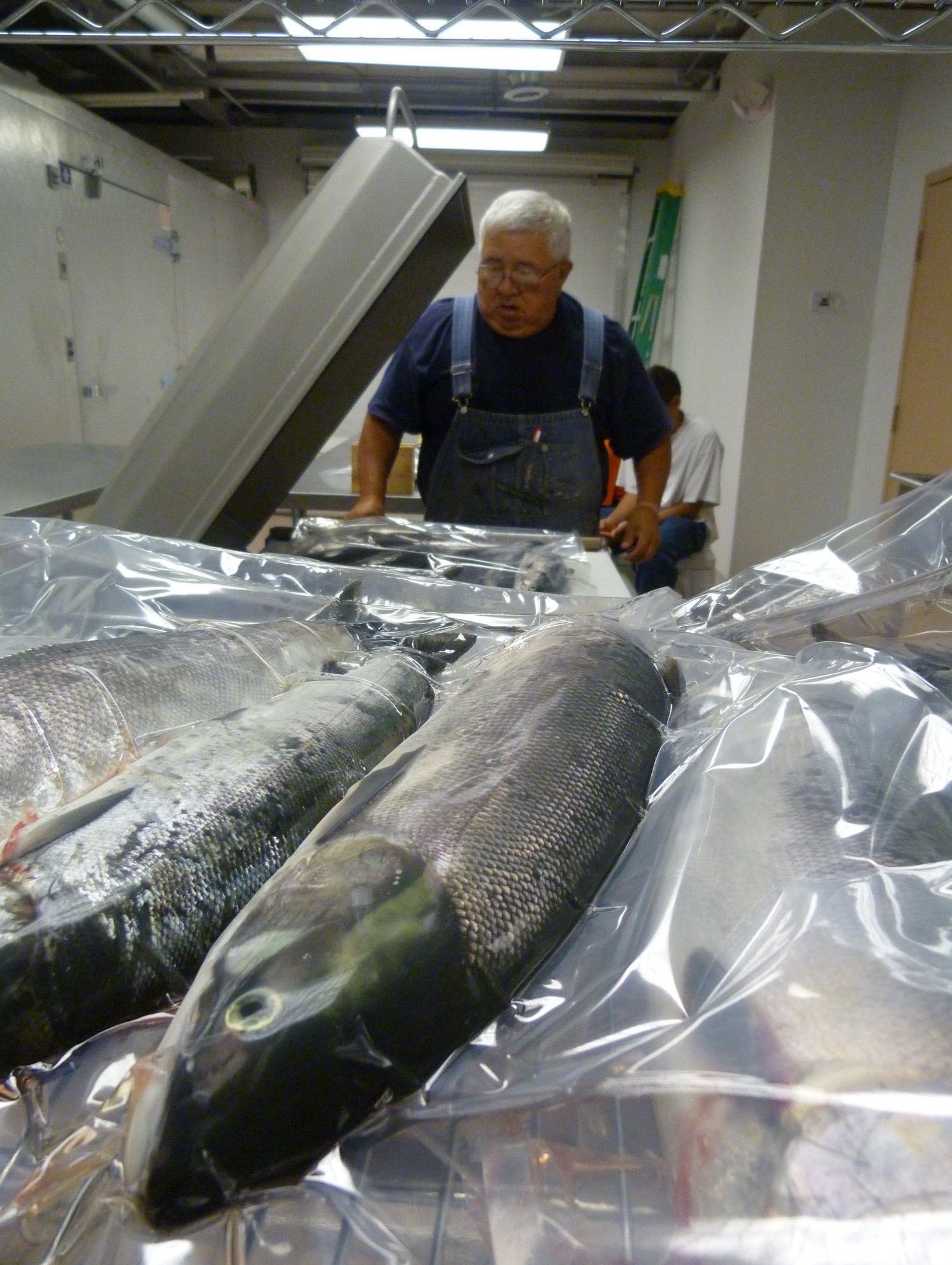
Their salmon-preserving facility in a newly-renovated building at the old Paschal Sherman Indian School east of Omak is currently a one-man operation.
Tribal elder Glen Launer once worked in a fish processing plant in Alaska.
He’s now in charge of washing, vacuum sealing and freezing the summer chinook and sockeye that Dale Clark brings to him after a morning of fishing in the tribe’s fishing boat, the Dream Catcher.
Although Clark and Launer are using modern methods to catch and preserve the fish, they are adhering to the old principles by making sure the wild salmon escape to spawn, and by sharing this bounty with elders and others who cannot fish for themselves.
It’s all part of a larger effort by the Confederated Tribes of the Colville Reservation to bring more salmon back to the upper Columbia River, and provide more of this traditional food to tribal members.
Stephen Smith, a fisheries consultant and biologist, said from his perspective, the Colvilles are doing everything right.
“They are the leaders in the Basin on selective fishing and proper hatchery management to restore wild runs,” he said. The operation includes a careful sorting of chinook salmon to release any wild fish to spawn, before harvesting those with a fin clipped, denoting they were hatchery-raised.