
No quick fixes at power plant
Much work even after reactors are stabilized
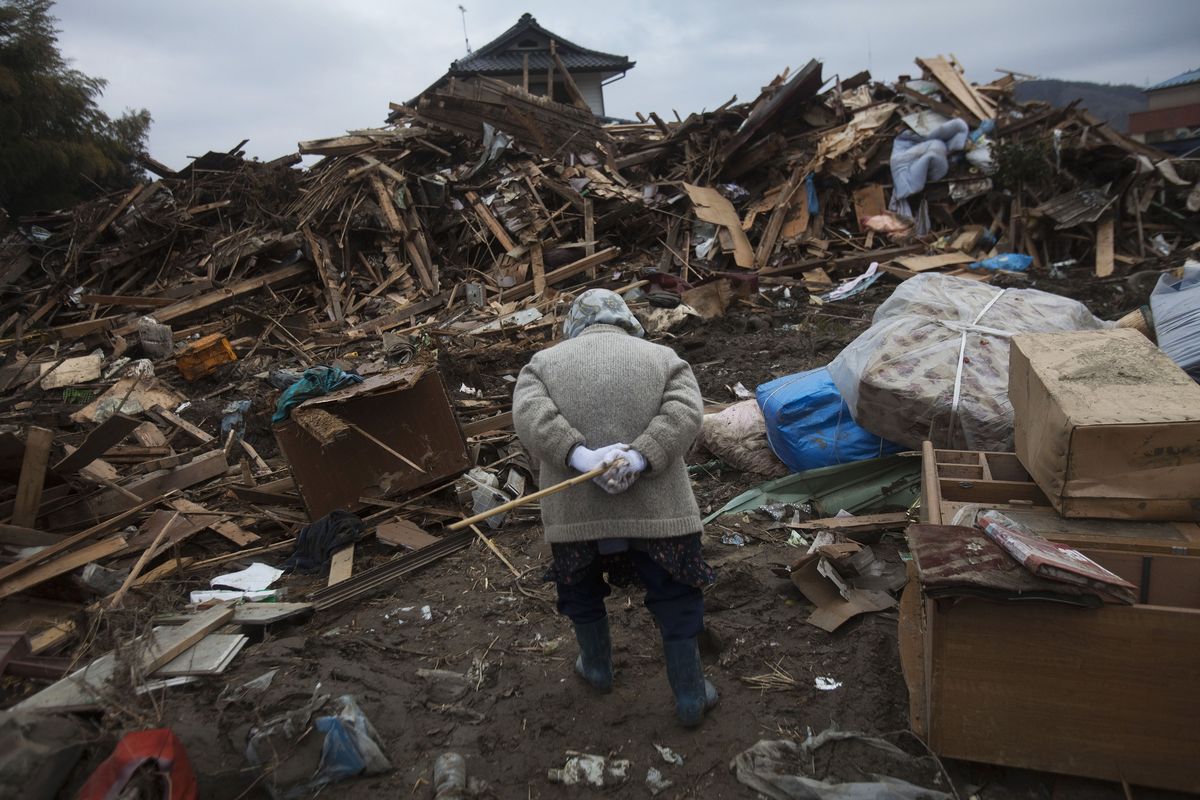
FUKUSHIMA, Japan – Officials are racing to restore electricity to Japan’s leaking nuclear plant, but getting the power flowing will hardly be the end of their battle: With its mangled machinery and partly melted reactor cores, bringing the complex under control is a monstrous job.
Restoring the power to all six units at the tsunami-damaged complex is key, because it will, in theory, drive the maze of motors, valves and switches that help deliver cooling water to the overheated reactor cores and spent fuel pools that are leaking radiation.
Ideally, officials believe it should only take a day to get the Fukushima Dai-ichi complex under control once the cooling systems are up and running. But it could take days or weeks to get those systems working.
The nuclear plant’s cooling systems were wrecked by the massive earthquake and tsunami that devastated northeastern Japan on March 11. Since then, conditions at the plant have been volatile; plumes of smoke rose from two reactor units Monday, prompting workers to evacuate units 1-4.
The crews resumed the work early today, plant spokesman Motoyasu Tamaki said.
If officials can get the power turned on, get the replacement pumps working and get enough seawater into the reactors and spent fuel pools, it would only take a day to bring the temperatures back to a safe, cooling stage, said Ryohei Shiomi, an official with the Nuclear and Industrial Safety Agency.
And if not?
“There is nothing else we can do but keep doing what we’ve been doing,” Shiomi said.
In other words, officials would continue dousing the plant in seawater – and hope for the best.
An official of the U.S. Nuclear Regulatory Commission said in Washington that Units 1, 2 and 3 have all seen damage to their reactor cores, but that containment is intact. The assessment dispels some concerns about Unit 2, where an explosion damaged a pressure-reducing chamber around the bottom of the reactor core.
“I would say optimistically that things appear to be on the verge of stabilizing,” said Bill Borchardt, the commission’s executive director for operations.
What caused the smoke to billow first from Unit 3 and then from Unit 2 on Monday was under investigation, nuclear safety agency officials said. In the days since the earthquake and tsunami, both units have overheated and seen explosions outside their reactor cores.
Workers were evacuated from the area to buildings nearby, though radiation levels remained steady, the officials said. It was a setback in efforts to rewire the plant, where officials had hoped to finish connecting all six reactor units to the grid today.
Problems set off by the disasters have ranged far beyond the shattered northeast coast and the wrecked nuclear plant, handing the government what it has called Japan’s worst crisis since World War II. Police estimate the death toll will surpass 18,000.
The World Bank said Monday that Japan may need five years to rebuild from the disasters, which caused up to $235 billion in damage, saying the cost to private insurers will be up to $33 billion and that the government will spend $12 billion on reconstruction in the current national budget and much more later.