
Netanyahu offers scant concessions
Palestinian demands still off the table
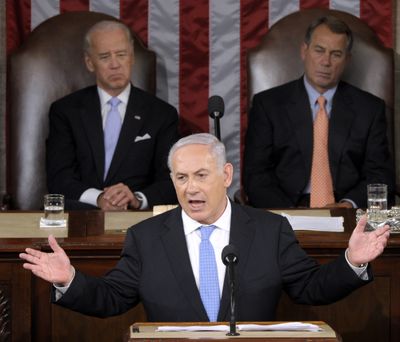
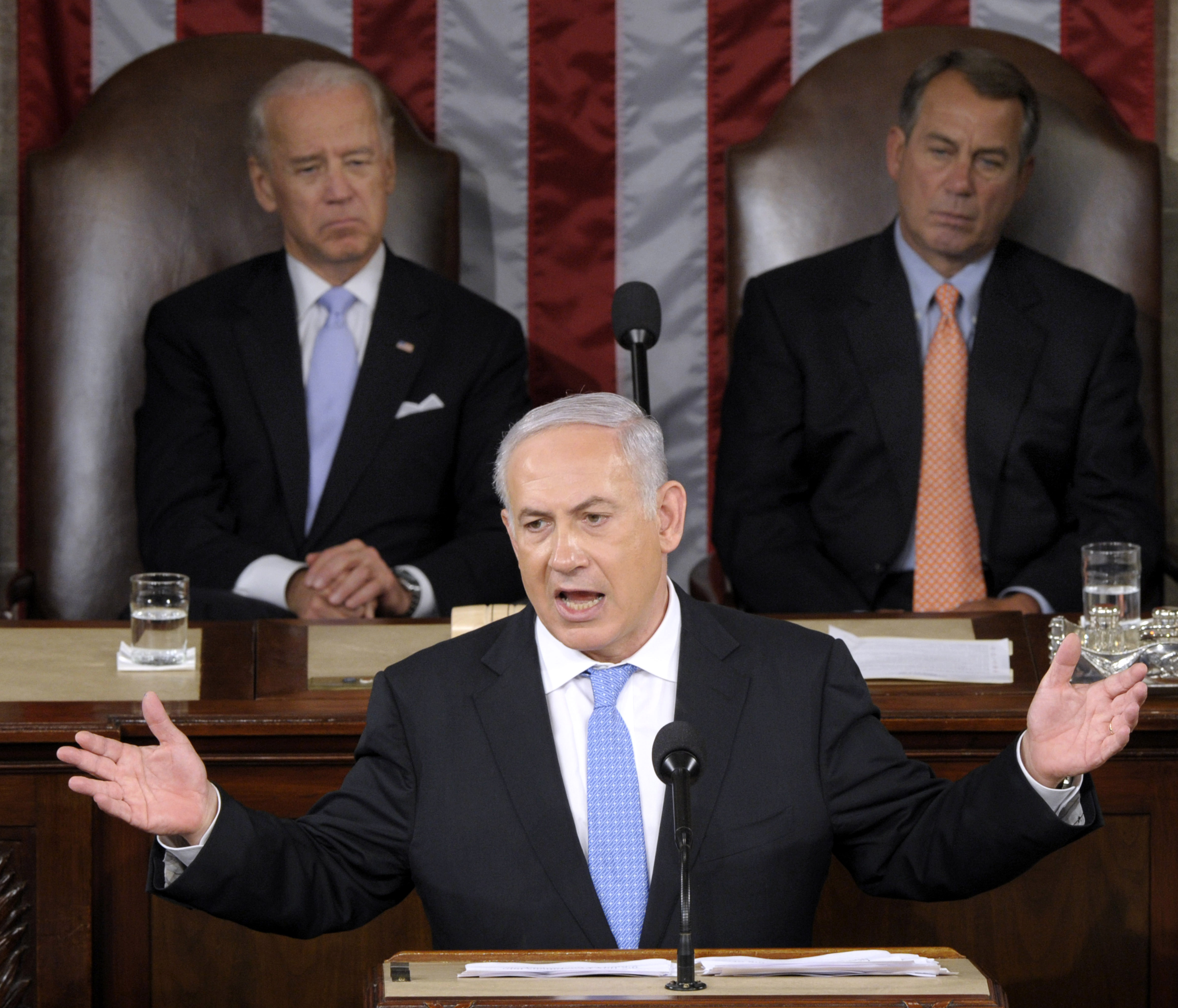
WASHINGTON – Israeli Prime Minister Benjamin Netanyahu told a joint session of Congress he is prepared to make “painful compromises” for peace, but he offered few of the concessions that President Barack Obama has sought to revive moribund Israeli-Palestinian negotiations.
Ending a tumultuous five-day visit to Washington, Netanyahu said Tuesday he is willing to give up “parts of the ancestral Jewish homeland” in negotiations to create a separate Palestinian state. But he outlined requirements that varied only slightly from his previous views, and he did not address many specific Palestinian demands.
Speaking to loud applause from U.S. lawmakers, Netanyahu promised to support a Palestinian state that is “independent and viable,” and acknowledged that “some (Jewish) settlements will end up outside Israel’s borders” in any final deal.
But he said that Jerusalem must remain the undivided capital of Israel, that the families of Palestinian refugees cannot reclaim their homes in Israel, and that Israel will need to deploy military forces along the eastern border of the proposed new state for the “long term.”
Netanyahu also restated that Israel cannot move its borders back to those used before the 1967 war, arguing that Israel would be only nine miles wide at its narrowest point and thus would be vulnerable to invasion. Last Thursday, Obama proposed that the 1967 boundaries become a baseline for territorial negotiations, an idea Netanyahu quickly rejected.
The speech signaled that Netanyahu places a high priority on retaining support of his right-wing partners in Israel, who oppose offering too many concessions. They believe that with political upheaval rocking the Mideast, and with the Palestinian Authority incorporating the militant group Hamas into its leadership, peace talks should stay dormant for now.
But Netanyahu’s speech also suggests that Israel and the Obama administration face an uphill struggle to convince allies that they should embrace the peace process and not Palestinian efforts to win recognition at the United Nations this fall, analysts said.
“He made peace with Congress, but he’s not going to make peace with Palestinians,” said Yossi Alpher, who was an adviser to former Israeli Prime Minister Ehud Barak. “There’s not nearly enough here. There was nothing new.”
Palestinians dismissed Netanyahu’s speech as little more than a restatement of familiar Israeli demands.