
Returning veterans fight to fit in
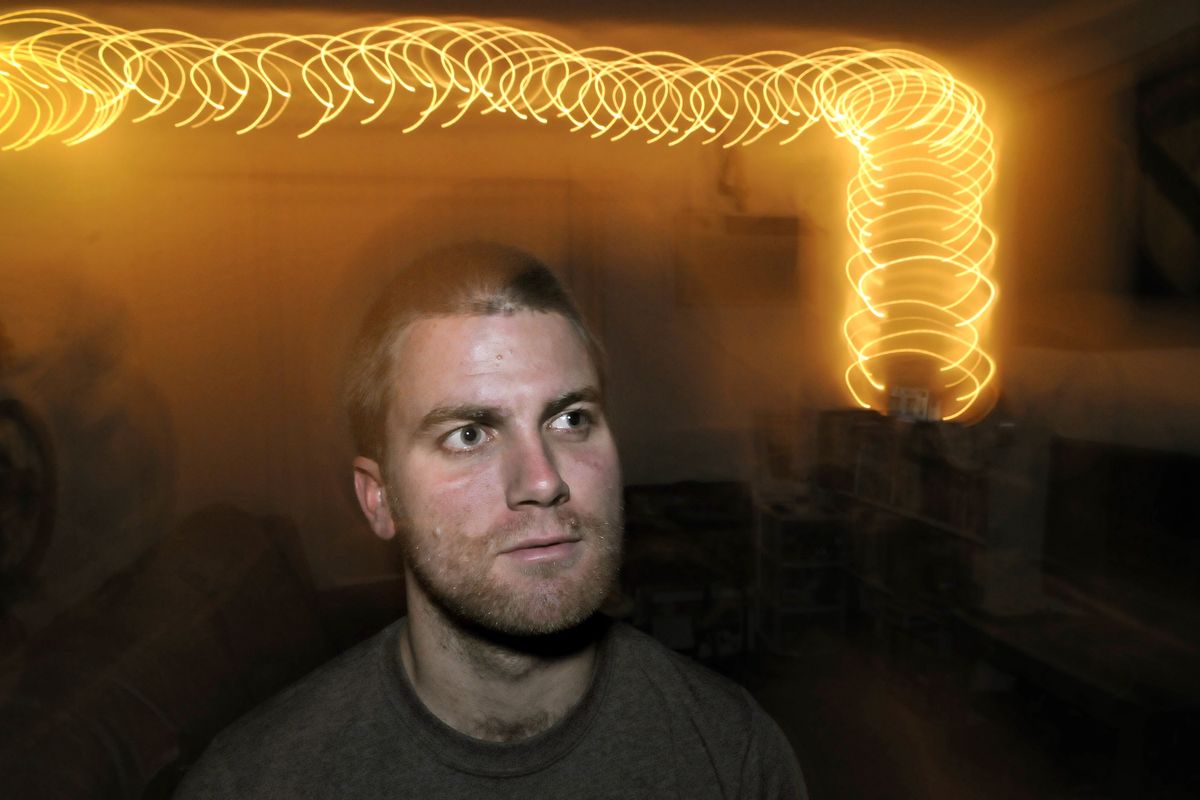
Billy Barmes spent months behind a heavy machine gun in Iraq, in an Army National Guard unit that escorted supply convoys around the country.
He found himself in several firefights, often at night – chaotic, long-distance affairs in which some of his colleagues died or were injured. After each mission, he returned to a base camp that was hit nearly daily by mortar fire.
“Literally, it felt like you were in an entirely different world,” he said. “It just seemed like it couldn’t possibly be true that there are places in the world that are that bad and that dangerous.”
Barmes returned in 2005 to a country that had no real idea what he’d just been through. Some people were nice, some people were oblivious, and some people were forcefully clueless.
“The first thing they’d say is, ‘Hey, did you kill anybody?’ ” said Barmes, 27, who moved to Spokane this summer for a coaching position with the women’s soccer team at Gonzaga University.
For many veterans, that gulf between their combat experiences and the inability of people back home to understand them creates a powerful sense of isolation. Barmes is one of four veterans who will talk about their experiences in returning home during a Veterans Day program today at Gonzaga University.
“People don’t know what to say,” Barmes said. “They don’t know what to ask you. They don’t know how to help you.”
Barnes is among some 30 veterans who have been interviewed about their homecoming experiences as part of a GU oral history project. Anna Marie Medina, a GU psychology professor, said the project began a couple of years back, when she and some fellow professors began noticing that some of their students were returning from war, and some were preparing for war – and no one was talking about it.
“It seems to say something about our community that we can wander through our days without thinking about our neighbors, who went to war for us,” she said. “Maybe we should be listening to our neighbors who did this for us.”
Barmes grew up in Lincoln, Ill., the son of a preacher and a mother who worked at a local Christian college. Faced with the prospect of putting himself through college, he joined the Army National Guard two weeks after he turned 17, with his parents’ permission. He went through basic training the summer between his junior and senior years in high school; he enrolled at the University of Illinois in 2002.
His unit was called up in December 2003. Barmes deployed to Kuwait, and then Iraq. His unit was based near Camp Victory, in the shadow of Abu Ghraib, and was the target of frequent attacks. He had trained as a truck driver, but most of his duty involved manning a .50-caliber machine gun on a truck outfitted to provide security for supply convoys throughout the country.
“I was in a number of firefights,” he said. “Every day is just fear, and you’re scared, and in a bad way, I guess, you get used to it. You have to be able to sort of harden up to things emotionally.”
Barmes saw some fellow soldiers who didn’t harden up – they’d have panic attacks daily. Toward the end of his tour of duty, his father died of melanoma; Barmes was able to make it home before he died, and then went back to Iraq for four months.
He was released from active duty in February 2005. At that time, relatively early in the war, there weren’t a lot of returning veterans around. In Lincoln, a town of about 15,000, he felt like a solitary species.
“To my knowledge, we were the only three people in the entire town of Lincoln” who had served in the war at that time, he said.
No one he met had even a vague concept of what he’d been through. The chaos of it. The fear. The psychological reality: Someone is trying to kill you, and you are trying to kill them.
He said he was in a “funk” for seven months, drinking nearly daily and suffering from obvious symptoms of post-traumatic stress disorder. He says that the counseling services weren’t helpful at that point; he says he eventually decided to drag himself out of it, with a lot of help and understanding from his mother.
He said that, for him, the best thing others could do was provide love and support, and not press him with questions and expectations. He said he tried to be patient with people and their lack of understanding, but on at least a couple of occasions, when he was asked the question – did you kill anybody? – he responded angrily.
“I say, ‘Do you realize how insensitive and inappropriate it is to ask a question like that?’ ” he said. “And then I paint the picture.”
Someone you can’t see is shooting at you – maybe at night. You’re firing back, laying down hundreds of rounds. You’re scared for your life, confused, trying to do a job. Barmes said it’s “disgustingly rude” to ask that question and force him to re-enter those memories – and to have to explain that he’s not exactly sure whether he did.
Barmes returned to college, earning degrees in sports management and coaching, and went into coaching women’s soccer. He moved to Spokane in June to take a position as an assistant coach with the GU women’s team.
He knows people who feel that going to war ruined their lives; he feels the opposite – that the experience, bad as it was, sharpened his appreciation for life and for what he has in America.
“It was my pleasure to serve,” he said. “It’s completely shaped my life for the future – for the better.”