
Explosion kills scores of Kenyans
Gas pipeline blast toll likely to rise
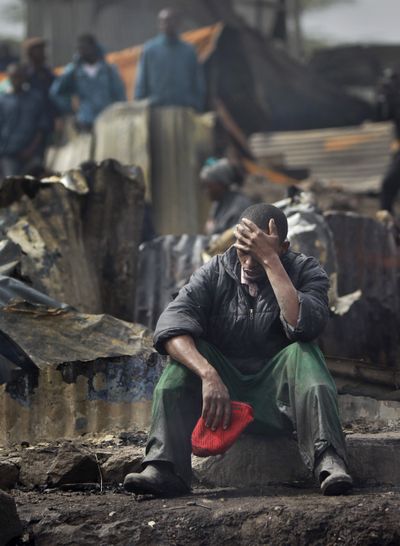
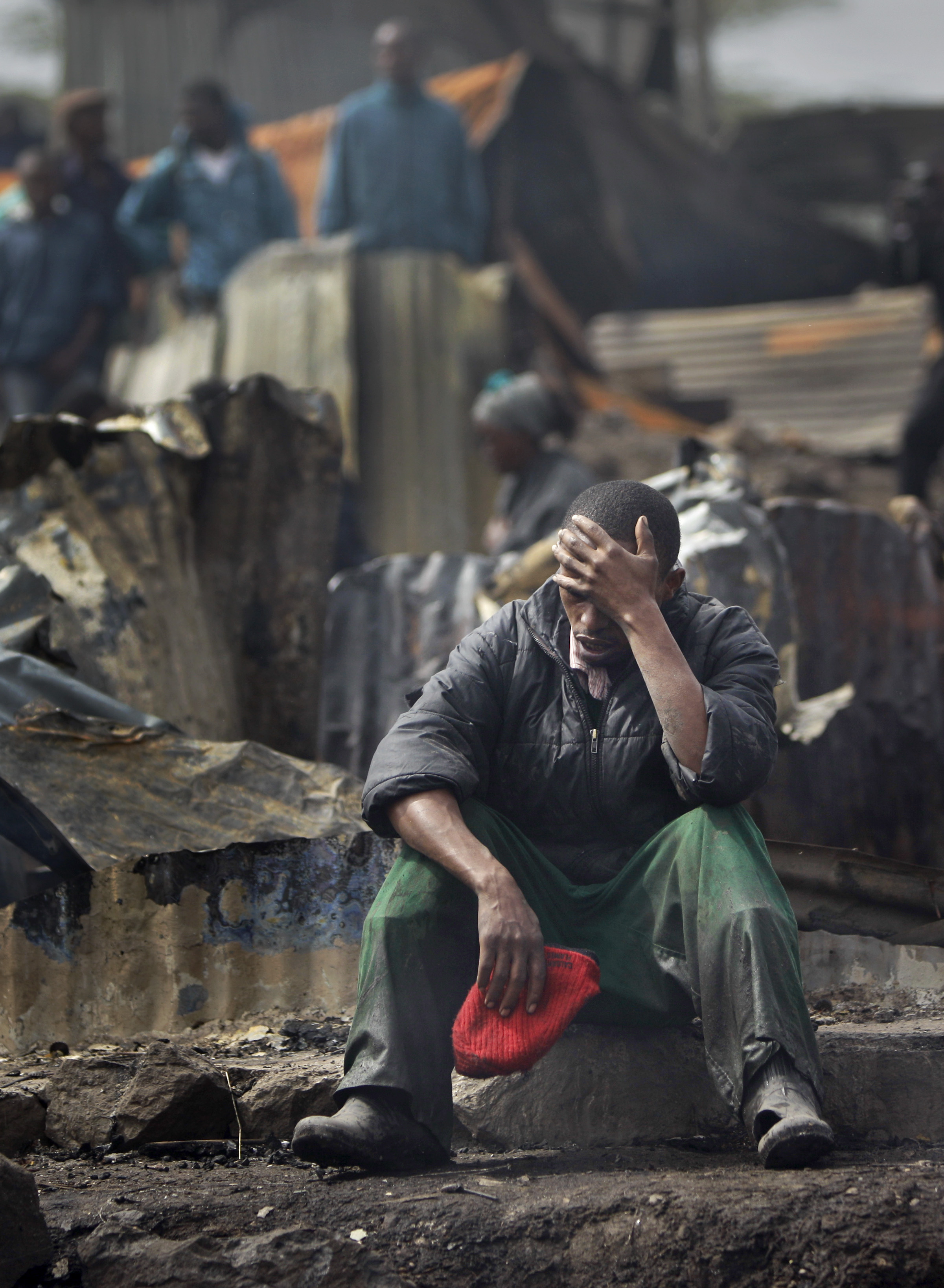
NAIROBI, Kenya – A leaking gasoline pipeline in Kenya’s capital exploded on Monday, turning part of a slum into an inferno in which at least 75 people were killed and more than 100 hurt.
Flames leapt out from the pipeline in a radius of some 300 yards, setting shacks ablaze and incinerating scores of people. Reporters later saw clusters of charred bodies and blackened bones at the site. Some burned bodies floated in a nearby river filled with sewage. Homes had been built right up to the pipeline, the residents said.
“I’ve lost count of the number of bodies,” said Wilfred Mbithi, the policeman in charge of operations in Nairobi as he stood at the scene. “Many had dived into the river trying to put out their flames.”
Red Cross official Pamela Indiaka said the Red Cross is providing body bags and has dealt with 75 bodies so far. The death toll from the blast may still rise.
Nearby, a young woman clawed through smoldering timbers, screaming in grief. Others wandered by the remains of the inferno, frantically dialing phone numbers that didn’t go through or staring around in disbelief.
Fires still smoldered among the twisted wreckage of corrugated iron sheets and scattered possessions.
Resident Joseph Mwangi, 34, said he was feeding his cow when people went running past him, calling out that there was a leak in the pipeline. He said others started drawing fuel and that he was going to go and get a bucket and get fuel too when he heard an explosion around 9 a.m. By then fuel had leaked into the river and parts of the river had also caught fire. People in flames were jumping into the fiery, stinking mess, he said.
Moments after speaking to the Associated Press, Mwangi discovered two small charred bodies in the burnt wreckage of his home.
“Those were my children,” he said blankly, before collapsing on the ground sobbing.
Another man, Michael Muriuki, found the body of his daughter still smoldering. He ran to the river for water to put her out. He took a deep breath and struggled for control before speaking.
“Her name was Josephine Muriuki. She was five,” he said.
At the time of the explosion, the narrow, twisting alleyways would have been packed with people on their way to work or school who had stopped to try to scoop up fuel. The flimsy homes of corrugated iron sheets would have offered little resistance to the blast.
The Red Cross was conducting search and rescue operations and had set up two tents for first aid and counseling, said Bernard Magila, who was helping the operation.
At least 112 burn victims have arrived so far at Kenyatta National Hospital. Many children were among the victims. Most had burns covering more than a third of their bodies, he said. Some were unrecognizable, said St. John’s Ambulance Service spokesman Fred Majiwa.