
Food lobbying groups focus less on health
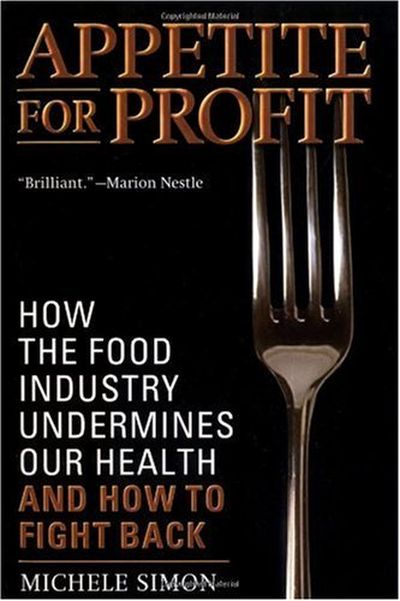

Editor’s note: This is a continuation of a piece about food health and efforts to combat large-scale marketing by food companies or food lobbying groups, especially those that promote unhealthy foods.
In Part 1, we talked about the book, “Appetite for Profit: How the Food Industry Undermines Our Health and How to Fight Back,” and the important work being done by its author, Michele Simon.
The public health lawyer, activist and founder of Eat, Drink Politics, has taken on a variety of large food and beverage companies which she believes are threatening public health and food justice.
Her book unfurls the propaganda strategies of big food, fast food and industrial agriculture, many of which are taken from the playbook of Hitler’s minister of propaganda, Joseph Goebbels. She details the influence that Kraft Foods, Coca Cola, Safeway, ConAgra and others have had on our so-called representative democracy — which has helped to create not just an obese USA: 1.5 billion worldwide are in the battle of the bulge (and coronary disease), according to writers like Raj Patel, author of “Stuffed and Starved: The Hidden Battle for the World Food System.”
“Appetite for Profit” also pulls back the veil on how we got to this point of McDonald’s and PepsiCo getting their greasy talons on our children, directly in schools, with a Faustian bargain of struggling school districts allowing companies to distribute junk food and sugary beverages, as well as letting them advertise their subsidiaries like Pizza Hut, Taco Bell, KFC.
The book tells a complex story of the undue influences against the health and welfare of the most vulnerable of us – the poor and the struggling middle class, especially single parents and young children.
The Grocery Manufacturers Association has more than 140 members representing every major food manufacturer with combined sales of more than $680 billion. This cabal of food industries opposes any state bill or citizens initiative calling for the restriction of the sale of junk food or soda in schools, in addition to other nutrition policies created by civil society and objective bodies looking to turn around out youth’s bad eating and poor health.
Then there’s the ‘other’ NRA – the National Restaurant Association, with 60,000 companies controlling more than 300,000 dining establishments. Her book indicates that this group doesn’t want nutritional information of foods available to consumers.
Two more heavyweights Simon illustrates in her book are the Center for Consumer Freedom and American Council for Fitness and Nutrition. The former is a lobbying engine for the big three influencers on political campaigns and focuses more on restaurant, food, beverage, and alcohol industries vs. the health of consumers of these products.
The CCF calls doctors, nurses, parents’ groups, nutritionists and lawyers like Simon radicals, or more specifically, “food cops.”
Coca-Cola and Kraft Foods support ACFN, which also has ties to the Grocery Manufacturers Association and the National Restaurant Association, along with the Association of National Advertisers. ACFN creates industry-friendly “articles” in both the academic press and commercial media. The corporate backing of those authors is usually left out of the byline.
The battle line healthy food advocates like Simon defend includes the contradictory issue of fruit and vegetable prices going up 40 percent since 1980 while junk foods have gone down 40 percent.
“Children are the most vulnerable” to the very deep psychological warfare tactics employed by these marketing strategists working for the fast-food, junk food and factory food industries. “It’s not a level playing field because parents and food and nutrition advocacy groups are up against their unlimited marketing budgets.”
Simon advocates a whole food, plant-based diet, and this war she has been fighting for more than 15 years is not about the heirloom tastes of foodies or the locavore movement. It’s about the unfair pricing strategies of these industries, where the 7-Elevens and grocery stores are placed in neighborhoods, and the power of branding. “The irony is the McDonald’s brand is so powerful that if the Golden Arches logo was ever associated with organic carrots, kids would eat organic carrots.”
Her book reveals the many battles taking place in the War Against Bad Food and Good Marketing, including figures about how we’re eating more, and worse.
The average American’s daily caloric intake includes:
* 51 percent from processed foods (cereals, breads, crackers, chips, cookies, cakes, soft drinks, etc.)
* 42 percent from meat, eggs, or dairy.
* 7 percent from vegetables, fruits, legumes, whole grains, nuts, and seeds - foods the human body needs to prevent disease and are optimum for overall health.
* 24.5 percent overall increase (530 calories), between 1970 and 2000.
Collectively, we might think we are meat-centric and dairy-loving omnivores, but for much of our evolutionary pattern, humans consumed a variety of plants, seeds and fruits, comprising more than 65 percent of our diets. We also walked a whole lot more than we do now (urban planning classes teach us that 450 yards are the average total walking distance the average suburban American accomplishes in a given day).
Simon offers ways to fight the bad food industry with organizing, lobbying and legal tactics. “We don’t need more data,” she said. “We have to fund advocacy, and we can’t be afraid to lobby.”
Her book is a primer on the three-pronged skewer we need to take the bite out of the food lobby – policy, politics and lobbying.