
President leaves Yemen
Saleh vows to return after he gets treatment in U.S.
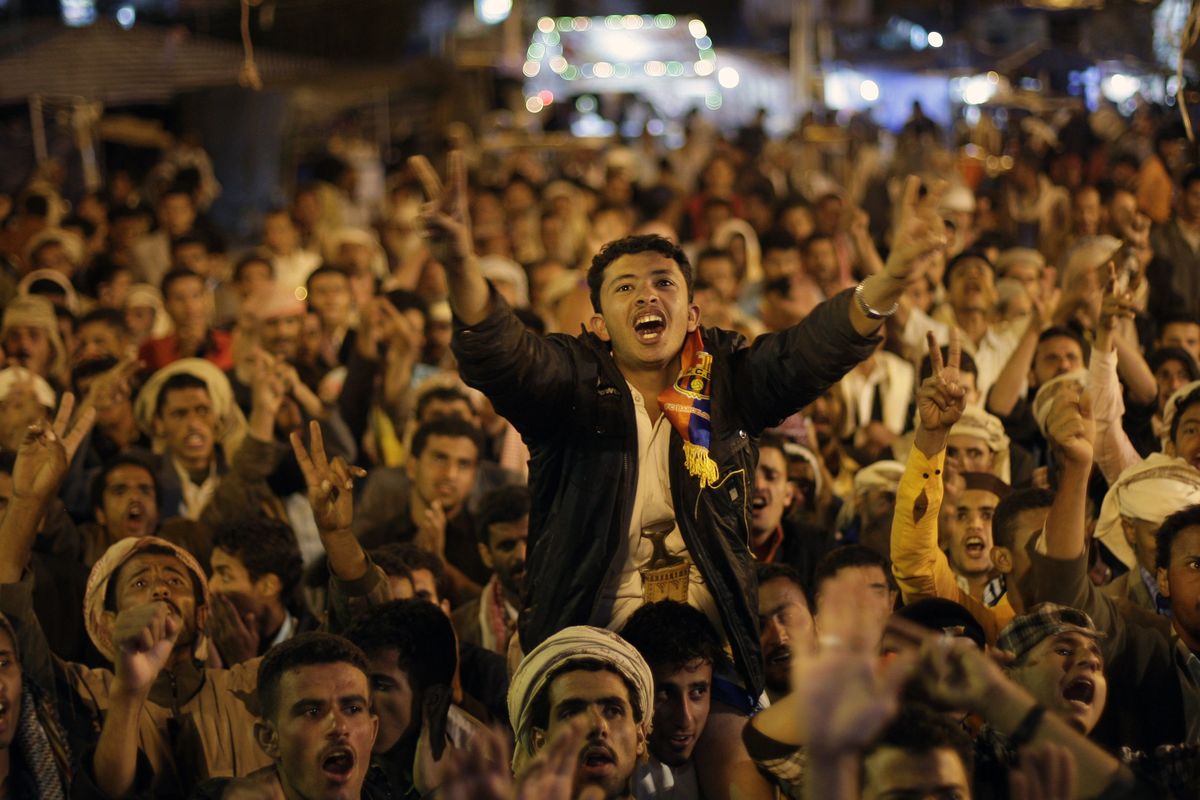
SANAA, Yemen – Yemeni President Ali Abdullah Saleh left his battered nation Sunday for medical treatment in the United States, asking his countrymen to forgive him for years of turmoil and vowing to return to the Arabian Peninsula state he has ruled for decades.
It was not immediately evident what effect Saleh’s absence from Sanaa would have on a government weakened by protests, resurgent al-Qaida militants, secessionist rumblings in the south and a rebellion in the north. Saleh’s departure was characteristic of his brash, often unpredictable nature that has long kept his friends and enemies off balance.
“I will leave for treatment in the United States, and I will return to Sanaa as head of the General People’s Congress party,” Saleh was quoted by the state news agency as telling party officials in the capital. “I ask for pardon from all Yemeni men and women for any shortcoming that occurred during my 33-year rule, and I ask forgiveness and offer my apologies.”
The State Department confirmed that Saleh’s request to travel to the United States had been approved. “As we have indicated, the sole purpose of this travel is for medical treatment and we expect that he will stay for a limited time that corresponds to the duration of this treatment,” a spokesman said.
Saleh, who was severely wounded in a bomb attack on his compound in June, flew to Oman on his way to the U.S. The day before, parliament granted him immunity from prosecution. The president left behind a family he has shrewdly kept at the center of power, including his son, Ahmed, and nephews and a brother who oversee military and intelligence agencies.
“His son still controls the Republican Guard and his brother and nephews control Central Security and Special Forces,” said Basheer Samawi, an anti-government activist. “We will still be ruled by Saleh, but only by different faces.”
Saleh handed much of his authority to Vice President Abdurrab Mansour Hadi in December after an immunity deal was backed by the U.S., Saudi Arabia and other Persian Gulf countries. On Sunday, Saleh vowed to return to Yemen before presidential elections in February, which Hadi, the only candidate thus far, appears certain to win.
Saleh spent months in Saudi Arabia recuperating from injuries from the assassination attempt. Many thought the president would be outmaneuvered by his political opponents and other enemies, but Saleh returned home defiant. The nation’s problems, however, have escalated as Saleh has been unable to defeat rival tribes, mutinous soldiers and al-Qaida fighters who have overrun towns and villages.
International pressure against him has intensified since protests against his rule began early last year as part of a wave of uprisings that swept the Middle East and North Africa. Saleh had been a close U.S. ally against al-Qaida, but the Obama administration became critical of him after Yemeni security forces repeatedly attacked peaceful protesters across the country.
Tens of thousands of protesters were outraged by the immunity deal, saying Saleh should be held accountable for the deaths of hundreds of street demonstrators. Many of them chanted, “It is our duty to execute the butcher,” as Saleh was preparing to leave Sunday.
A former tank commander, Saleh first announced in December that he would seek medical treatment in the U.S. He abruptly canceled weeks later after Washington appeared skittish at the prospect of greeting an autocrat at a time of regional upheaval.