
Two more initiatives likely to make ballot
Charter schools, tax hikes at issue
OLYMPIA –Two more contentious initiatives on familiar topics are likely to be added to Washington’s general election this fall.
Along with ballot measures for same-sex marriage and legalized marijuana, already guaranteed spots on the Nov. 6 ballot, voters almost certainly will be asked if they’ve changed their minds about charter schools or requiring supermajorities for the Legislature to pass tax increases.
Voters have rejected charter schools three times before, and the Legislature gave a similar proposal short shrift in its latest session. They have approved supermajorities for taxes four times, although the Legislature has amended and suspended some past provisions and the issue is headed for the state Supreme Court.
Both have passionate supporters and opponents, and the measures could add to the mix of contentious issues spilling over into races for offices like governor, where Republican Rob McKenna is a supporter of charter schools and Democrat Jay Inslee is an opponent.
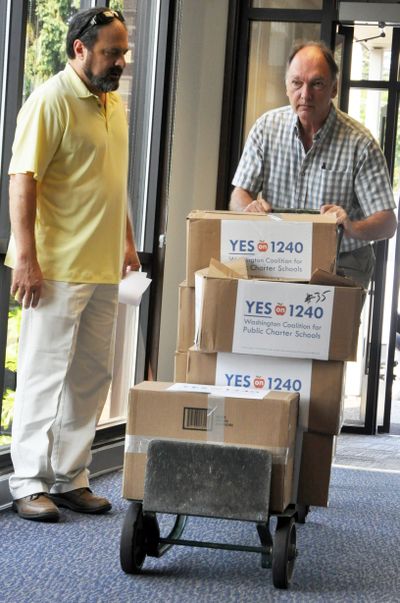
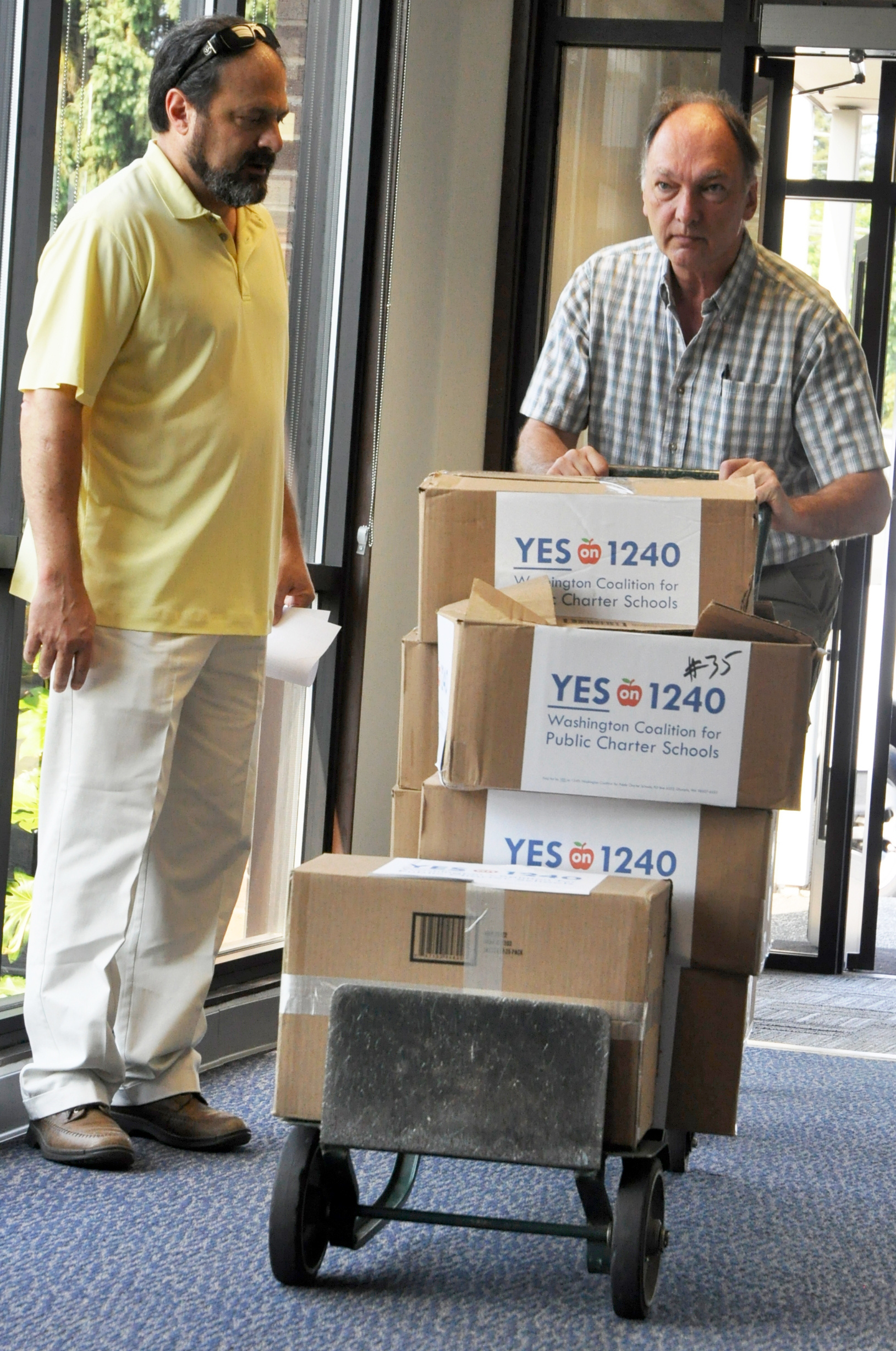
Supporters of Initiative 1240, which allows public school districts to set up charter schools, turned in some 350,000 signatures on their petitions Friday morning, 100,000 more than the required minimum of just under 242,000 signatures from registered state voters.
State Rep. Eric Pettigrew, D-Seattle, said the measure differs from past unsuccessful efforts by imposing stronger controls on how the schools can be set up and administered. Public school districts and nonprofit organizations will be able to establish a total of 40 charter schools over the next five years if the measure passes.
“For students who need flexibility in curriculum and environment, charter schools show a lot of success,” Pettigrew said.
Gov. Chris Gregoire said Friday morning that the charter schools have an uneven record, with some successes and some failures over the past two decades, and she supports other innovations to help students. Charter schools would take money out of the rest of the public school system at a time when the state may be searching for as much as $1 billion to add in the next biennium, she said.
Pettigrew said he respects Gregoire and is supporting Inslee but disagrees with them on charter schools. Instead, he agrees with constituents who tell him students need more choices. “I’m accountable to those folks.”
Later Friday morning, Tim Eyman and his two chief lieutenants, Mike and Jack Fagan, of Spokane, turned in more than 318,000 signatures for Initiative 1185, a cushion that also is large enough that I-1185 is all but assured a ballot spot.
It’s the fourth ballot measure they’ve sponsored that requires the Legislature to approve any tax increases with a two-thirds supermajority, and the most recent one remains in place. But after two years, the Legislature can amend a voter-passed initiative with a simple majority.
That’s what happened in 2010, when Democrats in both chambers suspended the supermajority requirements, then approved tax increases on several items, including soft drinks and cigarettes.
At a makeshift press conference at the back of the truck containing boxes of their petitions, Eyman and the Fagans warned that the Legislature might repeat that move if voters don’t pass I-1185.
But they faced challenges from opponents, who contend I-1185 is being funded by large corporate interests that want to protect themselves from tax increases.
Eyman dismissed suggestions that the state Supreme Court could rule an initiative-passed supermajority rule is unconstitutional. Two cases are headed to the high court involving the current law. The court has had a chance to rule on the constitutionality of the tax supermajority before, he said, and refused.
But Gregoire said previous court decisions turned on the timing of the challenge to the law, and the issue wasn’t “ripe” at those times. Now the court faces questions about taxes that have been approved, and they should decide whether a supermajority for taxes would need to be adopted by a constitutional amendment rather than a statute.
“That’s where the solution lies,” said Gregoire, who added she doesn’t believe the current law or the initiative is constitutional.