
Adapting critical in spring sports
Unpredictable weather requires backup plans
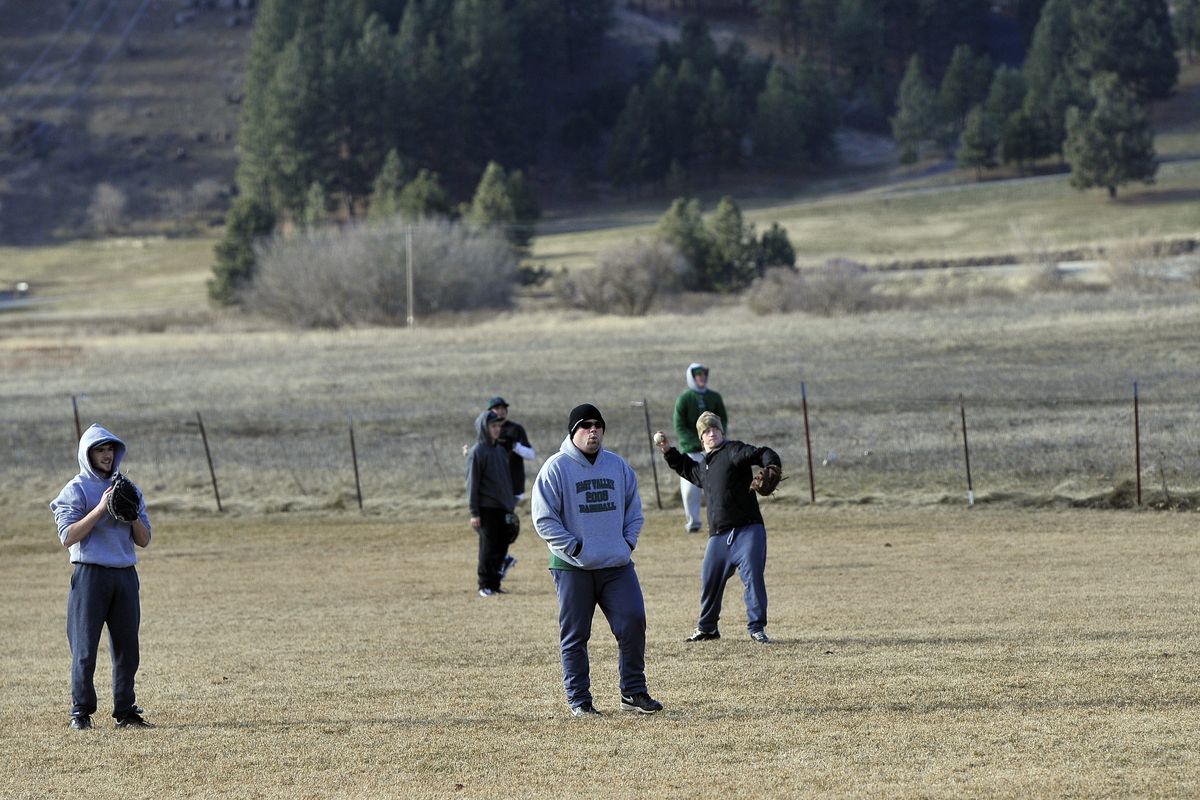
You may not have noticed, but high school spring sports just finished their second full week of practices and are preparing to begin actual play this coming week.
Greater Spokane League softball has a full slate of games scheduled for Tuesday, and baseball does the same Thursday – although there are better-than-average odds on the published schedule being out of date by Friday. West Valley hosts East Valley and Eastmont in a track and field meet Thursday and its annual West Valley Invitational meet a week from today.
All this while the weather forecast calls for subfreezing temperatures in the overnight forecast for Monday and a chance of snow for Tuesday. It’s a painful prospect for anyone who has ever tried to hit a ball with a bat in cold weather and felt the ringing sting that vibrates up from your hands.
Such is the wild, weird, world of spring sports in the Inland Northwest.
Coaches find ways to work around the weather while coaches for baseball and softball spend a great deal of time grooming their fields to make them at least playable, if not pretty.
At Freeman High School, for example, the track team took to the halls of the school for their first-week workouts. Anyone staying after school had to dodge sprinters running intervals and pole vaulters learning the basics of their event.
Tennis players were more apt to get their workout on the end of a snow shovel than they were using their racquets.
Golfers? Well, golfers are used to not seeing a golf course until significantly later in the spring – once the area’s courses actually open for play.
Soccer?
“We were inside in the gym the whole first week,” said Andres Monrroy of his boys soccer workouts at Central Valley.
With both boys and girls basketball teams preparing for last weekend’s state Class 4A tournaments, where both earned second-place trophies March 3, it got crowded in the CV gym.
“We had to practice from 8 p.m. until 10 p.m. every night,” Monrroy said. “I generally make cuts on Wednesday, but because we couldn’t be out on the field I waited until Friday to make those cuts. Luckily, we get the chance to go practice Friday at the Spokane Shock’s practice facility.”
Making cuts based on how soccer players look working out on a gym floor is a little like making cuts for a basketball team based how players look in a game of H-O-R-S-E.
“It just didn’t seem fair to cut on Wednesday,” Monrroy said. “It was a little better after we practiced Friday.”
Monrroy said he was bracing himself for another week in the gym when he looked out Saturday and saw his practice field still covered with snow.
“My heart sank,” he laughed.
But by Monday the snow was gone and the field was in good condition, all things considered. The frost layer had thawed, allowing the snow melt to seep into the ground. And while the grass was just beginning to come back to life, it offered firm footing without a trace of mud.
With a young team that should feature a good amount of speed, solid footing is a good thing for early-season workouts.
Softball and baseball?
The second week of spring has been kinder to West Valley softball coach Paul Cooley this season.
Cooley and the Eagles practice and play their games on Smith Field, sometimes known as Lake Smith Field for its early spring water content.
“We’ve had water over the entire field some years,” Cooley said, cringing at the memory.
What’s worse, the field just would not drain. Instead, Cooley and his players had to wait for the water to simply evaporate.
The problem, Cooley explained, was in the dirt.
“What they brought in and put down on the field was, pretty much, just a bunch of clay,” he said. “We tried to bring in a plow to break it up, but it didn’t help.”
Add water and the clay turned into a solid, impenetrable layer that prevented water from doing what groundwater is supposed to do no matter how hard or how often the coach and players raked the field.
Instead, over the past few years Cooley has worked a soil conditioner into the infield. Not only has it helped make the infield smoother, it now drains.
“I don’t know why or how it’s done it, but it’s actually helped to break down the clay,” he said. “It’s taken a couple years, but it’s worked its way down and broken it up so that it drains pretty well.”
Smith Field boasts one of the best-looking infields in the area and, more importantly, Cooley and the Eagles were busy working on infield defense instead of landscaping.