
Do the Waggle: Backyard beekeeping growing in popularity
Buzz growing for honeybee courses
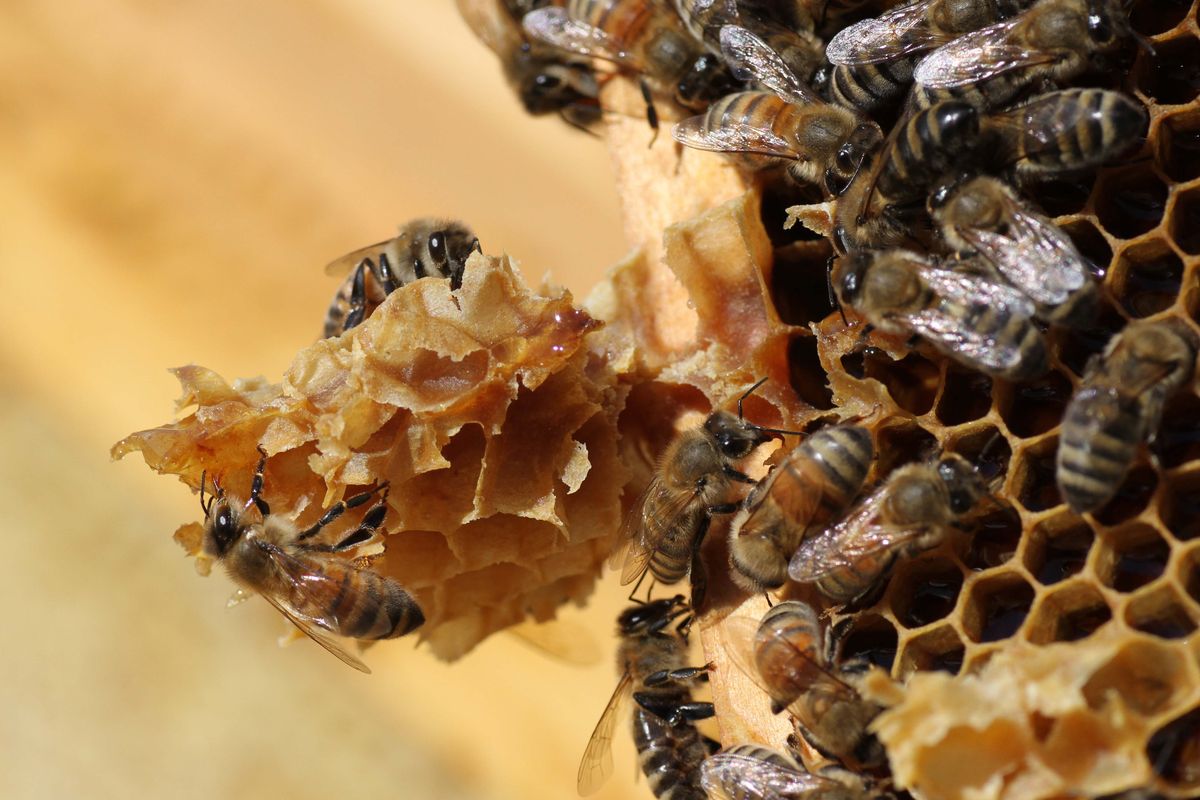
Not many people know the Waggle, but thanks to classes across the West, more humans are learning the secret dance of the honeybees, which communicates the location of nectar to other honeybees.
Beekeeping courses and apiaries are becoming more popular as the agriculture community and gardeners recognize honeybees’ significant importance to crops, produce and flowers—and as honey prices rise.
“Our classes are always full,” says Ruth O’Neill, Research Associate with the College of Agriculture in the Wanner Crop Extension Lab, Plant Sciences and Plant Pathology at Montana State University in Bozeman. “In the last year, we’ve offered nine classes and four workshops. These classes are highly popular, with 20 to 30 people each. We had one class with open enrollment and had 100 people show up.”
O’Neill and researcher professor David Baumbauer conduct beekeeper courses around western Montana. Now in the program’s sixth year, O’Neill says, they’ve had to enlist help from MSU’s Extension Service to meet the demand for more classes.
Last year, O’Neill and another researcher received a grant from the Montana Department of Agriculture to start more beekeepers’ education programs where they discuss starting up beekeeping ventures, and diseases and hives’ production. “We’ve done a lot of honeybee education,” she says.
Courses include instruction on installation of packaged bees, beehive management, pests and diseases affecting honeybees, and honeybee biology.
The educators tell eager, soon-to-be beekeepers that selecting a suitable apiary site includes finding a location that guarantees the bees nectar and pollen sources within two miles, while recognizing that predators—think Yogi and Boo Boo—and vandals need to be kept out. The apiary needs a windbreak and nearby water source.
O’Neill explains that while some people move their hives to warmer climates in winter, it’s possible to over-winter hives.
“Bees will over-winter here,” she says, “ideally inside a barn. Typically, bees can over-winter with insulation around the hive and under the outer cover of the bee box, leaving openings for ventilation, of course. I use Styrofoam but some people are using shrunken wool, very thick wool for insulation.”
She notes that because the bees store the honey for their own food, the longer the winter the more honey the bees need for their own consumption.
Despite the growing interest in beekeeping, buzzing bees are becoming a less-frequent summertime tune across the West, which means fewer native and domestic plants pollinated—a significant problem for farmers and gardeners. Well-documented hive collapse, called Colony collapse disorder, and ever-growing suburbs and ranchettes encroach upon wild territory and ag lands, diminishing bees’ ability to survive and thrive. Some pesticide use damages bees and their environment.
Other factors, including territorial and aggressive bee species also reduce honeybee populations—which are actually not native to the continent.
While some 20,000 species of bees buzz the globe, honeybees, a subset of the genus Apis comprise only seven of those species, of which there are 44 subspecies of honeybees. Honeybees’ main business, of course, is to produce and store honey in a nest made of wax.
Scientists find that the common honeybee, also called the European or Western honeybee, is not native to North America. Caves in Spain are decorated with bee art showing a person harvesting honey from a hive; the cave drawings are estimated at some 10,000 years old. Researchers estimate that the first beekeepers worked some 3,500 years ago.
Honey is widely recognized as the world’s first sweetener and fermentation product. It also offers antimicrobial properties. Wax is used as a sealant, lubricant and for numerous cosmetic uses.
European colonists’ imported crops that were depended upon honeybees for pollination, so Apis colonies were imported in the 1600s. By the mid 1850s, Mormon pioneers had brought honeybee colonies to Utah by wagon trains to assist with crop production. Soon after, colonies arrived on the West Coast aboard ships.
Today, large-scale beekeeping operations charge to transport bees and their box hives to croplands—a $14 billion pollination industry world wide. Yet it’s the small-time beekeeping operations that are taking off.
In Montana alone, according to Montana Ag Statistics some ten million pounds of honey was produced in the state to a value of $12 million in 2009. And that amount of sweet nectar is increasing. The Montana field office of the USDA’s National Agricultural Statistics Service found that in 2011, apiaries with five hives or more produced 13.3 million pound of honey, and increase of 15 percent from the previous year.
Record-high honey prices of 2011, at $1.64 per pound contributed to interest in beekeeping too. The report notes that in 2010, there were 157,000 hives in Montana, where the Montana Department of Agriculture allows five colonies per hobby beekeeper and two hobbyists per household. After that, beekeepers must register with the state’s ag department.
It’s notable that it takes some two-million bee visits to flower to make one pound of honey, and the life work of a bee is only one-twelfth of a teaspoon of honey.
The statistics revealed that Montana is among the top 10 states for honey production, at fifth in 2010. Beekeeping clubs are organizing all over the west, such as the Bozeman-based Gallatin Valley Beekeepers. The organization maintains a blog with helpful information and photographs at www.bigskybee.com. Discussions range from repairing wooden-ware bee boxes, to learning about dividing colonies, swarm management, and queen rearing.
Blogger/researcher Baumbauer posts upcoming lectures and yet-to-be-determined dates of 2013 beekeeping courses and classes. He writes beekeeping articles for Growing for Market and Bee Culture magazines.
“I’m a hobby beekeeper in Bozeman,” Baumbauer says. “I’m a greenhouse manager and small farm manager that also teaches classes in plant production and market gardening for Montana State University. Desperate for information on keeping bees in northern climates, I co-founded the MSU beekeeping workshop in 2004. Since then, I have given many beekeeping presentations throughout Southwest Montana.”
As more urban beekeepers launch operations, experts suggest connecting with neighbors who can help make a more hospitable environment for bees. People should avoid monoculture yards by letting dandelions and clover grow, and not mowing years constantly. Of course, avoiding pesticides and planting a variety of flowers, trees and vegetable garden crops is important too.
“Beekeeping is really a lot of fun,” says O’Neill.
While the waggle dance becomes more popular across the West, so does the bees’ Tremble Dance in which “receiver bees” are recruited to collect nectar from the waggle dancers as they return to the nest, to the care of some 150,000 noncommercial beekeepers in the U.S.