
Survivor remembers Pearl Harbor attack
‘Everything you heard … is what I saw’

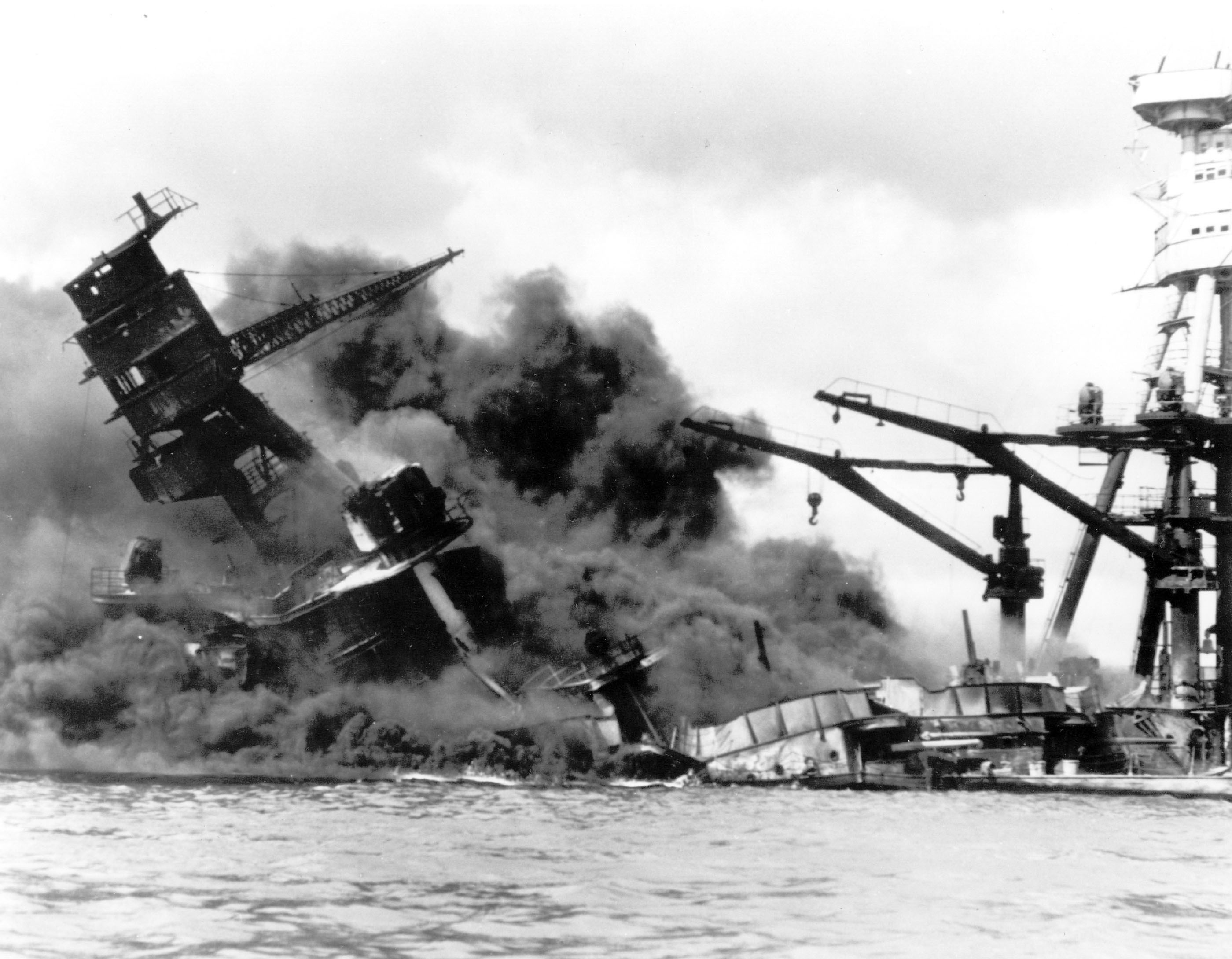
SACRAMENTO, Calif. – Glenn Sorensen was wiping down his car that December morning on Oahu, a 1937 Buick that, to this day, was the best he’d ever driven. That black sedan even took a bullet for him. Three, in fact. He’s holding one of them now, squeezing it between the fingers of his left hand, and he’ll tell you he’s the luckiest man he knows.
Sorensen, of Sacramento, is 100 years old, born on the day Germany invaded Belgium in the War to End All Wars. Twenty-seven years later, he looked to a sky filled with warplanes above Hickam Field and Pearl Harbor, Hawaii, and watched as the world changed again.
Ceremonies today will honor those lost on Dec. 7, 1941, the day the Japanese navy launched the massive surprise attack on Pearl Harbor that thrust the United States into war.
“Everything you’ve heard about Pearl Harbor is what I saw,” he said.
On a recent Friday at his Sacramento home, Sorensen apologizes that he doesn’t hear as well as he once did, the likely toll of dozens of bombing missions and nearly 60 years in the cockpit (“Nobody knows the western U.S. by air better than me,” he boasts). Sorensen was 80 when he reluctantly gave up flying 20 years ago.
His voice was quiet but strong, his tone gracious but circumspect about that morning so long ago, when he was a young Army Air Corps lieutenant at Hickam Field, a B-17 pilot just months out of flight school.
“I look up in the sky and it’s full of Japanese airplanes,” he said from his recliner tucked in a corner of his living room. After the first attack, Sorensen climbed into his Buick, speeding for the flight line and awaiting aircraft. A dozen new B-17 Flying Fortresses were arriving that day. He was too late.
“All of our planes and hangars were destroyed. I was strafed during the second attack,” Sorensen continued. “They were also dropping bombs and strafing the field.”
Three of those rounds struck Sorensen’s sedan, but somehow missed him.
Many others were not as fortunate.
By the end of the day, more than 2,400 service members were dead; another 1,400 or more wounded; much of the United States’ Pacific fleet in flames or sunk. The next day, Dec. 8, America was at war.
“We lost quite a few people. I was lucky to get through,” Sorenson said. “The Navy was hit very, very hard.”
Sorensen flew missions for days after the attacks, searching for the wounded and the dead.
He would go on to fly 84 bombing missions in the South Pacific as a member of the Army Air Corps’ 42nd Bombardment Squadron. They included sorties during 1942’s pivotal Battle of Midway, during which Sorensen was awarded the Silver Star – the nation’s third-highest military honor for valor.
After the war, Sorensen returned to California, first to Los Angeles, then to San Francisco, and finally Sacramento.
He started a family, then founded and grew a business. By the time Sorensen retired in 1978, his company, California Liquid Gas Corp., had 500 retail dealers in 11 Western states – plenty of territory over which to fly his beloved Beechcraft TravelAir.
He and his wife, Vernice, celebrated 68 years of marriage before she died in 2011.
“I’ve had more luck in this life than anybody I know,” Sorensen said. “I don’t know of anybody who has had more good luck than me.”
But Sorensen’s son Glenn recalled that his father, like many of his generation, spoke little of his time in World War II.
“Growing up, he was someone who was always looking ahead instead of looking backward,” the younger Sorensen said. “Everybody who was in that situation was tested. He wouldn’t want to be a part of history, but he is. He didn’t choose to be a part of history, but he is.”