
Jordan executes jailed militants as revenge against Islamic State
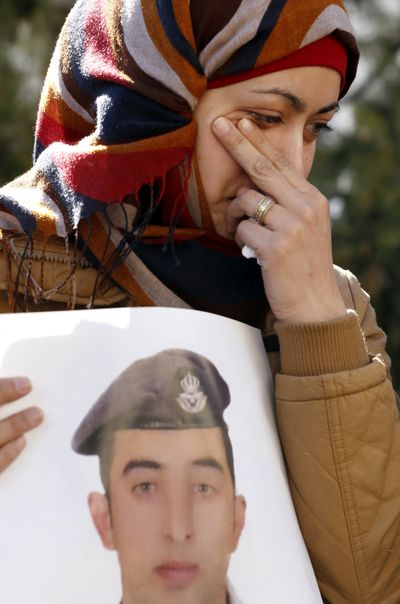
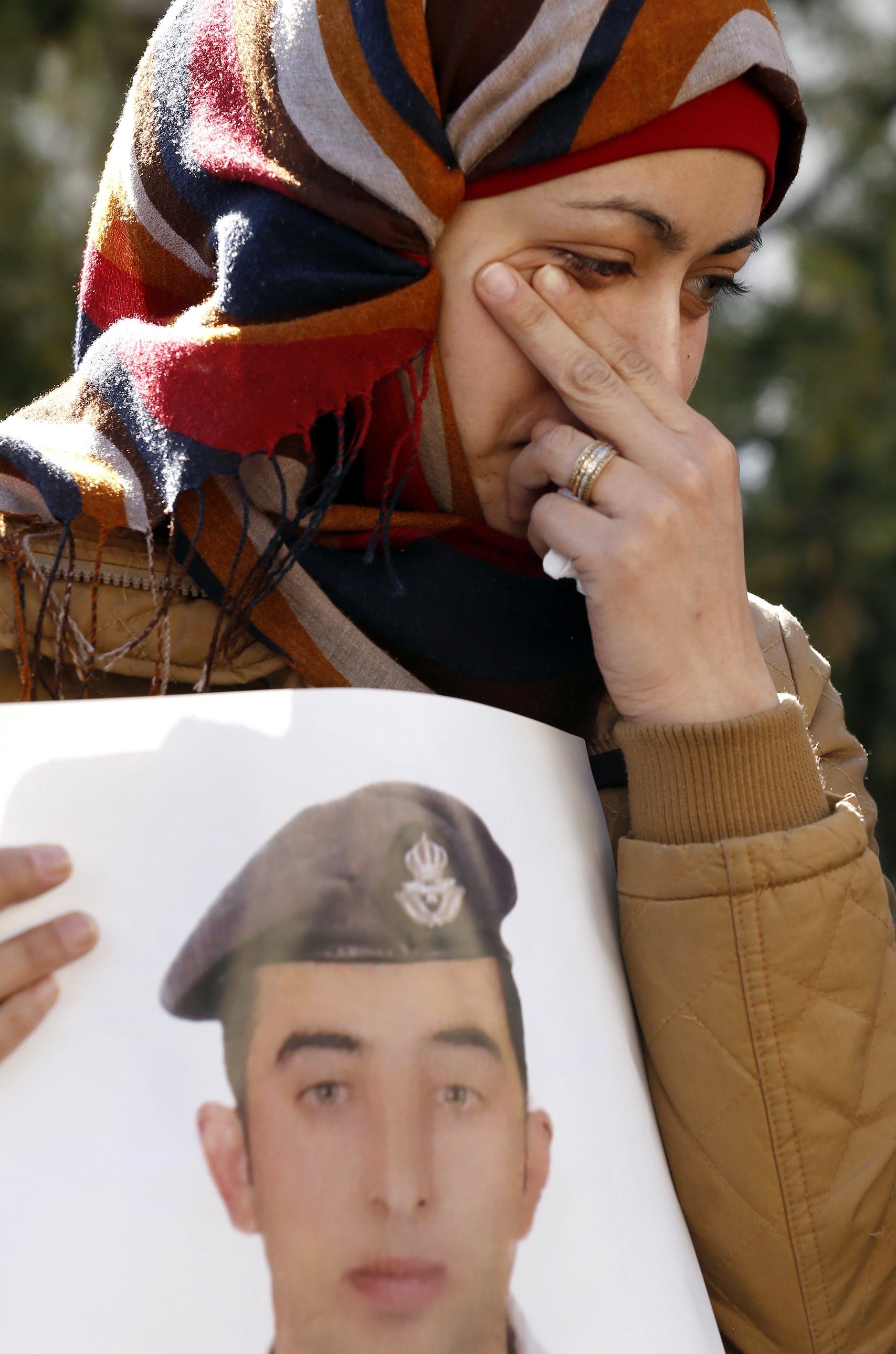
WASHINGTON – Faced with an outraged public and political commentary that it had been humiliated by the Islamic State, the Jordanian government got a little payback Wednesday at dawn, hanging jailed militants to avenge the extremist group’s killing of a captured pilot.
But analysts warned that while such a dramatic step might act as a short-term salve for a country in mourning, the move might backfire in the long run by looping a key U.S. counterterrorism ally into a cycle of savagery with a bloodthirsty militant group.
The English-speaking King Abdullah and his glamorous Queen Rania have gone to great lengths to promote Jordan as a moderate, Western-friendly beacon of stability in a volatile region – an unrecognizable description for those who know it better as a monarchy and police state with very little tolerance for dissidents.
Now, with plans for what a Jordanian army spokesman vowed would be revenge “at the level of disaster,” sympathy in some quarters is tinged with concern that Jordan risks sinking to the murderous level of the Islamic State, which is sometimes known by the acronym ISIS.
The Jordanian response also might prove awkward for the Obama administration, as one of its most reliable anti-Islamic State allies takes vengeance by stringing up suspected militants.
“Jordan has put itself in a tough position by vowing to execute ISIS prisoners in retaliation,” said Will McCants, a former government adviser on violent extremism who now heads the Brookings Institution’s Project on U.S. Relations with the Islamic World. “If Jordan delivers on its promise, it looks as bad as ISIS and ratifies the group’s brutal tit-for-tat logic. If it doesn’t deliver, it looks weak.”
Jordan defied the United States and other key allies with its willingness to negotiate with the Islamic State on a prisoner swap: failed female suicide bomber Sajida al-Rishawi for the return of 1st Lt. Muath al-Kaseasbeh, who was captured in December after his plane was downed in Islamic State territory. The U.S. opposes negotiating with terrorist groups, including ransom payments and prisoner exchanges.
Hopes pinned to such a deal evaporated Tuesday with the release of a 22-minute video showing the jihadist group had killed the pilot, reportedly a month ago, by burning him alive in a cage. It’s unclear whether the Jordanians knew al-Kaseasbeh was already dead when they demanded proof of life in recent weeks as they weighed releasing al-Rishawi, who’d been convicted of taking part in deadly hotel bombings that struck Amman in 2005.
Al-Rishawi was one of the two prisoners executed Wednesday. The other was a former close associate of Aby Musab al-Zarqawi, the founder of al-Qaida in Iraq, the predecessor organization to the Islamic State.