
Pope urges Europe to help migrants
Francis says sympathy is not enough as crisis mounts
MUNICH, Germany – The leading edge of a migrant wave began dispersing across Germany on Sunday as Pope Francis called on Europeans to not only welcome asylum seekers but also give them shelter and help them begin new lives.
Amid one of the greatest human displacements since World War II, a crowd of well-wishers gathered at Munich’s train station for a second day, waving welcome signs, and the arrivals waved back – though a police cordon separated them. The migrants were escorted away for medical checks in tents set up in a square beside the station.
A divided Europe is groping for a coherent response to the crisis, with policy and practice gyrating wildly from day to day, country to country. The scale of the crisis has led some countries previously reluctant to accept refugees to soften their stance, particularly more prosperous ones.
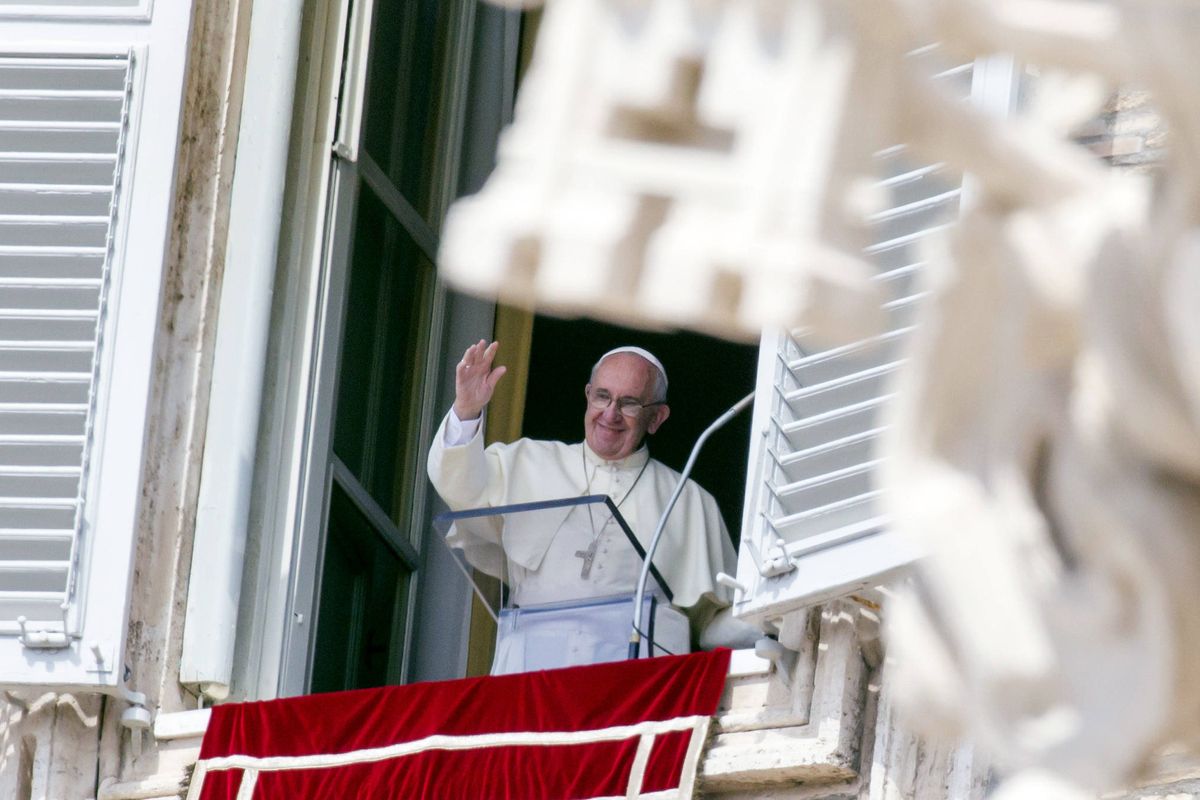
In St. Peter’s Square, the pope told a Sunday gathering that it was not enough to merely sympathize with those brought to Europe’s shores by convulsions of war and hardship.
“May every parish, every religious community, every monastery, every sanctuary of Europe, take in one family,” the pope said, according to Vatican Radio. He added that the Vatican would take in two families.
“The Gospel calls us to be close to the smallest, and to those who have been abandoned,” the pontiff said.
Italy has nearly 120,000 people who were brought to its shores after rescue at sea and who are hoping for asylum in Europe.
An Italian cardinal calculated that the parishes in the predominantly Roman Catholic country could practically host them all.
With more than 27,000 parishes, if each parish hosted a family of four, more than 108,000 people would have shelter.
“I hope this wish comes true,” Cardinal Angelo Bagnasco told a Catholic-affairs TV program on TV2000, adding, “It gives the idea of the possibilities that are in our country.”
Over the weekend, more than 13,000 people made their way into Germany via its border with Austria, the biggest share of them from war-racked Syria, but with large contingents of Afghans and Eritreans as well.
And at the southern end of the migrant trail, refugees continued to arrive en masse in Greece, having made the short but dangerous sea voyage from Turkey. The crush has overwhelmed tiny Greek tourist islands, with clashes breaking out Sunday between migrants and police on the island of Lesbos.
From there, migrants typically head north through Macedonia to Hungary, which had taken one of the hardest stands against allowing entry. However, in recent days it has relaxed its policies for those who want to pass through the country, and organized a caravan of more than 100 buses Saturday to take migrants to the Austrian frontier.
Hungary said the bus service was a one-time measure to keep refugees on foot from clogging the roadways and posing a safety hazard. By Sunday, more new arrivals had flooded into the capital, Budapest, and tensions were again rising along with the numbers.
Germany, the chosen destination of many, sought to not let too heavy a burden fall on any region, arranging special trains and jam-packing regular ones to carry them to Dortmund in the west, Dresden in the east and Hamburg in the north.
Germany has led the way in opening its doors to the newcomers, saying it expects to receive 800,000 asylum seekers this year. In France, where there has been little organized effort to provide refugee housing, the Interior Ministry said many municipalities have offered to help place refugees.
Some of the response was galvanized by devastating photos that circulated last week of a 3-year-old Syrian boy, Aylan Kurdi, whose body washed up on a Turkish beach after he drowned along with his mother and 5-year-old brother as the family tried to make the crossing to Greece.
Still, the window for entering Germany may have already narrowed. Austria said it intended to phase out the emergency measures that allowed asylum seekers unimpeded entry over the weekend, the Reuters news agency said.