
Gold helps Team North America win at Team Challenge Cup
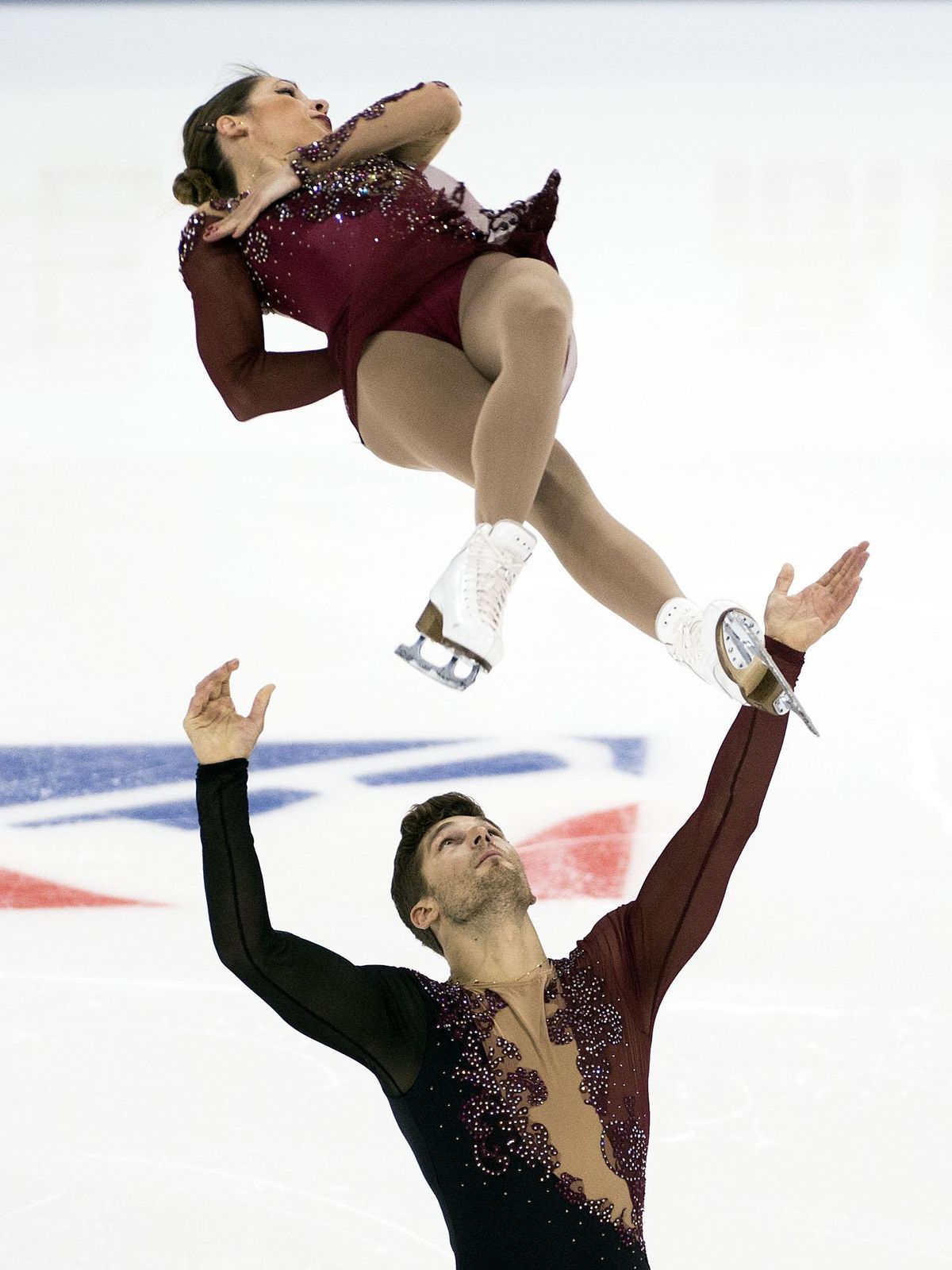
After losing the lead won earlier in the day, Team North America needed a boost Saturday night. Then Gracie Gold happened.
After feeling like she let her team down on Friday, Gold ripped off a masterful performance and rallied Team North America back into the lead with score of 142.00, which was the best ladies performance of the night at that point.
“It felt great because it just felt more free. I thought, ‘OK. Let’s just have fun,’” she said. “It’s kind of a redemption … especially after yesterday when I really kind of dropped the ball.”
Team North America won the inaugural Team Challenge Cup with 892.42 points. Team Europe scored 848.06 and Team Asia finished third with 820.22.
North America Team captain Kristi Yamaguchi said she felt privileged to coach the group, including Gold.
“They left it all out there. It was great to see,” Yamaguchi said. “That was so huge for Gracie, not just for the team. She really did start that momentum.”
Two skaters later, U.S. champion Adam Rippon took the ice and fell on his attempt of a quadruple lutz. But he recovered to post the highest men’s score at that point with 166.68.
“I went for everything. That’s what I’m proud of,” he said. “I tried to fight my hardest right to the bitter end. I’m really proud that I was able to kind of come through for my team today.”
The performances pushed Team North America ahead despite Japan’s Shoma Uno later hitting another quadruple flip, which is the only the second time the jump has been landed in competition – Uno owns both. Uno scored a 192.92, a personal best, for the highest men’s score of the night.
American Jason Brown followed Uno with a 181.50 which earned him a standing ovation from the Spokane Arena crowd of 5,919. The score was his second personal best of the weekend after coming off an injured back.
“I wanted to make a splash,” Brown said. “I am so thrilled to add two personal bests … to the team score.”
Russia’s Evgenia Medvedeva, the reigning world champion, posted the high ladies score of 151.55. But Ashley Wagner finished the competition at 143.20 to seal the victory for Team North America.
“I really had to fight because I’m absolutely exhausted,” Wagner said. “My jumps were not perfect, but I got it done.”
Earlier in the day, Team North America relied on its friends to the north to secure an early lead following the dance pairs and pairs free skate.
Canadian pair Eric Radford and Meagan Duhamel showed why they have earned the world’s top ranking and helped give Team North America a 19.62-point lead over second-place Team Europe.
Even though Duhamel missed her landing on the opening triple lutz, she gave Radford the green light during the routine to attempt a quadruple throw salchow after watching a strong performance (130.46) by Team Europe’s Fedor Klimov and Ksenia Stolbova.
“I missed my first jump,” Duhamel said. “We knew how the other team skated. We said if we don’t feel good going into the throw that we do a triple. But I felt like I could still manage a decent quad, so I told Eric, ‘Just go for it.’”
They nailed it, en route to a high score of 147.48.
“It’s one of the least consistent elements we have in training,” Radford said of the quad throw. “But somehow when we get out there in competition we zero in on the feeling we need to have and we’ve been able to make it work. It’s good if you want to win.”
In the dance competition, the Canadian duo of Kaitlyn Weaver and Andrew Poje (111.56) barely edged their world top-ranked teammates of Madison Chock and Evan Bates (111.30) for the top score.
“I’m really happy with how it went,” Poje said. “After worlds being a little bit of a letdown … we were really looking forward to this competition and going out there and giving a performance that we could be proud of.”