
Researchers work to spread prized genes of Yellowstone bison
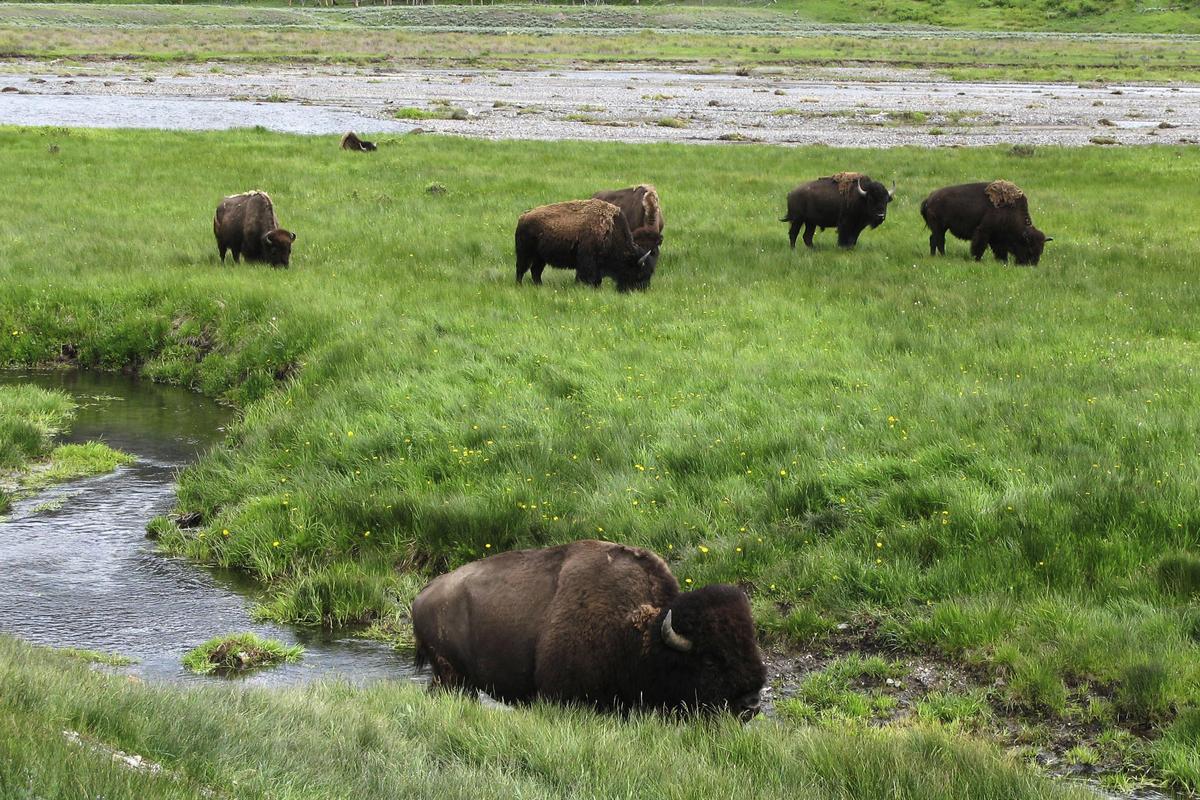
MINNEAPOLIS – Researchers have transplanted embryos originating from the bison herd at Yellowstone National Park into female bison in Minnesota in hopes of increasing the genetic diversity of herds in the state and helping to restore America’s official mammal to the landscape.
While Yellowstone bison are prized because they’re free of domestic cattle genes, experts say using them in breeding programs is difficult because they carry a contagious disease called brucellosis, which causes spontaneous abortions in pregnant cattle. Other efforts at spreading the genes of Yellowstone bison have focused on using animals descended from the park’s herd that have been certified as disease free. Transplanting embryos uses in-vitro fertilization to get around the problem.
Colorado State University animal reproduction professor Jennifer Barfield and other researchers last month implanted embryos in four female bison at the Minnesota Zoo. Veterinarians will conduct ultrasound tests in the coming months to see if the animals became pregnant. If all goes well, they’ll give birth to baby bison in the spring.
The four females are part of a larger “conservation herd” managed by the zoo and the Minnesota Department of Natural Resources. The herd would benefit greatly from Yellowstone genetics, officials said, but securing a sexually mature Yellowstone bull to breed conventionally has been impossible because they can’t be moved out of the park.
“It will also demonstrate that we can use reproductive technologies to move the Yellowstone genetics outside of the park without the threat of spreading the disease brucellosis, which has implications for bison conservation on a broader scale,” Barfield said.
Tens of millions of bison once roamed the Great Plains but were hunted to near extinction in the late 1800s. About 30,000 wild bison now roam the country. Yellowstone has the largest population so its genetics are highly diverse.