
Tyson adopting video, welfare checks in poultry operations
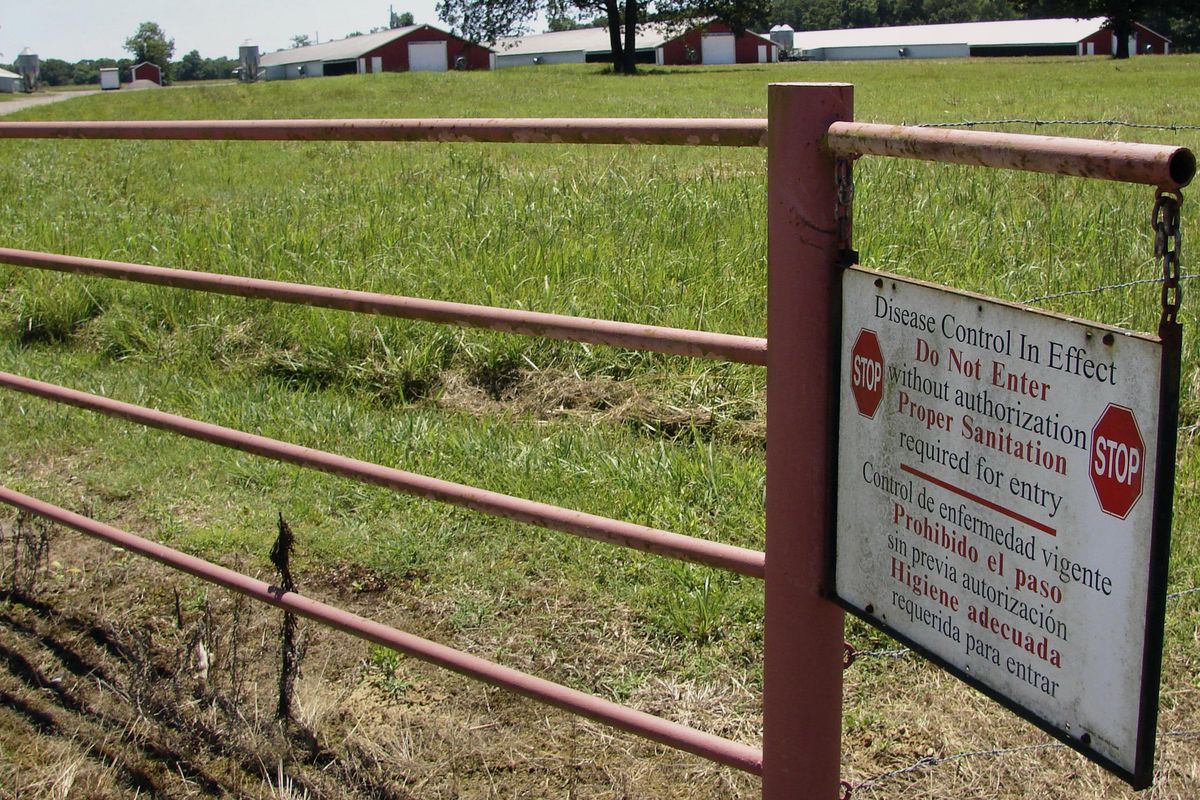
PLUMERVILLE, Ark. – Tyson Foods on Wednesday unveiled a plan to stop abuses at its facilities, but an animal rights group that routinely distributes videos of disturbing practices of agricultural abuses said monitoring slaughterhouses won’t stop other cruelty that exists within the poultry industry.
The nation’s largest meat producer said it installed cameras and hired off-site auditors to review how it handles and kills birds at its 33 processing plants. The Springdale, Arkansas-based company also plans to explore using carbon dioxide to render the birds unconscious before they are killed.
Mercy for Animals said the company hasn’t done enough.
“Chickens raised for meat are bred to grow so unnaturally fast that they often collapse under their own weight,” the group said in a news release. Once on the ground, the birds sit in their own waste and develop sores after losing their feathers.
“While we applaud Tyson for working to reduce the animal cruelty incidents on its farms, Tyson has yet to commit to adopting specific animal welfare standards that will reduce severe suffering,” said Brent Cox, the group’s vice president of corporate outreach.
Tyson Foods said its animal well-being initiative wasn’t made in response to Mercy for Animals and others who have gathered or released video showing animal abuse.
Tyson in August fired 10 workers after secretly recorded video compiled by an animal rights group showed chickens being crushed or swung by their legs and wings. Tyson terminated a contract with a farmer a year earlier after another group released video showing workers standing on birds’ heads to break their necks. Over the past year, Hormel Foods has hired third-party auditors to review hog farms after video showed some animals in very tight quarters and another animal being slammed to the floor.
“We want to learn from the opportunities and the challenges we face,” said Justin Whitmore, Tyson’s first chief sustainability officer. “If we see something come up in our system, we’ll look to have the appropriate measures in place to ensure they don’t recur.”
The Humane Society of the United States also called on Tyson to adopt a broader plan.
“It’s positive Tyson is looking at the core forms of animal cruelty in its production systems for chickens, but we are disappointed that the company is sidestepping other steps,” said Matt Prescott, the group’s senior food policy director.
Lora Wright, Tyson’s director of animal well-being, said Tuesday that during the past year, Tyson has installed the industry’s largest third-party monitoring system – with off-site auditors reviewing operations at Tyson’s 33 poultry processing plants across the U.S. and concentrating on areas where workers handle live animals. The company also has trained nearly five dozen animal well-being specialists like Stacy Barton, who grew up on a poultry farm.
“We’re making sure the birds are being handled properly and treated with respect and care in every step of the process,” he said Tuesday outside a 120,000-bird operation near Plumerville, about 35 miles northwest of Little Rock. The well-being officers are also trained on how cattle and hogs should be handled. Some of their visits are announced; others are not.
Additional but less-intensive monitoring among the growers who raise chickens for Tyson is in the works, said Adam Aronson, whose New York-based company Arrowsight monitors operations from a hub in Huntsville, Alabama.
“We’re spot checking the workers throughout the day,” Aronson said. Arrowsight reports back to Tyson regularly on whether workers are handling birds properly.
While it’s a little like Big Brother, the general concept is “if you could replicate having your best front-line managers at all times,” he said. “We’re like the football coach looking down from the booth with a headset. That’s effectively what is going on.”
He said Tyson is by far the deepest into video auditing of poultry operations, after other companies pioneered it for beef, pork and turkey.
Bret Hendricks, who is responsible for the 7 million chickens that will one day be processed at Tyson’s plant in Dardanelle, said the company has recognized that keeping animals content helps the bottom line.
“If they’re happy, the more they’re going to eat and the more they’re going to grow,” Hendricks said before a tour of a growing operation at Plumerville. Inside, some of the 120,000 9-day-old birds raised here scurried underfoot; others stayed near automated feeding and watering stations. Each of the birds weighed a little less than a half pound each. At 33 days old, they’ll average about 3.65 pounds and be ready for slaughter.
The company also said it will experiment with “controlled atmosphere stunning,” in which birds are suffocated by carbon dioxide rather than being stunned and having their throats slit.
“We think that there could be an opportunity to process and slaughter the birds in a more humane way,” Whitmore said. “We … are going to test it.”
The company said it will also consider adding perches for the birds.