
Paul Ryan returns to ‘binary choice’ rhetoric
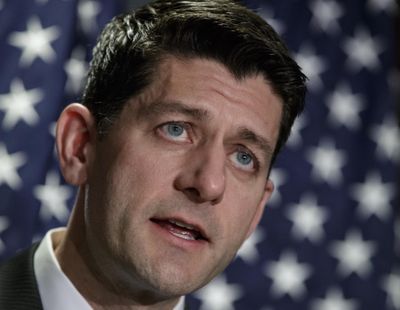
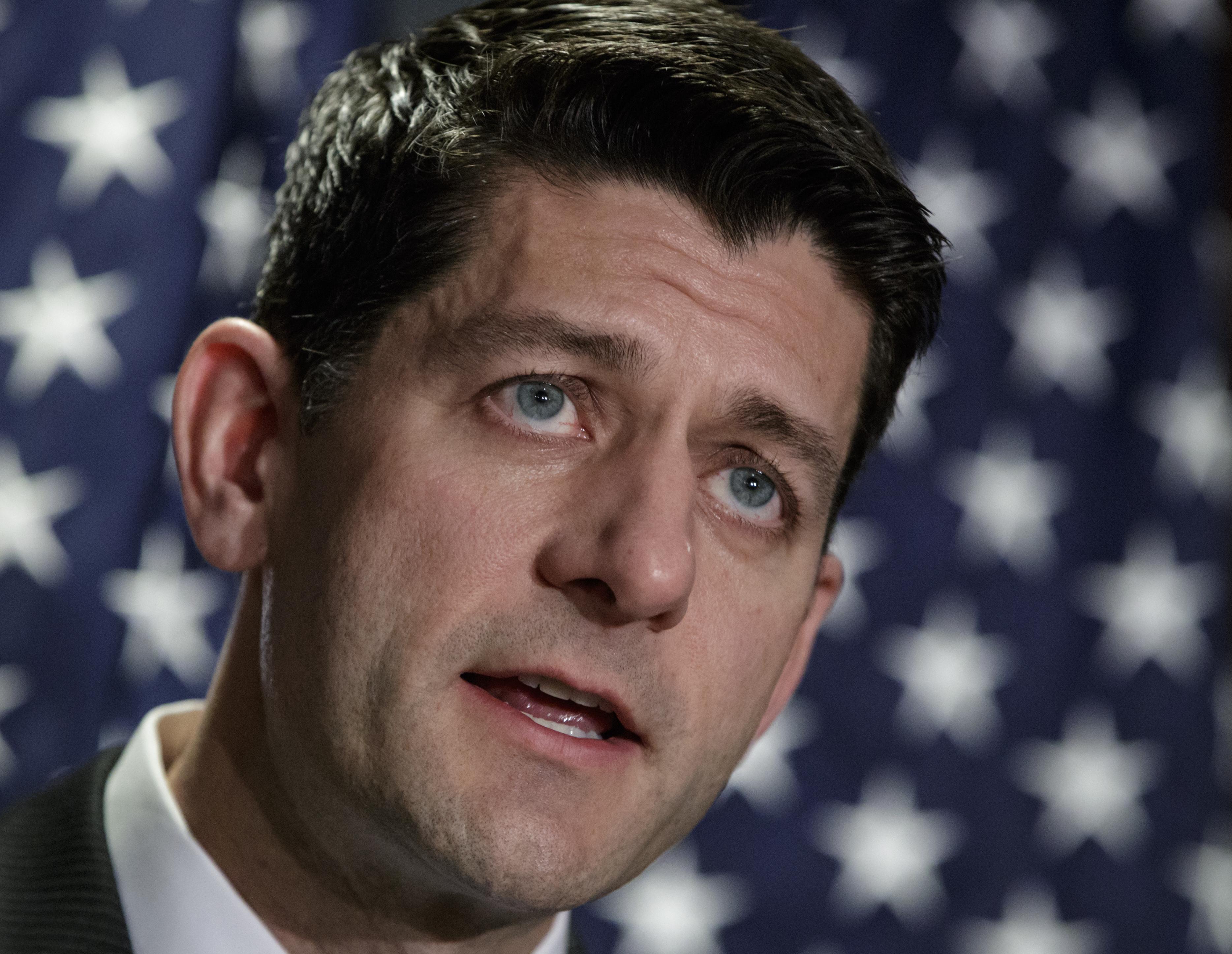
WASHINGTON – Speaker Paul D. Ryan is selling the GOP’s health care bill the same way he did the presidential candidacy of Donald Trump, but on the health front, his pitch is falling flat with conservatives.
“Binary choice” is the phrase the Wisconsin Republican used during the presidential election to describe his reason for supporting Trump over Democratic nominee Hillary Clinton. Ryan acknowledged throughout the campaign that both candidates were flawed but Trump was the better of two options, the only one who would help Republicans advance their legislative agenda.
“It really comes down to a binary choice,” the speaker said during his weekly press conference Thursday about moving forward with the GOP’s health care plan or leaving in place the 2010 law.
“This is the closest we will ever get to repealing and replacing Obamacare,” Ryan said. “The time is here. The time is now. This is the moment. And this is the closest this will ever happen.”
Several members with serious concerns about the bill rejected Ryan’s characterization of the choice in front of them.
“If he thinks that’s how Congress works, he’s wrong; that’s not correct,” House Freedom Caucus member Justin Amash said.
Asked whether Ryan’s “binary choice” comment and other expressions of confidence that the bill will pass were undermining members, Amash said, “I think it’s fairly typical of leadership – and it likely was true of Democratic leadership when they controlled the House – but saying there’s a binary choice is not true.”
“The reason we have such bad policy in this country and bad politics is because people frame everything as a binary choice,” the Michigan Republican added.
House Freedom Caucus Chairman Mark Meadows also rejected the premise of a binary choice.
“Nothing in Congress is ever binary,” the North Carolina Republican said. “It always is multifaceted, just like a diamond. You know the more you cut it, the more you see that there’s different brilliance that comes out. And so hopefully that’s what this particular replacement bill will be like.”
Still, Meadows said he doesn’t believe Ryan is trying to undermine members’ concerns.
“He’s got a tough job, a real tough job, and he’s trying to get to 218,” he said. “And yet at the same time we all represent very different districts. And so expressing those concerns and hopefully working toward a solution is critically important. And so I don’t think he’s undermining the process. This is the way it goes whenever debates get to the final hour. You know, they can get a little contentious.”
Other conservatives who are trying to push changes to the bill were also sympathetic to the position Ryan is in trying to balance competing interests among Republicans.
“It’s the second law of thermodynamics,” Republican Study Committee Chairman Mark Walker said. “Every time that there’s a move toward a conservative position, some of the more moderate members, there’s an equal reaction on that particular side. Trying to find that (balance) it’s certainly a difficult position for Speaker Ryan.”
While Ryan still has work to do to secure 218 votes, his rationale has registered with some of the rank and file.
“It’s a binary choice,” former Republican Study Committee chair Bill Flores of Texas said Thursday, repeating Ryan’s phrasing. “Do we keep what we’ve got, or do we start advancing toward a 21st century (health care system)? It’s just that simple. And so by voting no, I’m voting to keep Obamacare and my people, my constituents will not approve that. And so (is) this perfect? It’s 80 or 90 percent toward perfect.”
New Jersey Republican Tom MacArthur, co-chairman of the moderate Tuesday Group, said there’s some truth to Ryan’s statement.
“No bill is perfect, and certainly this one is not in my mind,” he said. “I think the key is where it goes and how it develops over the next week or so. That’s going to determine whether people vote a yea or nay on it. But let’s not kid ourselves, you have to vote on the bill that’s in front of you, not on the bill you wish was in front of you.”
During a press conference Friday, House Energy and Commerce Chairman Greg Walden suggested that the bill is Republicans’ “best effort” to accommodate all viewpoints.
House Majority Leader Kevin McCarthy echoed that sentiment.
“Yes, there’s going to be questions on both sides of the aisle,” the California Republican said. “But sometimes when you have pushback on one side and the other side from a political spectrum, you might have found the sweet spot.”