
Author Blaine Harden to speak on North Korea and the ‘King of Spies’
The new book, “King of Spies” tells the true story of a rogue American spy who became an influential player in North Korea at the dawn of its conflict with the United States.
It’s the largely untold story of U.S. Air Force Major Donald Nichols, a grade school dropout-turned-black ops kingpin who was a close confidant of South Korean President Syngman Rhee. Nichols warned of a North Korean invasion months ahead of the pending conflict, and between 1946-1957, worked virtually unsupervised by the U.S. military, cracking enemy codes and identifying most of the targets destroyed by American bombs in North Korea. He also witnessed and did not report on the slaughter of tens of thousands of South Korean civilians by order of Rhee.
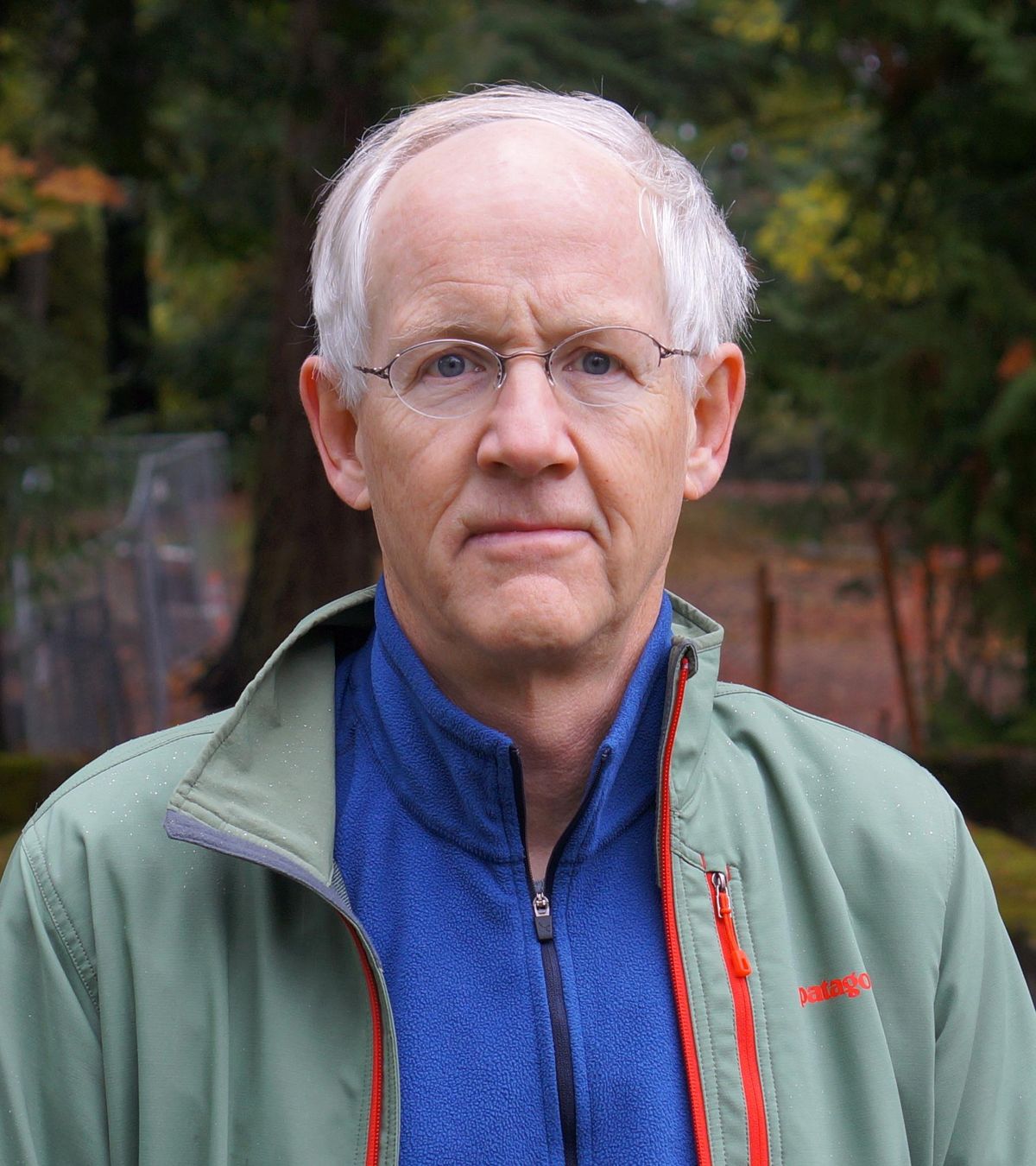
The author of “King of Spies” is Blaine Harden, a Moses Lake native and Gonzaga University alum who uncovered previously unreported information about Nichols’ Korean War exploits, and how the U.S. military forced him into months of electroshock therapy after the conflict.
“Every time I looked around the corner I would find something new about Donald Nichols, and it was often very dark,” Harden said.
Harden believes the story of Nichols can be seen as an origin of sorts to the current conflict between the United States and North Korea.
“America’s involvement in the Korean peninsula is a complicated, dark story,” Harden said. “Lots of unnecessary violence, lots of covered-up atrocities, lots of ignorant flailing around.”
Harden will speak about “King of Spies” and its connections to modern North Korean relations at 7 p.m. Wednesday at Auntie’s Bookstore. He will also speak to classes at Gonzaga earlier in the day.
Harden worked as a correspondent for the Washington Post and the New York Times and is currently a reporter and consultant on PBS’ “Frontline.” Another of his nonfiction books, “Escape from Camp 14,” was a New York Times best-seller. “King of Spies,” which was named a “best book of October” by Amazon, is his third book with a focus on North Korea and its history.
Harden began working on the book in 2013, but its recent release couldn’t be more timely given the escalation of tensions this summer between President Trump and North Korean leader Kim Jong-un.
“It’s created a level of uncertainty in this endless North Korean crisis that is new and more elevated than ever before,” Harden said. “The chances of a shooting war have increased.”
Harden believes the Vietnam War overshadowed the conflict in Korea to the point where many have forgotten the United States’ influence on the region and how it relates to current conditions. Nichols, who had extreme knowledge of the inner-workings of the North Korean government and military at the time, was perhaps the most active and powerful American spy during the war.
“The fact that he’s utterly unknown 60 years after the war suggests that we didn’t pay enough attention,” Harden said. “(More than) 32,000 Americans died in Korea, most of them died in a span of 18 months. It was an incredibly rapid and terrifying toll.”
The atrocities in Korea, including those committed by Americans, were largely overshadowed by Vietnam, Harden said.
“A lot of the dark threads that emerged in Vietnam are woven into the story of Donald Nichols’ rise and fall (in Korea),” he said.
Much of Nichols’ career was unknown prior to Harden’s research. In addition to interviewing family members and military colleagues, Harden obtained military service records, criminal records, unpublished photographs from his time in Korea, and even letters from his time in the psychiatric wards of military hospitals.
“This guy was really a classic American character,” Harden said, noting that Nichols rose out of a poor family because of his courage, guile and a relentless work ethic. But his grasp of power lured him into atrocities as well.
“He was like the best of what Americans can be in a time of war, but he was also the worst,” Harden said. “He had no ethical competency. He really did live in a world of severed heads, and he never reported any of it to his superiors. And the reason he didn’t was his power as an operative depended on his close relationship with Syngman Rhee.”
As fascinating as Nichols’ exploits were in Korea, Harden was intrigued by the extent in which he was buried in military psych wards after his command. In 1957, military psychiatrists diagnosed him as schizophrenic despite no prior history of mental illness. He was subjected to months of electroshock therapy.
“The Air Force pulled the plug on him, turned him into a non-person, lost to history,” Harden said. “What my book tries to do is put him back where he belongs.”
Harden believes that history is key to understanding the current nuclear standoff between the U.S. and North Korea. That war history may be forgotten by many Americans, but the conflict plays a significant role in how the Kim family regime influences its people.
“(The regime) seals off the country, which sort of makes it immune to the passage of time, and constantly reminds its people of what the Americans did during the war,” Harden said. “They remind their people they need to be protected from Americans, that’s where the Kim regime gets its legitimacy… that’s how dictators survive. By having the constant external threat.”
Harden will speak on the Gonzaga campus and at Auntie’s Bookstore about his book and how it connects to where the American-North Korean conflict exists now.
“I’m actually quite concerned about it,” Harden said. “You’ve got a very young leader over there who may or may not exercise good judgment, and you’ve got a president here who is clearly different than any other president we’ve ever had, so the mix is potentially volatile.”