
Then and Now: Logsdon IGA Foodliner at 29th and Regal
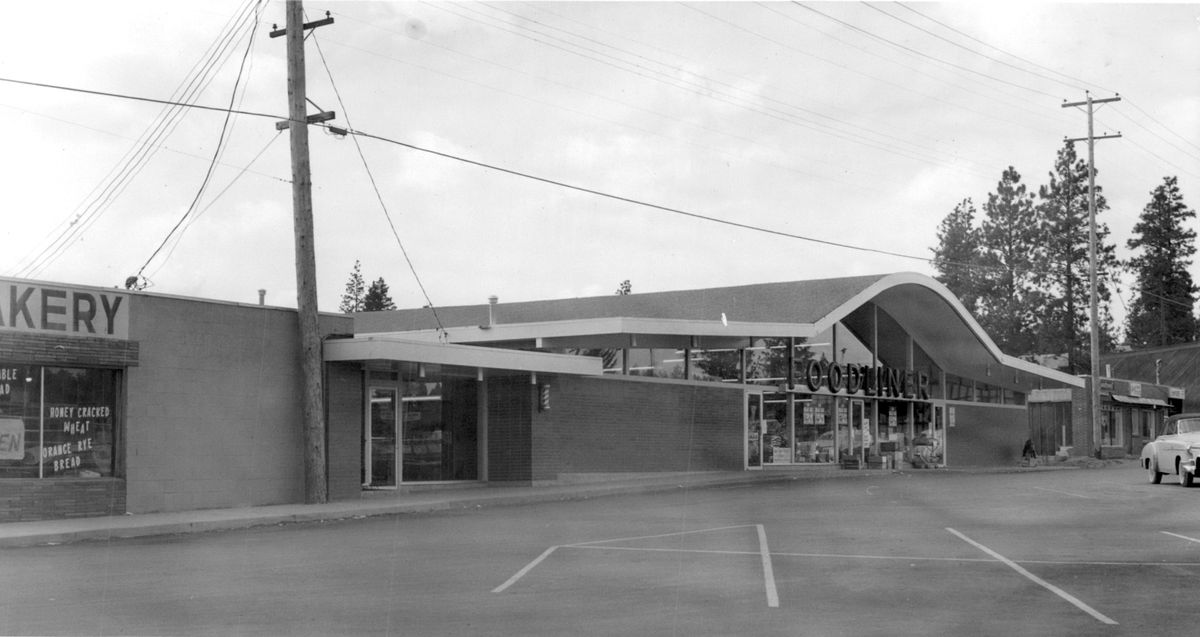
Retailing in America transitioned from 18th and 19th century trading posts to small general stores and then into the self-service grocery stores and department stores of the early 20th century.
In the 1920s and 1930s, energetic entrepreneurs began assembling regional chains of stores in order to create and use reliable supply networks that make the modern supermarket possible. With the rise of grocery chains like Safeway, Albertsons, A&P, Piggly Wiggly and others, each new generation of stores was bigger than the last.
Many family-owned grocery stores that weren’t acquired by a chain joined the Independent Grocers Alliance, founded in 1926 in New York and Connecticut, to take advantage of their central marketing and a consistent supply system. Each store, and sometimes small chains of two to five stores, was privately owned. In most regions, IGA stores had their own brand of canned and prepared foods.
In 1935, trustbusters in the Washington State Legislature proposed a licensing fee of up to $250 on stores that banded together for bulk buying or group advertising, which most small stores were doing.
“Why don’t they just put on a mask and take a gun and openly commit robbery. I won’t pay it,” said Spokane grocer Wilfred E. Harrington. It didn’t become law.
The longtime grocer had owned Harrington’s Mercantile at 2830 E. 29th Ave. since the 1920s.
After World War II, son Bill Harrington bought the store from his father and affiliated with IGA, which marketed weekly grocery specials in local newspapers for dozens of stores from Wallace to Cheney, Moscow to Colville. One advertisement in 1949 listed 73 IGA affiliates.
In 1950, Harrington sold the business, though he still owned the building, to Loren Logsdon, a young soap salesman, who ran it for 14 years.
Around 1955 the word “Foodliner” was added, a name adopted by larger IGA stores. Logsdon died in 1983.
In 1965, the store became Owen’s IGA Foodliner.
Even after the grocery store was long empty, Harrington maintained it, patching the leaky roof himself at age 82. He died in 2013 at age 90.
The empty store and attached storefronts were torn down after being damaged by fire in 2016. The parcel is now owned by developer Harlan Douglass.