
100 years ago in Washington, bootleggers have a clever idea
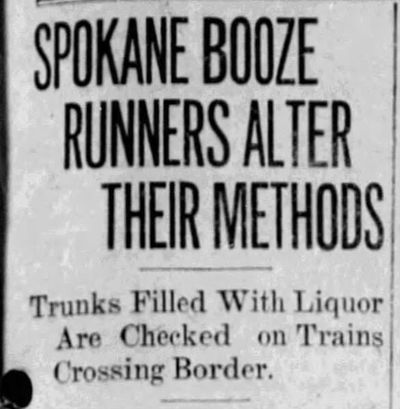
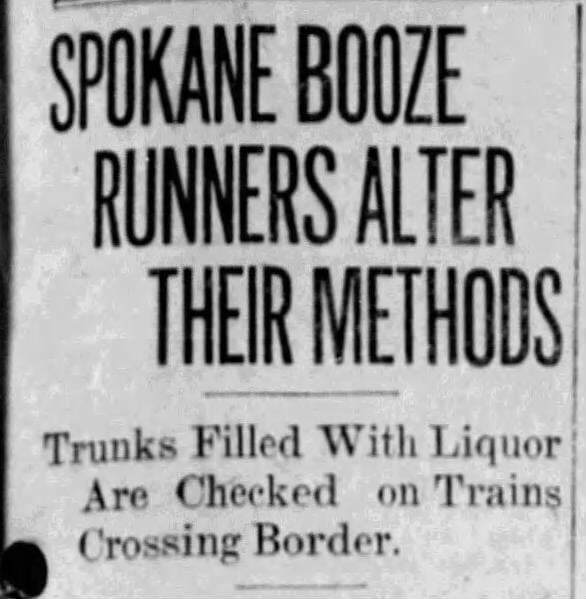
The Spokane Daily Chronicle described a new “stunt” being used by bootleggers running whiskey out of Canada.
The American rum-runners would go into Grand Forks, British Columbia, and buy 30 cases of whiskey at one of the liquor export houses that had sprung up in this small town after Prohibition. Then they would have the whiskey delivered surreptitiously to a point along the international line. Then it would be packed into trunks and delivered to a railroad station at Curlew or some other Washington town.
Then the smugglers would buy a ticket for the Great Northern branch line north of Marcus, Washington, “a line that runs in and out of British Columbia.”
At the boundary, the rum-runners would ask the American customs inspector to “bond” or “seal” the trunks.
“This is done, and neither the American nor Canadian customs officers can look into the baggage,” said the story.
Then the sealed trunks full of whiskey come into Spokane by rail, unmolested. The bootleggers claim it, carry it off and sell it for a fortune.
This was far more complicated than the old way of smuggling whiskey from Canada to the U.S., in which smugglers would simply use abandoned roads to cross the border and then cache it in barns and pine woods on the American side. But authorities caught on to that and now the smugglers were using “originality” in baffling the Prohibition agents.
Not all of the new methods were creative. Recently, some rum-runners in Alberta simply sprung open a freight car door, loaded 101 cases of whiskey into the car and climbed in after it. They were caught by provincial authorities before the train reached the border.