
NASA releases stunning new James Webb Space Telescope image to mark anniversary
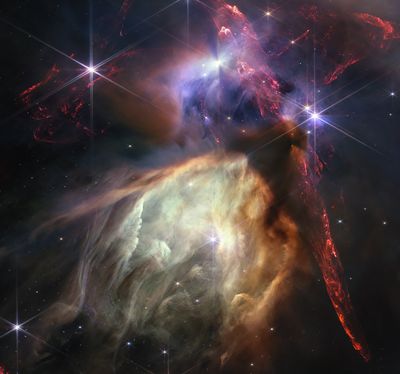
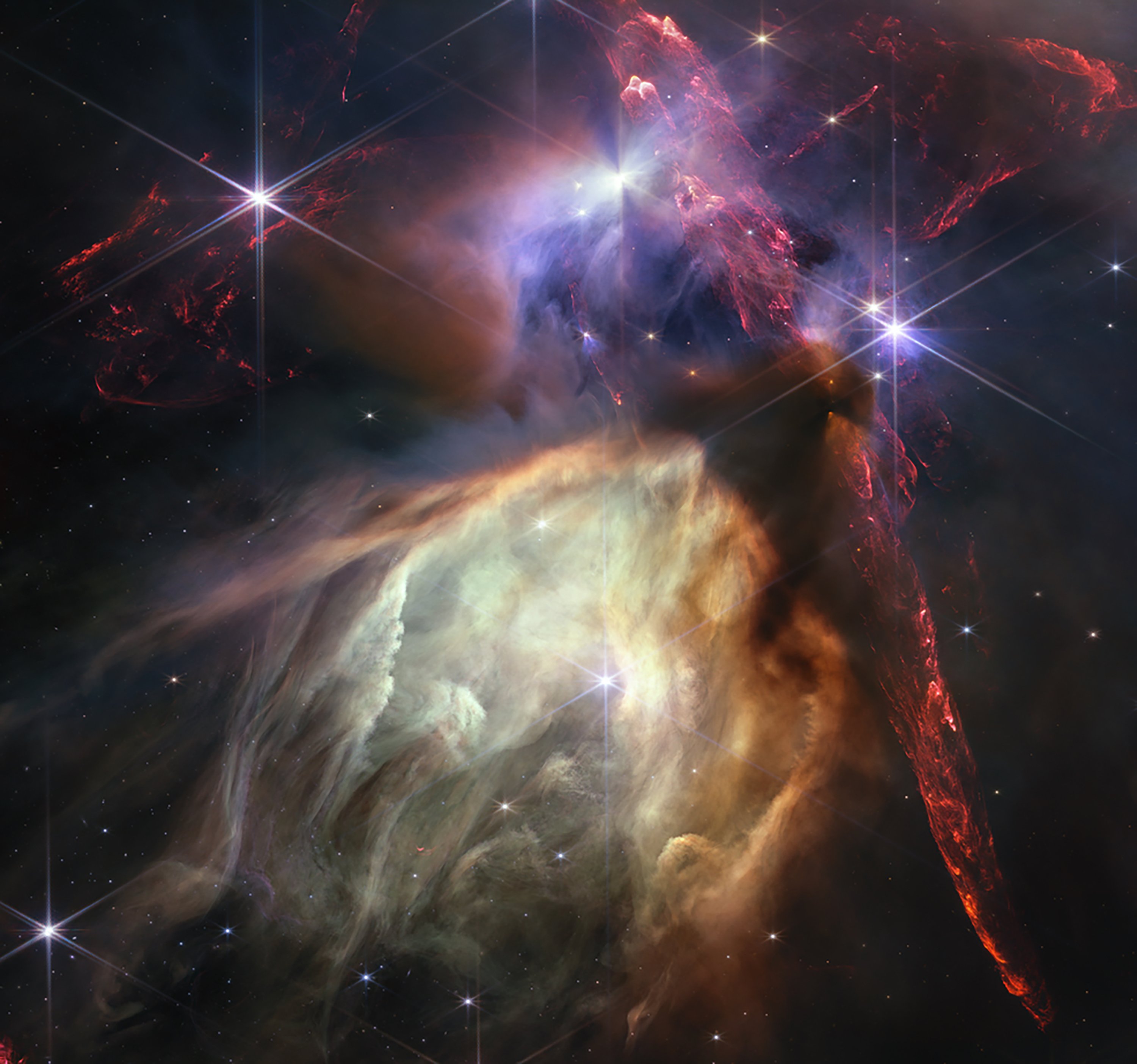
The hits just keep coming from the James Webb Space Telescope as NASA released a spectacular new image to mark the one-year anniversary of the start of its science mission.
The shot is of the Rho Ophiuchi cloud complex, a region of space that’s in the midst of forming stars.
“In just one year, the James Webb Space Telescope has transformed humanity’s view of the cosmos, peering into dust clouds and seeing light from faraway corners of the universe for the very first time. Every new image is a new discovery, empowering scientists around the globe to ask and answer questions they once could never dream of,” said NASA Administrator Bill Nelson in a press release.
The new image shows space 390 light years away, although it’s the closest such star-generating section of the universe to Earth, according to NASA. The shot shows about 50 young stars that are similarly sized or smaller to our solar system’s star.
Darker spots in the image are dense with the building blocks of stars, while jets of molecular hydrogen are seen shooting in opposite directions colored in red. These jets occur when a star is born shooting in bipolar paths from the star as it forms out of the cosmic dusts, NASA said.
“Webb’s image of Rho Ophiuchi allows us to witness a very brief period in the stellar lifecycle with new clarity. Our own sun experienced a phase like this, long ago, and now we have the technology to see the beginning of another’s star’s story,” said Klaus Pontoppidan, a Webb project scientist at the Space Telescope Science Institute in Baltimore.
Webb’s instruments allow for much greater detail than ground- and space-based telescopes, including Hubble.
The $10 billion telescope uses infrared imagery designed to peer back 13.5 billion years near the beginning of the creation of the universe. It finally launched in late 2021, making the trek to about 1 million miles from Earth for its clear view into space. The program is led by NASA but partnered with the European Space Agency and the Canadian Space Agency.
The rollout of images from the space telescope have become media events, including the initial shots in July 2022 and detailed planetary reveals since including last week’s shot of Saturn.
Shots have given scientists the most detailed set of data for a variety of spatial phenomena including some of the most distant black holes and farthest ever seen galaxies. It has spent time looking at exoplanets and been able to determine atmosphere composition, and dug into the chemical makeup of stellar nurseries such as Rho Ophiuchi, including finding water and organic carbon-containing molecules.
“Webb has given us a more intricate understanding of galaxies, stars, and the atmospheres of planets outside of our solar system than ever before, laying the groundwork for NASA to lead the world in a new era of scientific discovery and the search for habitable worlds,” said Nicola Fox, associate administrator of NASA’s Science Mission Directorate in the release.