
Eva Lassman Memorial Writing Contest second-place middle school winner: ‘Born in Blood: The Fight Against Hate’ by Andrew Sun
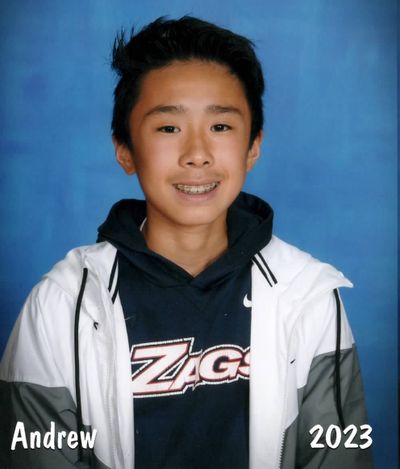
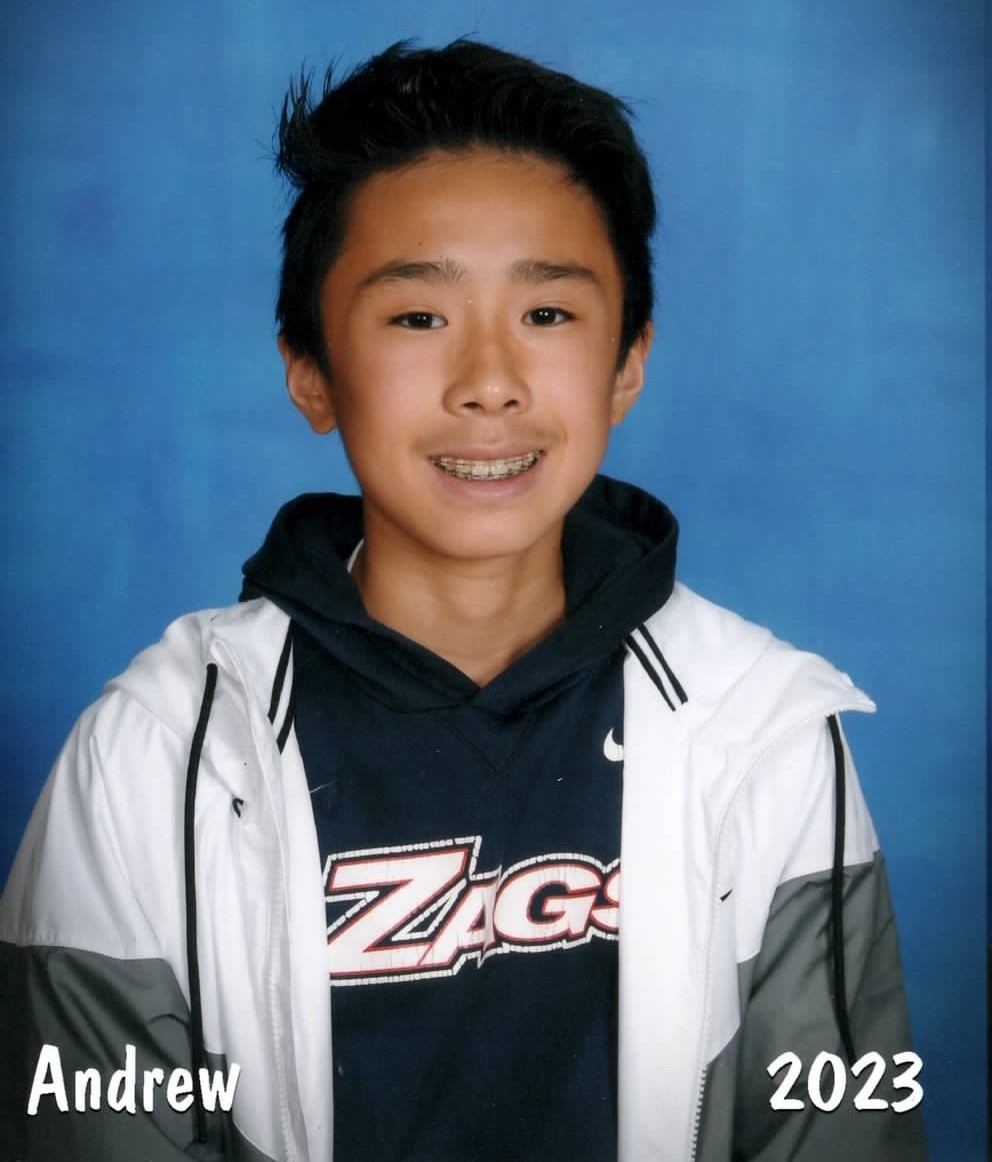
Andrew Sun won second place in the middle school division of the 2024 Eva Lassman Memorial Writing Contest for “Born in Blood: The Fight Against Hate.” The eighth-grader at Libby Center was advised by Andrew Olmsted.
‘Born in Blood: The Fight Against Hate’
During a time of Nazi oppression and brutality, young Jewish heroes rose to fight against the ones who had taken their homes, families, freedom, and right to life. Two young heroes who fought for liberty and vengeance were Frank Blaichman and Shalom Yoran.
After the Nazis invaded and occupied Frank’s hometown of Kamionka in Poland, the Germans created many regulations that restricted and burdened the lives of the Jews. Frank’s father’s business and family valuables were seized, so their family could not make money to sustain themselves. Furthermore, there was harassment, raids, random shootings, being chosen for forced labor, and the looming threat of mass killings and being deported to death camps. To provide for his family, Frank traveled from town to town, buying and selling goods. In doing so, Frank took risks such as not wearing the Star of David or having the required permits to travel from his town. Once, he was chosen for forced labor on a farm but paid someone else to work instead. All the risks Frank took as a Jew were to help his family survive the brutal Nazi occupation. Later, after avoiding being forced into a ghetto, Frank joined other Jews hiding in a forest. He stole firearms and started an organized defense unit to protect the Jews. After a German attack left eighty Jews dead, Frank and the survivors united to fight the Nazis. Frank and the survivors killed German spies and collaborators, ruined telephone lines, damaged dairy factories making food for the Germans, and ambushed German patrols. Later, the survivors joined a larger all-Jewish unit, and they protected two hundred Jews hiding in a forest. Frank became a platoon commander and accompanied the future prime minister of Poland to meet with the Soviet high command.
Shalom Yoran, originally known by his Polish name , Selim Sznycer, was from Warsaw. In 1942, the Einsatzgruppen liquidated the Kurzeniec ghetto. Yoran and his brother escaped before the liquidation. His mother told them, “Try to save yourselves and take vengeance for us.” What his mother told him motivated him to fight the Nazis. Later, Yoran and his brother saw one thousand and fifty-two Jews shot and burned, including their parents. After escaping liquidation and surviving through the winter of 1942, Yoran, along with his brother and three friends, were rejected from joining non-Jewish partisan units because they had no weapons and because they were Jewish. Later, a deputy commander agreed with Yoran’s group that if they successfully sabotaged a German weapons factory, they could join the partisan unit. However, after destroying the factory, Yoran’s group was still denied because they were Jewish . Therefore, Yoran helped create an all-Jewish unit of about two hundred people. Yoran’s unit fought with non-Jewish Polish and Russian partisan groups. However, they found that the non-Jewish partisan groups were antisemitic, and instead, Yoran’s unit joined an all-Jewish division of the FPO, or the United Partisan Organization. Yoran’s unit ambushed retreating Germans after the German defeat at Stalingrad, or modern-day Volgograd. After the Germans lost the area where Yoran was fighting to the Soviets, Yoran was drafted into the Russian army, where he faced brutality and political persecution for being Jewish. He deserted and fought with the British Army until World War II ended.
Throughout my study of the Holocaust and the young heroes, I have come to learn two lessons. The first lesson is how hate and bias escalate into genocide, and how we must work together to prevent such occurrences from happening again. As seen with the Pyramid of Hate, genocide is a process with four steps leading up to it. All steps leading to genocide were in the events leading to the Holocaust. Starting as a community, we should work together to stop hate at the lower levels to minimize the consequences and escalation of consequences. The second lesson is that even in the dark and dire times of human history, the best qualities of people can still become known. During the Holocaust, millions of Jews were mistreated, beaten, tortured, and murdered by the Nazis. Even though such evils took place, there were many Jews and non-Jews who risked everything, their homes, families, and lives, to help the Jews and to aid the oppressed. The Jewish heroes demonstrated some of the best qualities of humanity: bravery, sacrifice, willpower, spirit, perseverance, and determination. Among the Jewish heroes was Frank Blaichman, who started traveling without required identification to provide for his family and grew to fighting the Nazis and protecting other Jews. Another Jewish hero was Shalom Yoran, who saw his parents murdered by the Nazis and their collaborators, but later helped organize Jewish resistance and persisted in the fight against the Germans while experiencing antisemitism in non-Jewish partisan units. Preventing the escalation of hate and bias and finding the best of humanity during a time that was overrun with the hate and oppression are two key lessons I have learned from my study of the Holocaust.
After studying the stories of the fight for liberty and retribution of Frank Blaichman and Shalom Yoran, two young Jewish heroes in the Holocaust, a better understanding and application of the lessons from the Holocaust can be attained. As free citizens of a pluralistic democracy, we must try to prevent the escalation of hate and bias in its early stages, and we must recognize the stories of young Jewish heroes in the Holocaust, who showed the best of humanity during a time of persecution.