
Steelhead surprise: Early returns outpacing preseason forecast
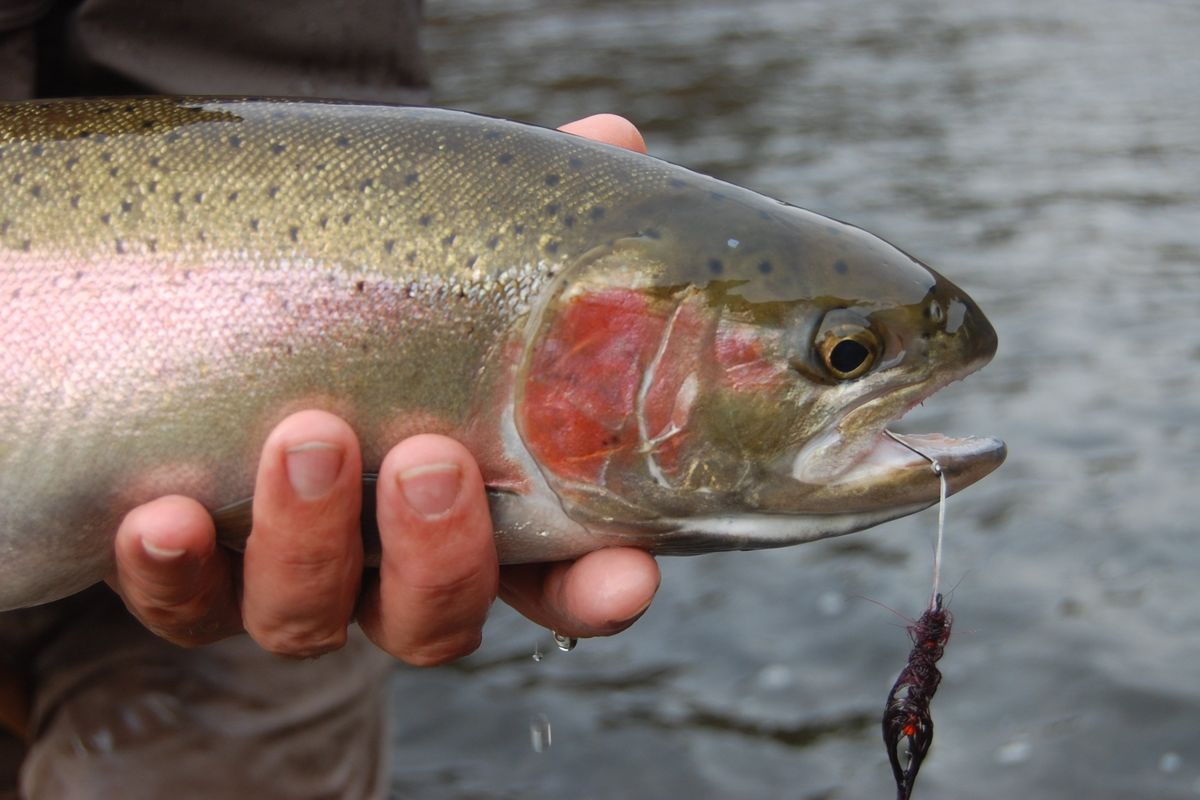
The preseason forecast for steelhead appears to be off by a wide margin and that is good news for the fish and anglers.
Prior to the start of the run, state, tribal and federal fisheries managers predicted a total of about 75,000 steelhead would return to the Columbia River, including 55,600 A-run fish and 11,800 B-run fish.
The A-run fish have already surpassed their forecast with several weeks yet to go for the run that is made up of fish that generally spend just one year in the ocean. Their abundance compares favorably to years when the runs were more robust.
“Unless the bottom falls from underneath it, we are looking at the same number of A-run (steelhead) we had in those years it was really great from 2000 to 2014 where we were exceeding 200,000 annually at Bonneville,” said Chris Donley, fish program manager for the Washington Department of Fish and Wildlife at Spokane.
As of the middle of last week, nearly 58,000 A-run steelhead had been counted while passing Bonneville Dam. The 10-year average for the same time span is about 30,000.
Anadromous fish runs are difficult to forecast from year to year. But Donley noted that it’s rare for a run’s trajectory to change dramatically in season.
“Generally the way runs work is if they start coming in at low numbers and that trend holds for a month, it’s going to be low numbers and the same is true if they come in at high numbers, it’s going to stay at high numbers,” he said. “The last 30 days it’s been double or more of the 10-year average.”
He cautioned that it’s too early to know if B-run fish that tend to spend two years in the ocean survived at the same rate. He also noted the steelhead run has sputtered over the past decade, sometimes dipping to concerningly low numbers.
“Remember, the last 10 years it has stunk,” he said. “It’s an average based on the last decade and the last decade has been bad for steelhead.”
It has been especially bad during odd-numbered years when booming pink salmon runs flood the northern Pacific Ocean and outcompete other species for available food. That makes this year’s early returns even more perplexing. He said the dramatic uptick is probably not related to subtle management changes like the amount of water spilled to help juvenile fish pass Snake and Columbia River dams or the number of juvenile fish that are barged through the hydropower system.
“Something is good in the ocean,” he said. “Something has changed out there where it’s more productive because they certainly survived at a much higher rate.”
It’s not just hatchery fish. Early counts indicated that wild steelhead protected by the Endangered Species Act make up about 50% of the turn.
“That is the reason we are conservative and we have put all the rules in place to be conservative so these wild fish could recover when conditions are right,” he said.
Donley noted fisheries managers have reduced or shut down harvest during some of the poor years and put fisheries restrictions in place around the mouths of Columbia River tributaries that give steelhead a place to escape high water temperatures.
But some advocacy groups wanted fisheries managers to do even more to help protect wild steelhead.
“The rules we have implemented last decade – different rules for different reasons – have been highly protective of steelhead, and when the ocean turned around those things have been able to respond and those folks who were critical of what we were doing were wrong.”