
‘Tell me you wouldn’t lose your mind just a little bit’: Author Chloe Caldwell captures fertility journey in ‘Trying: A Memoir’
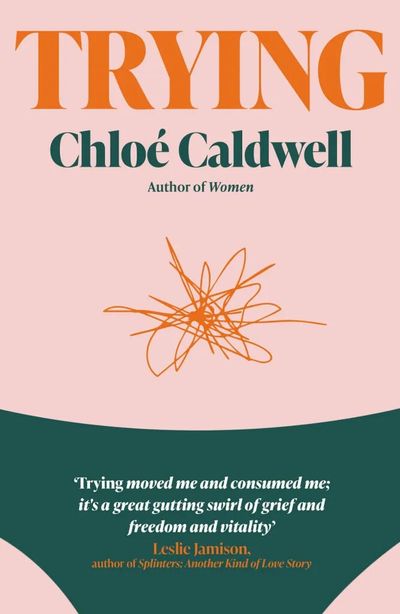
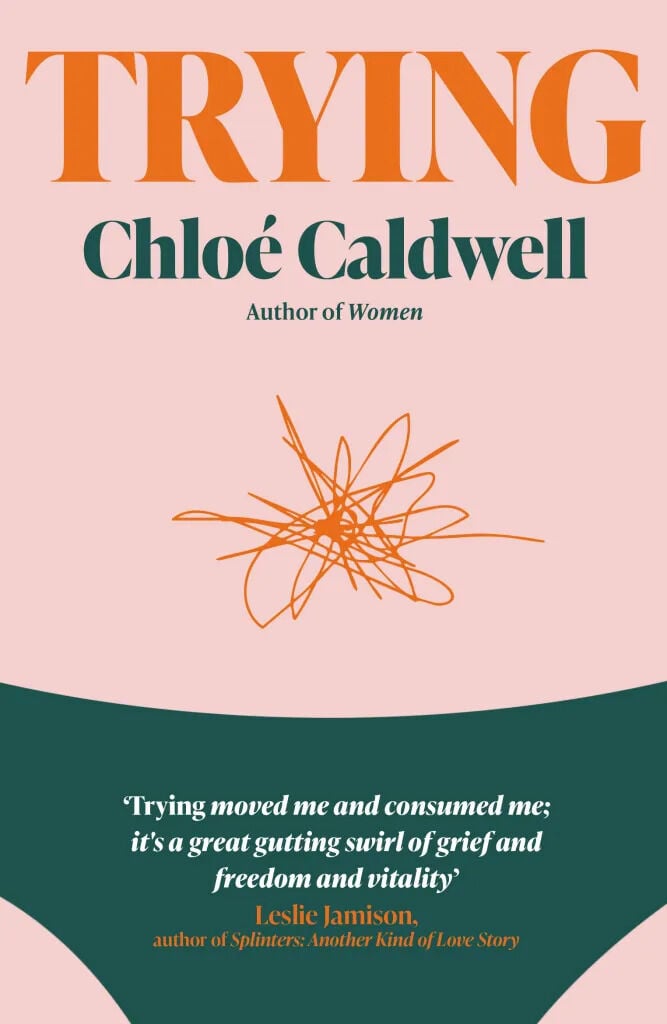
Chloe Caldwell’s dad advised, “You get good at what you do,” a lesson she has applied to her writing that allowed her to chronicle her fertility journey in real time.
It was all captured in her newest book “Trying: A Memoir,” which details when a cataclysmic event shifts the ground under her feet.
On Friday, Caldwell will be in conversation with Spokane author Chelsea Martin, at the Spokane Public Library’s Liberty Park branch, about “Trying,” which Graywolf Press published Tuesday.
“We’ve done probably three tours together,” Caldwell said of her relationship with Martin, author of the novel “Tell Me I’m An Artist,” the essay collection “Caca Dolce” the novella “Mickey” and others. “She’s a writer I always go back to. I still teach her in all of my classes. I still have her be a visiting author in my classes.
“I think she’s one of the smartest writers ever. I always trust her opinion. Actually, she’s the first person I sent (“Trying”) when I had 20 pages. I asked her to read it back in 2021.”
Writing a book about her life as it was happening was one of many “writing rules” that “Trying” breaks; Caldwell, author of the novella “Women,” the memoir “The Red Zone” and the essay collections “I’ll Tell You in Person” and “Legs Get Led Astray,” is an advocate of breaking such rules.
“For me, they’re not really breaking rules, because I didn’t go to school, so I was never told any rules, whereas a lot of my students who have MFAs have all these things in their minds of what you can and can’t do,” Caldwell said. “… I’ve always just made my own way, and that’s, to me, the point of writing, is that there aren’t rules.”
Caldwell also found freedom with her publisher, Graywolf Press.
“They’re an experimental press, so I could really do whatever, whereas, if I had been with a big-size publisher, it would have been an entirely different book and conversation,” Caldwell said.
In the first two acts of the book, the reader is extremely close to Caldwell’s thoughts and inner dialogue, but doesn’t see much of the people around her.
“This is a very isolating experience, and I just want it to be like a body floating in space,” Caldwell said. “There’s that line in the book that’s like, ‘No one else cares as much as you, and no one can do it for you.’ So, at the end of the day, even if you have someone who’s massively supportive, it’s your body that needs to get pregnant.”
The exception to this rule is the scenes set at the clothing shop where Caldwell worked, Loup, which had a sign outside that said “Life-Changing Pants.” This sign solicited a lot of reactions from customers, especially women speaking negatively about their bodies.
“I was definitely aware that I was having sometimes insane conversations with people, because pants and bathing suits are very triggering for women to try on,” Caldwell said. “When you’re a sales girl all day, you’re like, ‘You want to try it on?’ It’s all you talk about all day. And the advice when you work in a store too is, just get them in the clothes, have them try it. They can talk forever, but have them try it. So, not to be so literal, but I was like, ‘Huh, that’s an interesting trying aspect.’ ”
“Trying” also delves into how fertility is treated differently in heterosexual couples than in queer couples.
“In a hetero context, opportunities start to close in on you, because you’re like, ‘OK, why am I not naturally getting pregnant?’ ” Caldwell said. “And then women beat themselves up for it, and there’s like, so much shame around that, it’s absolutely insane. And then, because we’re just told our whole lives, like, ‘Oh, you’re gonna get pregnant,’ it’s how it goes.
“So then when you don’t, it’s a very strange feeling. Whereas, like lesbians, my friend the other day said this. She was like, ‘The worst thing about being a lesbian is that you can’t get naturally pregnant.’ And I was like, ‘Well, for me, that’s what’s so freeing. Everyone’s on the same playing field, right?’ ”
In the book, Caldwell quoted writer Haley Nahman about the experience of trying to get pregnant.
“In case you’re unfamiliar with this particular feeling,” Haley Nahman writes in her newsletter, “imagine if someone said you’d be receiving a life-changing phone call some time in the next year, but as soon as tomorrow, and that you may notice signs in your body when the call is imminent, although not necessarily. And if you eat poorly or drink too much or work out the wrong way or not enough, it may alter the quality of the news. Now tell me you wouldn’t lose your mind just a little bit.”
“She talks about a friend who’d said the brain of someone trying to get pregnant should be studied,” Caldwell wrote. “Consider this book to be that brain.”