
This day in history: Spokane leaders debated how to fix tattered roof of Expo landmark. Deaconess nursing school boosted offerings

From 1975: Over the preceding two years, the tilted-parasol canopy over the U.S. Pavilion in Riverfront Park had become Spokane’s most recognized symbol.
The only problem? The canopy was badly ripped and flapping in the wind.
Officials were worried that fall and winter winds would rip it totally to shreds.
For that reason, the Spokane City Council authorized negotiations with Birdair, the Buffalo, New York, company that manufactured the giant vinyl canopy.
Birdair representatives had already estimated that it would cost more than $100,000 to complete the repairs. The company submitted a bid for $38,900 for partial repairs, with the rest completed by local subcontractors. Birdair was only guaranteeing its work for one year, but city engineers were confident that the repaired canopy would “last considerably longer.”
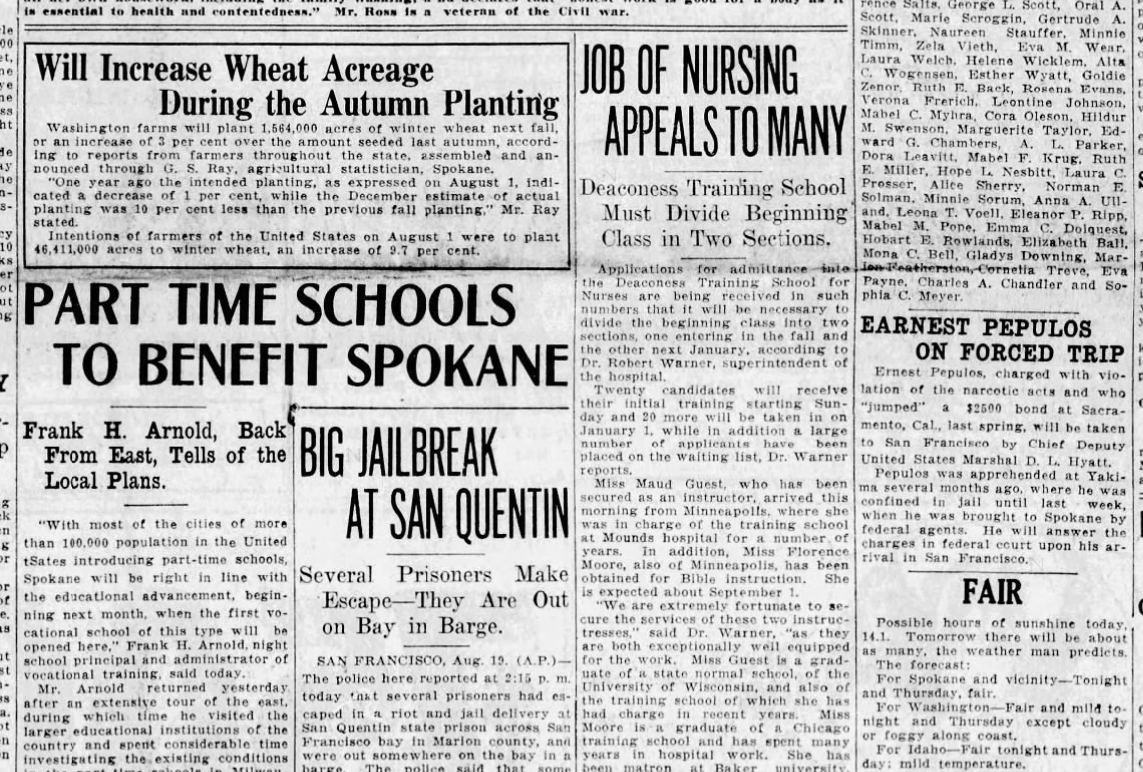
From 1925: The Deaconess Training School for Nurses in Spokane received so many applicants, the school had to divide the beginning class into two segments, one in the fall and one in January.
About 20 student nurses would start work in fall, and an equal number later.
The school also had secured the services of several high-quality instructors, said the Deaconess Hospital superintendent.
Maud Guest was previously in charge of a training school in Wisconsin, and Florence Moore was previously a matron in Minnesota. The Deaconess training staff also included a dietitian and a chemistry instructor.
In addition, “lectures will be given every evening by our staff physicians.”