
Unlimited transfers, NIL have given college QBs the ability to fill the pocket while also escaping it. Is that a good thing?
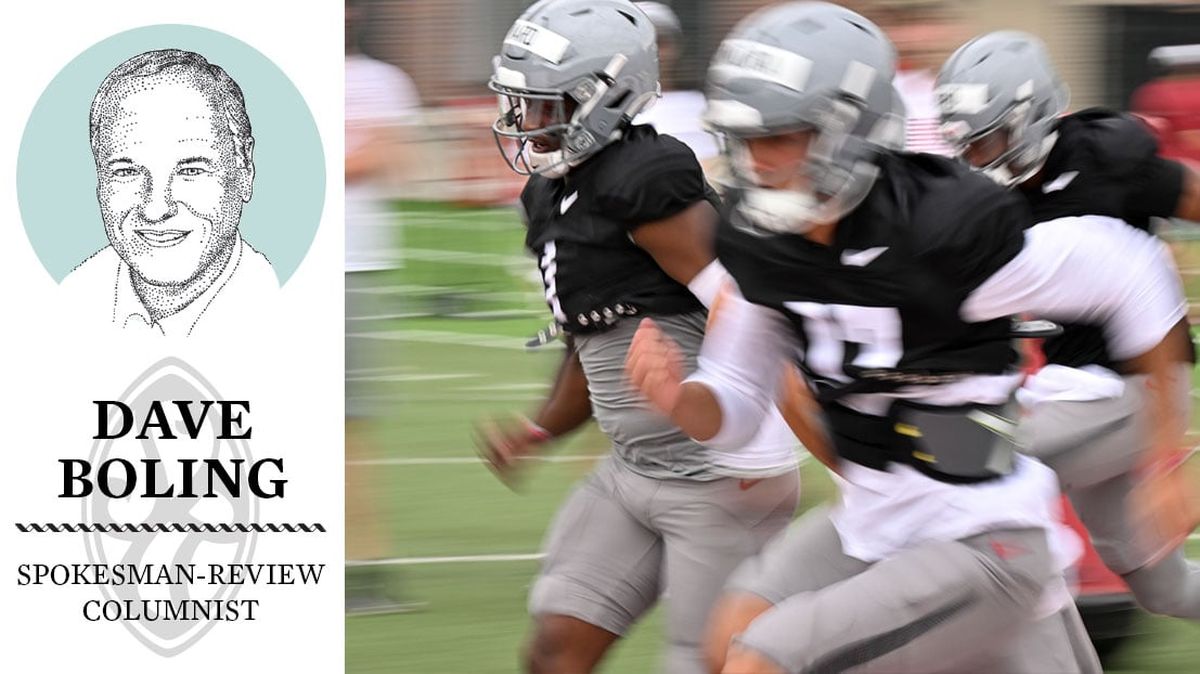
Remember when the term “quarterback mobility” applied to a player’s ability to escape defenders threatening the pocket?
Now, of course, it’s about finding a market, leveling talent to value, moving up-down-sideways to a better situation, and cashing in on what could be life-changing income.
By different projections, somewhere between 60 and 70% of starting college quarterbacks for the 2025 season are transfers, or at least first-year starters filling in for a player who has transferred out or been deposed.
The concept of identifying, recruiting and grooming a long-term quarterback is now rendered antiquated in an age of unlimited transfers and name-image-likeness money without a salary cap.
Washington State, Idaho and Eastern Washington all have new quarterbacks this season.
WSU, in particular, has become a study of national prominence, having lost eventual No. 1 NFL draft pick, Cam Ward, to a multi-million-dollar NIL deal. But his defection to Miami opened the revolving door for a successful year by John Mateer, who then left for Oklahoma, along with his offensive coordinator Ben Arbuckle.
Eastern’s starter, Kekoa Visperas transferred to Tennessee Tech, while Idaho’s Jack Layne followed his head coach, Jason Eck, to New Mexico.
I sampled a collection of prominent former quarterbacks from the region for opinions on the new landscape that college quarterbacks now occupy, where they can earn six-figure salaries and upward.
Most agree: Players deserved pay for their efforts, and coaches have never faced more challenges trying to build and retain rosters. That’s fair, too, they suggest, since coaches have been able to abruptly move on to the highest bidder forever.
Some findings:
• • •
It was time for players to start getting their share of income. And some degree of free-agency was fair. But the absence of rules and guard rails have allowed the situation to get out of hand.
After some of the quarterbacks polled used colorful language to describe it, for the record, they settled on comments such as “interesting,” and “unique.”
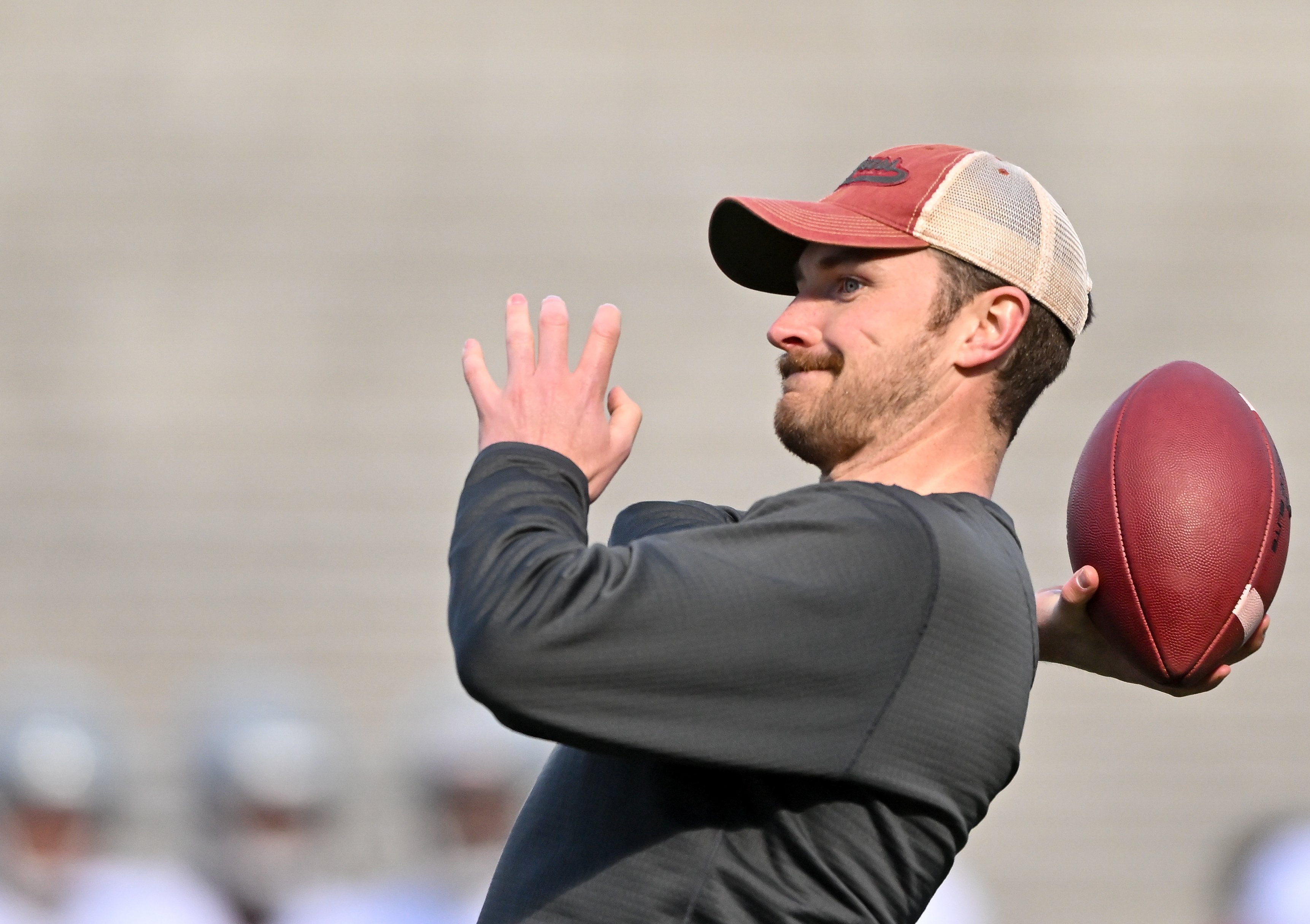
“The whole college landscape is just wild, but for quarterbacks, in particular,” said Luke Falk (WSU, 2014-2017, 119 TD passes) “But that’s the reality of it, right?”
Connor Halliday (Ferris High, WSU 2010-2014, 90 TD passes): “I’ll just say ‘interesting.’ From 18 to 21 years old, every kid’s mindset is very short term, you know, who can pay me the most money? Where can I get the most eyeballs on me? You know, me, me, me. I understand, everyone has a dream, I had a dream, and I would have done anything to make it happen.”
Money? Sure. Players would be foolish to ignore the potential windfall.
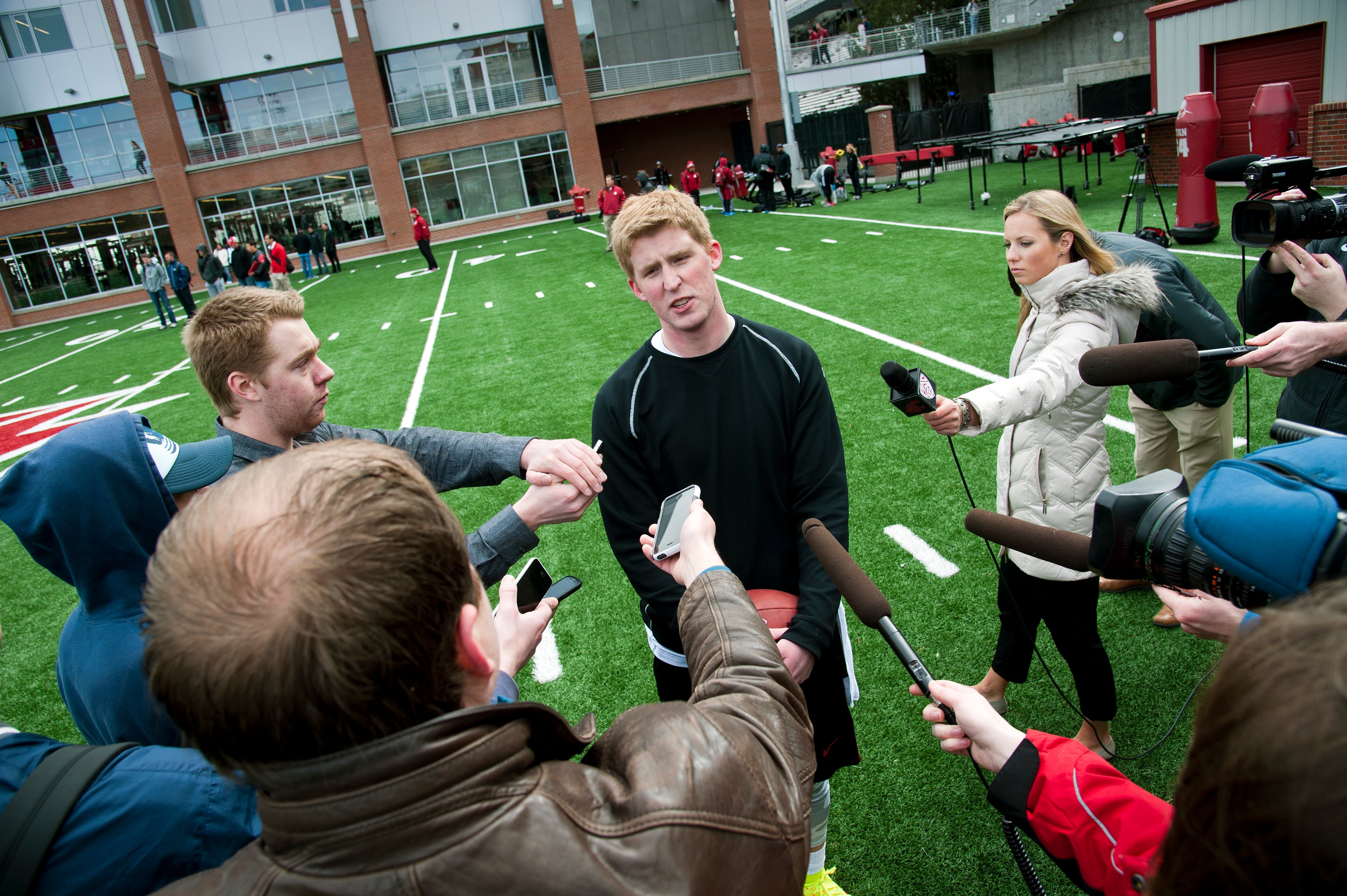
“I loved my experience, but it was a struggle. I didn’t have much money, and used a student credit card to get by,” said Matt Nichols, record-setting QB at EWU and two-time Big Sky offensive MVP (2007-2009). “If that had been an option for me, it would have been incredible. What some of those kids are getting offered would have been life-changing money for me.”
Hugh Millen, former Washington quarterback and eight-year NFL player, has two college-quarterback sons (who have each transferred twice), believes the chance for players to make money was too late in coming.
“There’s a lot of nostalgia about the old ways, but they were denying the opportunity of players in a free-market system,” Millen said. “The more outraged you are about how things have changed, the more it’s a testament to how much the old system was unfair.”
• • •
All quarterbacks sympathized with the situation coaches now face, sometimes even facing the defection of a quarterback during the season.
But it’s the system they face now, and they better get on-board or get left behind.
“The ones who are still winning are the ones who have done the best job of adapting,” said Hall of Fame quarterback Warren Moon, who played in the NFL until he was 44, after being Rose Bowl MVP at UW. “It’s not just quarterbacks, Washington brought in 40-some new guys last year, and two quarterbacks. I don’t know how coaches do it now.”
“I think coaches who accept it and adapt are the ones who succeed,” Falk said. “Adapt or die, right?”
How to adapt?
“Coaches have to accept what they can’t change,” Falk said. “If you’re not honest with the situation, it’s going to drive you nuts. I think it will help recruiting if you’re honest with the kids and genuinely mean it. We want you to come in here, play well, and we want you to move on.”
It’s an approach former WSU coach Jake Dickert used with Cam Ward.
“I talked to coach Dickert a lot, and he was very, very open about it (with Ward),” Halliday said. “It will be interesting to see how coach (Jimmy Rogers, at WSU) deals with it. I think he was a great hire; I think that guy can coach the heck out of a football team. It will be interesting to see how he does with the dynamic he’s walking into.”
Moon thought that coaches can ease these transitions by catering the offense to suit the background of the new quarterback or by targeting a new quarterback who is familiar with the system.
Millen downplayed the impact of changing teams, since so many college offenses run similar plays, which then becomes more of a function of translating the language of play calls.
Falk thought the Air Raid system run by former coach Mike Leach was “very quarterback friendly,” in which quarterbacks with basic ability to read defenses “can really thrive.”
• • •
Quarterbacks parachuting in for immediate play can face a tricky situation. Trust has to be earned. Leadership isn’t automatically bestowed.
“I liken it to when I came into the NFL from Canada,” Moon said. “I had to convince that locker room that I’m good enough to take those guys where they wanted to go. Now, that has to happen every year in colleges.”
Learning their teammates is first, Moon said. “They’re going to be looking at you, and you’re going to be going into battle with them every week. You have to instill confidence in those guys very quickly.”
Millen called it a “Goldilocks” balance of being assertive but not arrogant.
“I think if you come in and have a humility about you, where you’re not making a lot of big waves,” Falk said. “If you do your job and get to know your teammates on a personal level, trust is built on that.”
It can go badly, and it can happen quickly.
“Nobody wants to hear a guy standing up talking to the team if he hasn’t done anything on the field,” Halliday said. “If you get a transfer quarterback in there and you start the year 1-4, that team can quit pretty quickly if there’s no leadership.”
Halliday and Falk both pointed to Gardner Minshew (WSU, 2018), who came in from East Carolina, which ran an offense similar to Leach’s, as the perfect pop-in, plug-and-play transfer.
“Gardner had only a summer before played,” Halliday said. “That showed the power of the system coach Leach had created. And then, Gardner’s a phenomenal player, as well.”
Minshew led the Cougars to an 11-2 record and finished fifth in the Heisman Trophy voting.
• • •
What’s lost in this process?
Surely the depth of the connection of the player to the fans, as all quarterbacks polled believed that three- and four-year starters at one school is likely a thing of the past.
Although, Minshew, in just one season, is still held in high reverence as a Cougar.
Falk, a walk-on, wondered if there will even be a place for walk-ons anymore.
“I don’t know if Washington State’s going to have three- or four-year starters ever again,” Falk said. “Because if they play good enough, they’ll probably move on, and if they’re not playing at that level, then we probably are trying to replace them.”
The relationship between players and coaches won’t have the chance to ripen, either.
“When (Leach) first came in, our relationship was so rocky,” Halliday said. “I mean, I wanted to strangle that guy. And he hated me just as much. I mean, we hated each other. But by the end of my junior year, we were like best friends. I wanted to spend every second with that guy. We had gotten really, really close.”
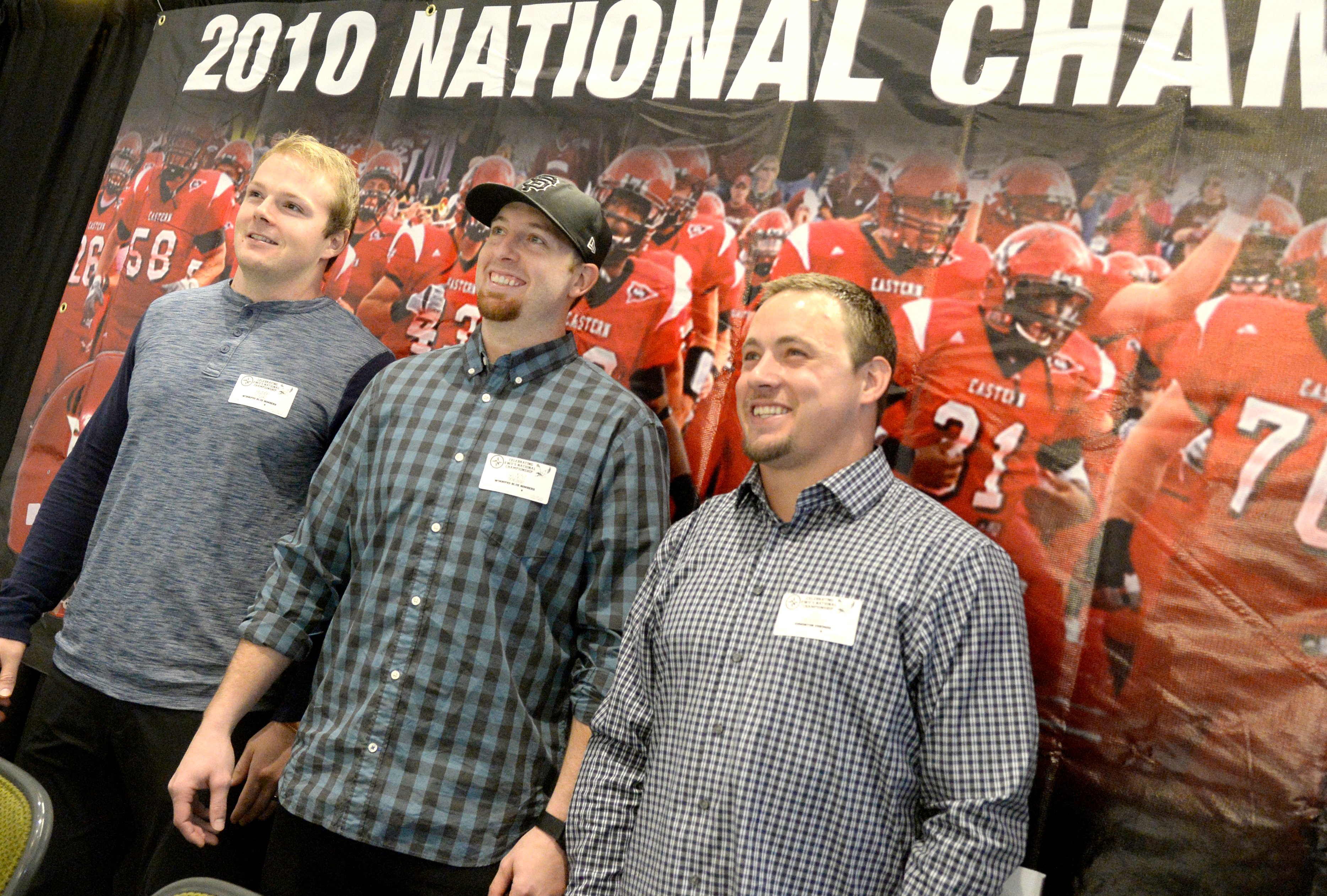
Nichols started four years at Eastern. “I loved my experience, but it was a struggle sometimes,” he said. “ But playing in college, for me, was about growing up and becoming an adult and learning to live on my own.”
While a short-term payday would have helped, “going through this with the same group of people, and finishing with them” was important, Nichols said. “Some of those things are going away, now.”
• • •
Nichols brought up an element of the new rules that he envies. A longer competition window.
Several quarterbacks have played in seven seasons, some still taking college snaps at age 25. Oregon’s Dillon Gabriel played 64 games at three colleges.
“Besides the first game (as a freshman) at Oregon State, I started every other game I was eligible for, 47 straight games,” Nichols said. “I see people with 61 starts – that’s another full season for me. I could have thrown for 20,000 yards in college.”
The financial incentive to move on can be staggering and has to be the most compelling part of a player’s decision.
Cam Ward reportedly cashed in $2 million in NIL deals to play last season at Miami.
He stayed at WSU two seasons, and earned his degree, before moving on. Will he be held in the same esteem as other long-time Cougars? Probably not. But is esteem bankable?
Reports hold that WSU financial backers rallied hard to try to keep Mateer another season.
“(Mateer) worked his butt off, sat behind Cam Ward, and was ready for his opportunity when it came up,” Halliday said. “I was in very close contact with (former Coug QB and key fund-raiser) Jack Thompson during (Mateer’s) recruitment to stay at Washington State. In the beginning, they did an amazing job of raising money and were close to Oklahoma’s initial offer. But then they offered him $4 million and we had no chance.”
• • •
Looking back, now, would these quarterbacks have taken the money and moved on if it had been an option in their day?
Yes, they admit.
Nichols actually had an offer, but it was before NIL money was involved.
“I did have a scenario come up when I did have a chance to go to Washington State for my senior year,” Nichols said. “At the time, it was a little more taboo to transfer, and I wanted to finish with my guys.”
But …?
“If that happened today, getting offered a million dollars to transfer? That’s probably a no-brainer.”
Nichols said he loves college football, regardless, but thinks a solution is actually pretty easy. “A salary cap and one free transfer, with going back to a penalty (sitting out a year) for a transfer after that,” he said.
Good concept. Might be hard to get consensus at this point, though.
Moon: “I know me, I probably would have stayed … but I also would have liked the money.”
Halliday: “That’s a really interesting question because it would have taken an amazing offer to get me to leave coach Leach. As a 32-year-old man, I’d say, there’s no way I’d leave. But that 21-year-old knucklehead that I was, if someone flashed a couple million dollars in front of me, I can’t say that I would have turned that down.”