
Salish School of Spokane helps create global nonprofit to support Indigenous language revival
In an effort to expand their support in language revitalization, Salish School of Spokane has partnered with the new nonprofit Indigenous Fluency Now in British Columbia, which will take the lead on supporting other Indigenous language communities around the world.
The nonprofit will help these communities adopt the school’s language fluency transfer system and revitalize endangered languages.
“The idea of Indigenous Fluency Now is to build a network of endangered Indigenous language communities and bring them together so we can support, encourage and empower one another,” said Chris Parkin, principal and business manager of the school.
It started with an elder
Parkin described how their system was made possible by the Colville Salish materials they created with Tribal elder Samtica, who was a survivor of the St. Mary’s Mission boarding school in Omak, Washington, from 2004 up until her death in 2021.
The collected materials became the Salish fluency transfer system, Parkin said. Built from hundreds of hours of audio recordings from Samtica, it was organized and sequenced so the school could take a learner through the beginning level and help them become an advanced fluent speaker who can look at complex cultural texts at the system’s fourth level. The system is used, Parkin said, to teach new speakers the language and train new Salish immersion teachers.
Their work with Samtica caught the attention of the Kalispel Tribe, who contracted with the school to help them build the same fluency transfer system in their language. The system then made its way to being adopted by people in Montana and reached more Indigenous language communities who saw the school’s work and wanted to learn more.
“We gift this fluency transfer system to folks and then do our best to help them adapt it to their particular language, culture and ecology,” Parkin said.
Their language model has been used to spark revitalization efforts in Australia earlier this summer as well as in the Yukon territory and British Columbia. The system has a base framework that can be shared with other communities free of charge, which has come to be called the Indigenous language fluency transfer system (ILFTS).
Creating Indigenous Fluency Now
Over the years, more people asked for help and Parkin and LaRae Wiley (Sinixt), who is also a founding board member of the nonprofit and Parkin’s wife, worked to make the free tool more accessible. They realized they had a lot on their plate at the school, and they didn’t have the capacity to provide substantial support to other language communities.
For years, they searched for someone who could help them develop a support system for those who wanted to adopt ILFTS. Then, while teaching classes at Selkirk College in British Columbia, they met Sonja Thoma who became executive director of the nonprofit.
“Finally, we found that person who had the capacity, commitment and expertise, to really help us support other Indigenous language communities that are adopting our fluency transfer system,” Parkin said.
The nonprofit’s mission, he said, is to support other Indigenous language communities to “develop effective and timely fluency transfer systems so they can revitalize their languages.”
Wiley said the transfer system was specifically designed for critically-endangered languages.
Besides Wiley, the other board members consist of Michele Johnson (Okanagan Indian Band), founder and former executive director of the Sylix Language House, and K’èdukà Jack (Taku River Tlingit), executive director of the grassroots organization Children of the Taku Society.
“Indigenous Fluency Now’s board of directors is made up of three Indigenous women with substantial successful language revitalization knowledge, expertise and practice under their belts,” Parkin said.
Building a network of language communities
The nonprofit’s immediate project, according to Parkin, is to develop a suite of tools, videos, trainings and software solutions and applications that can strongly support communities that are newly adopting the school’s language fluency transfer system. These tools will help automate some of their tasks and support them in building the materials for the system and delivering them using full immersion teaching techniques.
One person they are supporting is Jonathan Newchurch (Kaurna and Narungga heritage), who is working with his wife Natasha Martin (Te Arawa and Ngāti Ranginui) to revitalize the Kaurna language in Australia. Parkin and Wiley previously held a two-day workshop on their transfer system for the couple, their group and their family earlier this summer. Right now, Newchurch and his wife are finishing the construction of the level one language book and are looking to begin teaching it this coming fall.
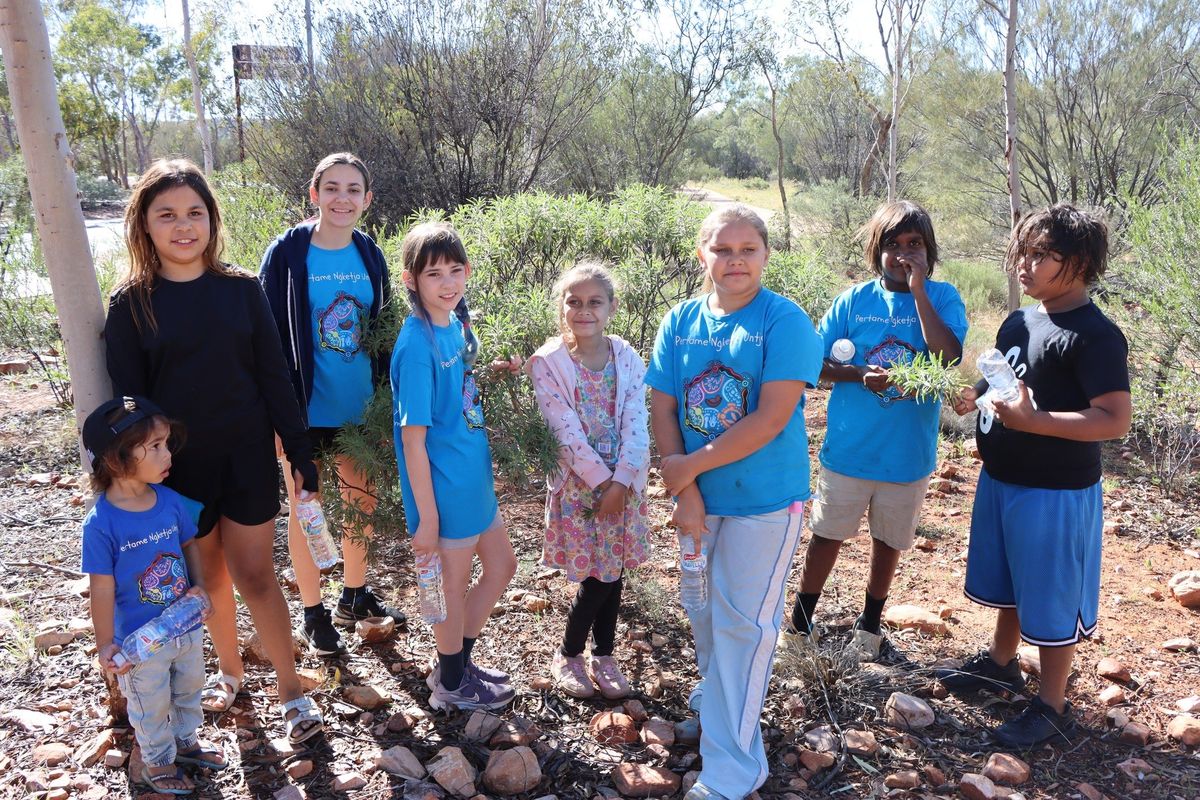
Another project they are working on involves three language groups that have completed the level one materials and are now working on developing a level two language book. These groups include the Stó:lō Shxwelí Halq’eméylem Language Program, the Tuchone Heritage Society and the Pertame School. The nonprofit is creating a support group and online work group to help these organizations successfully develop the level two materials.
Wiley said the support being given is essential to help communities move into being able to create their transfer systems for their languages, especially when it comes to the barriers in place.
One barrier, she said, is understanding technology to work with the transfer system, which involves audio recordings, tables, graphics and text. This is because some Indigenous communities don’t have Wi-Fi, and they have to rely on hot spots or towns with internet.
“It’s really important for us to have an open hand and to share what we’ve learned from our experience and our fluency transfer system with other people who are in the trenches and all experiencing the same thing,” Wiley said.
Eventually, Parkin said they want to get to a place where they have enough funding to not only provide tools, but also give these communities direct funding to develop different components of the transfer system.
They also want to support all minority and repressed languages across the world. Parkin said Thoma has a personal mandate to make the transfer system in Bavarian, her native language, and Parkin is taking it upon himself to develop a system in Gaelic, the language of the Irish, his ancestors. They have expressed interest in developing a system for the Taino language as well.
This story was written in partnership with FāVS News, a nonprofit newsroom covering faith and values in the Inland Northwest.