
Medicare scam calls create constant harassment to man caring for his dying wife
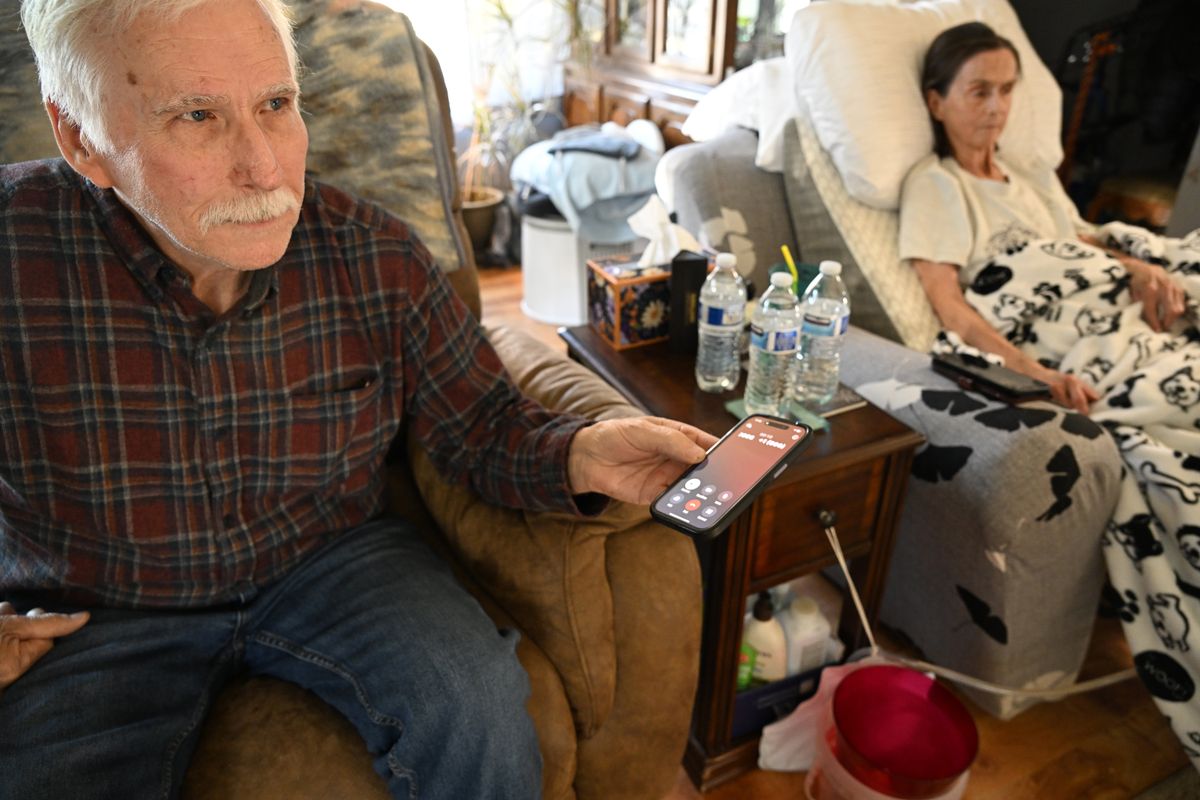
Tim Parkey was sitting in the living room of his Elk home last month with his wife – who has Stage 4 lung cancer – lying in a chair beside him when his cellphone rang.
An automated voice asked whether Parkey has Medicare parts A and B. Parkey said he has Medicare.
“Perfect, you’re eligible for our plan,” the woman’s automated voice said. She then transferred Parkey to a “benefits specialist” who claimed he wanted to make sure Parkey didn’t miss out on his Medicare benefit opportunities for 2026.
Parkey knew it was a scam and likes to toy with the callers, which is exactly what he did when he was transferred to the real human who introduced himself as “Olson.”
He fed Olson false information, like a fictitious age. After a few questions, Olson said Parkey was qualified to receive up to $185.
Parkey continued to sprinkle in falsehoods, like a fake name andbirth date. Olson eventually picked up on them and asked Parkey why he was “lying” to him. The scammer eventually hung up.
The scams are nothing new to Parkey.
He is inundated with 15 to 20 Medicare scam calls every day and has tried everything to stop them.
The 76-year-old Elk resident has blocked calls and written his state legislators. He even called the White House pleading for help.
But he answers all his phone calls, so he doesn’t miss an important one regarding Pam, his wife of 53 years.
“At this point, I’m not taking a chance,” he said.
Most of his scam calls show a 509 area code from cities like Moses Lake, Spokane, Odessa and Pasco, but the call are likely not originating in those towns. Technology makes it cheap and easy to “spoof” caller ID information to hide a caller’s true identity, according to the Federal Communications Commission.
Parkey said he’s forced to answer each call because the person on the other end of the line could be a doctor, nurse or pharmacist checking on his 79-year-old wife, who was recently placed on home hospice care.
“This has really been incredibly stressful for me, incredibly stressful,” Tim Parkey said. “I’m losing my wife. I have all these new pressures put on me.”
He said he is his wife’s main caretaker and his health is ailing, too, as he deals with chronic obstructive pulmonary disease. He has had a stroke, a heart attack and several back surgeries.
“I don’t need all this stress,” Parkey said of the calls.
According to the National Council on Aging, Medicare scams tend to increase this time of year during the Medicare open enrollment period when beneficiaries are encouraged to review their health care coverage and make necessary changes.
For Parkey, the calls have not only caused frustration, but led to missed home nursing care appointments for his wife.
He said a medication his wife was taking prevented her cancer from progressing, but the medication also caused heart failure and led to her hospitalization at three different medical centers.
She was eventually deemed healthy enough to return home where her husband and nurses could care for her.
But the nurses never showed because Parkey said he accidentally blocked their calls in response to the overwhelming amount of scam calls he was receiving.
“That’s why we lost communications with people that needed to get a hold of us,” he said.
He said his wife returned to the hospital for a week because of the lack of nursing care at home.
She has since returned home, where she receives care from nurses the couple finally connected with. Pam Parkey said she has “good days and bad days.”
Tim Parkey said his wife never smoked and blames the cancer on genetics.
Pam Parkey also receives a plethora of scam calls, including Medicare ones, her husband said. Both Tim and Pam Parkey have Medicare.
“Our phones are actually kind of useless, you know?” Tim Parkey said. “We don’t know whether to answer them or block ’em, or throw them away and start over, or what the hell to do, you know? It’s really frustrating.”
Once he’s on the phone with a scammer, he knows it, and either hangs up right away or plays along with the scammer for fun by providing false information.
He received two Medicare scam calls during a 90-minute interview with The Spokesman-Review.
Some scammers use a person’s Medicare card number to submit fraudulent claims in that person’s name, according to the Medicare website. It urges people to never give their card number or Social Security number to anyone except their doctor or people they know should have it.
The FCC warned that Medicare does not call uninvited and ask for personal information. A person will usually get a written statement in the mail before they get a phone call from a government agency.
If the caller asks for personal information, such as a Medicare card number, Social Security number or other health insurance identification, it is most likely a scam call and the person receiving the call should hang up.
Medicare warns people not to accept money or gifts for free medical care and to never join a Medicare health or drug plan over the phone unless they called Medicare first.
Anyone who thinks they have been scammed should contact local law enforcement immediately, the FCC says.
The Federal Trade Commission and FCC have tried to crack down on illegal telemarketing calls, robocalls and robotexts in recent years through policies and enforcement.
The FTC’s “Operation Stop Scam Calls,” which involves federal and state law enforcement nationwide, targets telemarketers, the companies that hire them and generators that deceptively collect and provide people’s telephone numbers to robocallers and others, falsely saying the consumers consented to receive the calls, according to the FTC.
The FCC’s “Robocall Response Team” works to combat illegal spoof and scam calls, as well as robocalls and robotexts, according to the FCC.