
This prison rehabilitated inmates until ICE paid to fill it with immigrants.
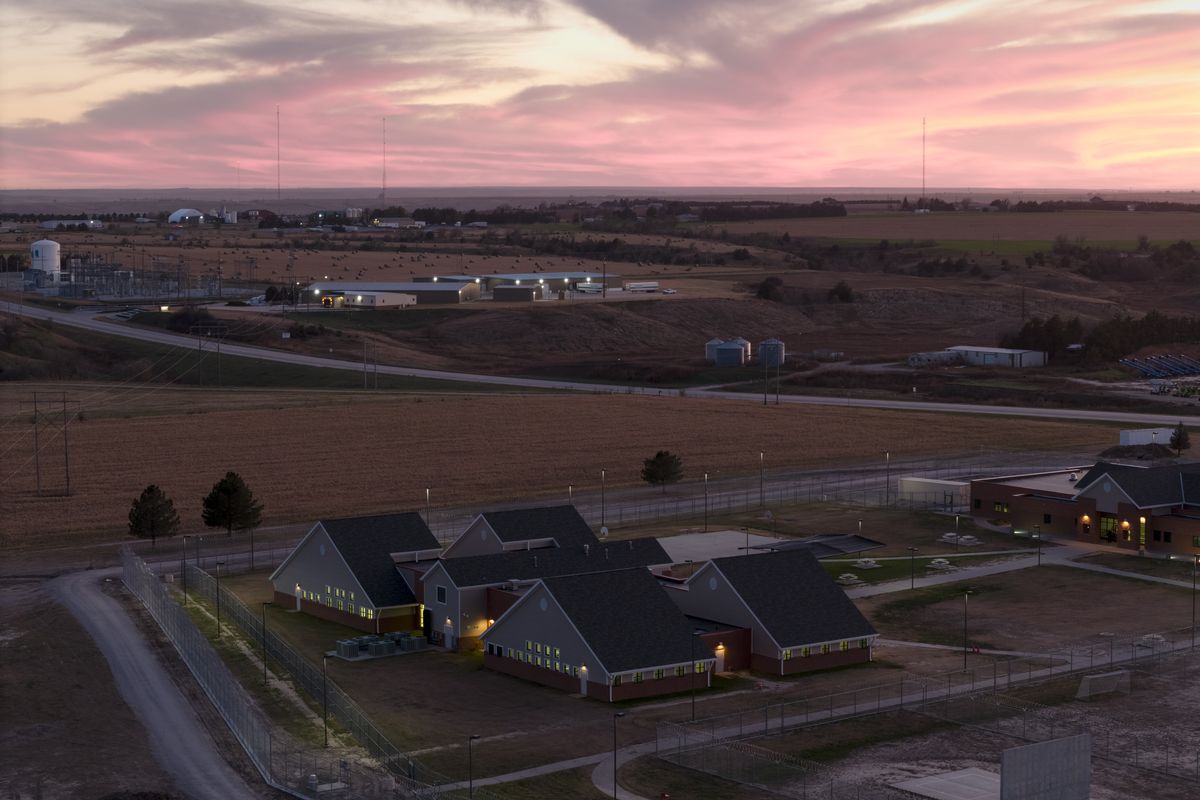
McCOOK, Neb. – The inmates housed at the minimum-security state prison in McCook, Nebraska, could often be seen around town, working on road paving, weeding cemeteries, taking down Christmas lights and mowing the high school football field before games. They took classes at the local community college, and an art gallery displayed work from 13 prisoners this summer.
For more than two decades, the prison, known as the Work Ethic Camp, was Nebraska’s only state prison geared solely toward rehabilitation. The facility held nonviolent felony offenders who were nearing the end of their sentences and prepared them, with counseling, schooling and job training, to return to the outside world.
That changed this fall, after state officials announced that the Work Ethic Camp would be replaced with a 300-bed, high security Immigration and Customs Enforcement detention center to support President Donald Trump’s national crackdown on illegal immigration.
And so a place that had been devoted to second chances now had a very different mission, and a new name to go with it: “The Cornhusker Clink.”
In McCook, a conservative town of about 7,500 that voted overwhelmingly for Trump, some residents have objected. Many said they support Trump’s stance on illegal immigration but also liked what they had before: A prison that didn’t feel like a prison. With its close ties to the community, it was a place that helped Nebraskans get back on their feet.
Other residents said they were in favor of the new ICE facility, viewing McCook as doing its part for the president’s agenda and potentially benefiting from 50 to 60 added jobs. But opponents said they were frustrated by Gov. Jim Pillen’s unilateral decision to change the facility and turn it into a place to detain immigrants. City officials are also worried about the potential strain on resources if hundreds of detainees are transported in and out through the town’s small airport, which has one full-time employee.
“Now when people think of McCook, this is all it is – it’s ICE detention,” said Nate Schneider, the city manager and a registered Republican who said he has voted for both parties over the years. “But for us, it’s a lot more than that. McCook is home. McCook is a place that I want my kids to think is a good place to live. We’ve been working so hard to make McCook a draw, and now this.”
The Trump administration, aiming to deliver on a campaign promise of deporting 1 million people this year, has sought to expand its detention capacity. Federal authorities took the rare step of seeking detention space in state prisons, signing agreements with Indiana, Louisiana, Florida and Nebraska, all states where Republican governors have agreed to assist.
McCook officials said they were given no advance notice of the state’s decision to repurpose the Work Ethic Camp, nor have they been told that the city can expect any revenue from the ICE agreement with the state, which Pillen has said will bring in about $14 million annually, after expenses to run the facility.
Thirteen McCook residents and a former state legislator sued the governor, arguing that the facility was designated and funded by the Nebraska Legislature for the purposes of rehabilitating state inmates, and that Pillen did not have authority to change that. In October, a judge declined to grant the residents an injunction but also declined the governor’s request to dismiss the case, which is proceeding.
“I have no problem with prosecuting immigrants who commit crimes,” said Bruce McDowell, a retired telecommunications technician and a plaintiff in the suit. McDowell, a Democrat, said he viewed Pillen’s decision to turn the facility over to federal authorities as a political calculation. “He’s trying to curry favor with Donald Trump, and that carries a lot more weight than a few of us down here,” he said.
Pillen’s office did not respond to requests for comment, but the governor has previously said that the facility would benefit the state, calling it “good for Nebraska’s taxpayers” and a way to ensure that Nebraska is “doing all that we can to keep criminal, illegal aliens off our streets.”
Tricia McLaughlin, a spokesperson for the Department of Homeland Security, said that the department’s leadership was “grateful for Gov. Pillen’s partnership to help remove the worst of the worst out of our country.” The ICE facility began housing detainees in early November and has only held about 28 men, on average, each day.
‘A Wake-Up Call’In 1997, the Nebraska Legislature approved the Work Ethic Camp, so named to reflect the facility’s stated philosophy that “positive work ethics can be learned and transferred to other areas of an individual’s life.” Its purpose was to prepare low-level offenders to return to the community and to reduce a perpetual overcrowding problem in Nebraska prisons. The state’s prison system regularly ranks among the nation’s most overcrowded.
The Work Ethic Camp housed fewer than 200 people at a time and cost the state around $10 million annually. Its programming included vocational and educational courses, as well as classes to contend with substance abuse and domestic violence. McCook did not receive any direct revenue from the work camp but many residents were employed there, and the inmates worked low-paying jobs around town.
Over the years, a few prisoners escaped, but in many ways, the camp was seen as accomplishing its stated goals. A 2024 corrections department report touted that of 369 people held there last year, more than 90% successfully completed requirements that allowed them to be released from the camp.
Over 48-cent coffee at Arby’s, where a group of men gathers most mornings, residents were divided over whether McCook should have had a say in the decision to convert the facility into an ICE detention center.
“Who are we to say, ‘No, you can’t bring them here, you’ve got to go somewhere else,’ ” asked Brad Gillen, who owns a carpet cleaning business in McCook and voted for Trump. “If this is our part we have to do, that’s fine.”
But others took issue with Pillen for choosing to partner with federal authorities without seeking input from the community most affected, McCook.
“He did it to us, not with us,” said Dale Dueland, a semiretired farmer and rancher, who is one of the plaintiffs in the lawsuit against Pillen and describes himself as nonpartisan.
“If you’d come before this all happened, most people here would say that what happens in Washington is so far away, it doesn’t affect us,” Dueland added. “All of a sudden it’s like a wake-up call that what happens in those faraway places can directly affect us here.”
From Washington to McCookIn mid-March, Pillen and his staff members traveled to the White House to attend one of Trump’s executive order signing ceremonies. The following week, David Lopez, Pillen’s chief of staff, exchanged emails with DHS officials, thanking them for meeting with him. He also inquired about how Nebraska might assist in immigration enforcement.
It is not clear exactly how Pillen and the corrections department landed on offering up the Work Ethic Camp, one of nine state correctional facilities, in the months that followed. But in August, in a joint statement with DHS, the governor announced the plan. That was the first time most people in McCook learned that the camp would be repurposed.
“I am pleased that our facility and team in McCook can be tasked with helping our federal partners protect our homeland,” Pillen said in the announcement. In addition to a new detention facility, Pillen announced that the Nebraska State Patrol and 20 Nebraska Army National Guard soldiers would assist ICE officials.
Pillen later announced the state’s new contract with the federal government: ICE would pay Nebraska a one-time fee of $5.9 million for renovations, and monthly payments of $2.5 million over a contract period of two years.
In its final months, about 186 men were held at the Work Ethic Camp. As the camp was closing, about 100 of them were moved to even less restrictive correctional facilities that allow inmates to leave daily and seek full-time employment. Ten others were released altogether, some on parole and others on supervision.
Still, 76 inmates were moved to more secure facilities, most to the Nebraska State Penitentiary, the state’s oldest prison, in Lincoln.
One of them was Jeff Smith, who is now serving his seven-year sentence for felony drug possession and other charges at the Nebraska State Penitentiary after being moved from the Work Ethic Camp.
“There’s no outside jobs here, no self-help classes here, no chance to go out every day and work in the garden,” Smith said in an exchange over a messaging system that prisoners can access.
“Consider us collateral damage,” he said.
This article originally appeared in The New York Times.