
‘You can be doing all the right things and still be homeless’: More than a thousand kids in Spokane Valley are homeless

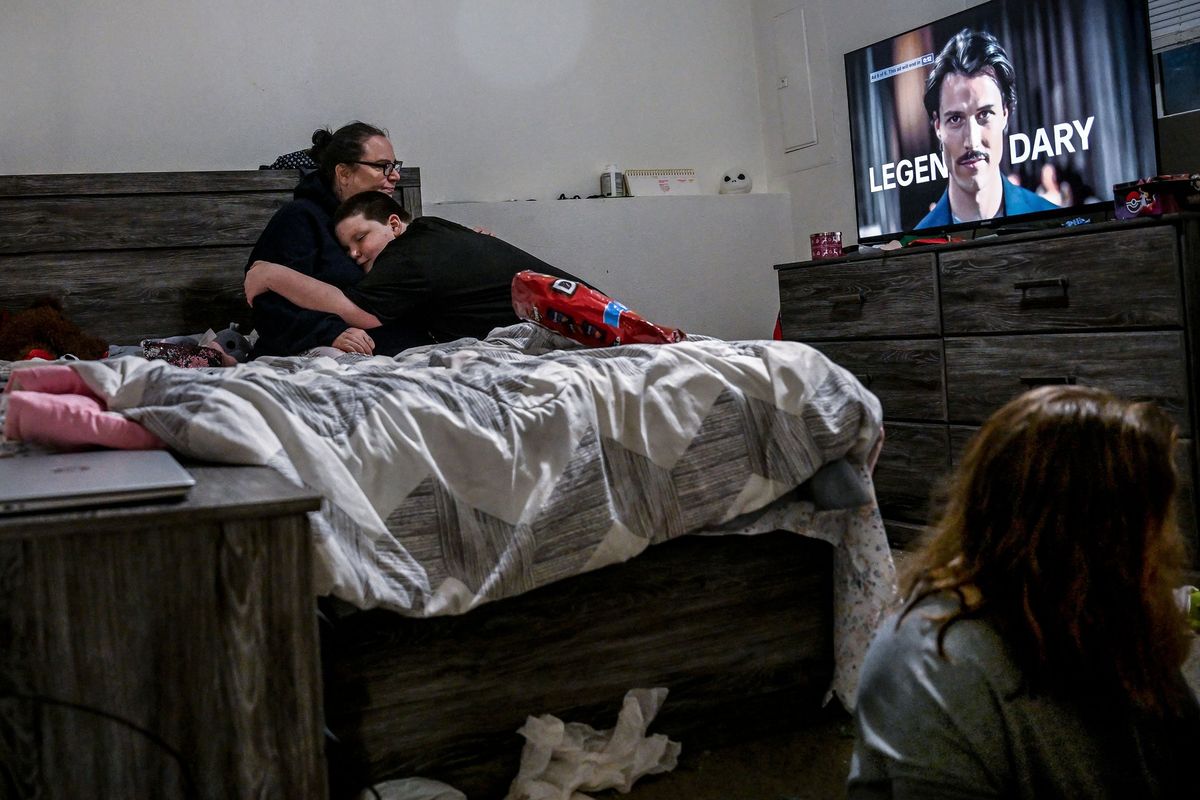
Last December, Kelley Kemplin and her two children were living out of a blue Chevy Traverse in Spokane Valley. Nine-year-old Michael and 7-year-old Ava used blankets and pillows to make a bed in the back of the SUV.
Today, they remember how their warm breath would steam up the windows.
They are not the only ones who have lived like this.
Last year, there were 1,122 homeless students in Spokane Valley, said Katelynn Clark, a social worker at Central Valley School District. School districts in the Valley, including Central Valley, East Valley and West Valley each contribute to that number. There are another 1,172 homeless students in Spokane Public Schools, according to district spokesperson Ryan Lancaster.
“There’s no school that isn’t touched by homelessness,” Clark said.
Exacerbating the struggles of homeless students is the lack of services in Spokane Valley, where homelessness is not as visible as it is in the city of Spokane and thus is not addressed as a critical community issue requiring urgent attention.
There are no shelters or temporary housing spaces in Spokane Valley, according to Eric Robison, the Valley’s housing and homelessness coordinator. There is one food bank, Partners Inland Northwest, and a soup kitchen set to open on Jan. 26 to serve hot meals every second and fourth Saturday from 4-6 p.m. All the other services for homeless people are in Spokane.
And yet, Spokane Valley has no plan to build a shelter or any other services to help homeless people who live within its city limits. Spokane Valley contracts with the county to collect and administer its share of state money designated for homelessness services. The county had $14 million allocated for homeless services funding from 2024-25, $5.7 million of which went toward emergency shelter.
“The largest problem is with our families, with our kids,” Robison said. “We literally have no place to send people when we find them in a car, even if they’re doing all the right things. So, you can be doing all the right things and still be homeless and there is a lot of that in our community. I get calls every day from terrified families who are facing eviction and don’t know what to do.”
Kemplin and her kids lost their home after she lost her job working at a laundromat. For eight months, she tried to find a new job. Eventually she moved to Spokane Valley with Michael and Ava, in hopes of a finding a job and stabilizing.
They lived out of the SUV for five months.
It is not the first time Kemplin’s family has been homeless. Michael remembers going from homeless shelter to homeless shelter when they lived in Arizona.
“When we moved here it was super cold because it was the snowy season. Every time I would wake up my feet would be frozen,” Michael said.
The family slept in a hospital parking lot, occasionally driving around when it got too cold in the car. Kemplin worked at a casino in Airway Heights for two weeks, then worked for Family Resource for four months before landing her current job working as a caregiver in Clayton.
In the mornings, Kemplin would drive the kids to school at Broadway Elementary before going to work. While working at Family Resource, lots of Kemplin’s clients were in the Valley, so it made sense to stay there. Kemplin enrolled her kids in school as soon as they arrived in the Valley, she said. The school district and Family Promise helped provide the children with pillows, blankets and clothes. Through Family Promise, Kemplin and her kids found a place to stay in May.
Since their time being homeless, Michael has been diagnosed with PTSD. Kemplin thinks it is because of the time they spent without a stable home.
“It’s tough, because I’m the one person that they’re relying on and I tried my damnedest to do what I could to get them in school,” Kemplin said, choking back tears. “I tried to do what I could. I tried the best I could.”
Housing is expensive and paychecks often don’t quite meet the city’s cost -of -living demands.
According to the Bureau of Labor Statistics in 2024, the average wage in Spokane Valley is $31.92 an hour, which is just over $66,000 a year. Rent for an affordable two bedroom apartment in Spokane Valley is typically around $1,300 a month, according to Family Promise Lead Housing Case Manager Cassie Montgomery.
If Spokane Valley were to approve and build shelters or temporary housing within the city limits, it would give the school districts a place to send students and families who do not have a place to stay, Central Valley Superintendent John Parker said.
“Spokane Valley is behind,” Parker said. “It’s nobody’s fault, but it takes time when funding sources are drying up.”
In many cases, students who do not have stable housing have been failed by the system and the adults in their life, Parker said. Most of the families in the district that are facing homelessness are in that position because of housing prices and income, Parker said.
“Some jobs just aren’t paying enough,” Parker said.
Many families considered homeless are “doubled up,” meaning they stay with another family because they either can’t afford or just lost housing. So, while trying to get back on their feet, they stay with family or friends, Morphis said. Some families, like Kemplin’s, live out of their car, Morphis said. Most of the time, kids facing homelessness are not unaccompanied and live with their family.
“The families who are facing housing instability, most of them are really hard workers,” Clark said. “A lot of us aren’t that far away from being homeless if we lost our job. Everyone is doing the best with what they have.”
But there is a growing concern that students who are homeless may not be able to get the quality education they deserve because of their situation, Parker said, calling the problem systemic.
And that is something social workers like Morphis try to emphasize when they work with homeless students.
“Education is key … it’s the one thing that people can’t take away,” Morphis said. “But it can be the last thing on a child’s mind or a parent’s mind when they don’t know where they’re going to be sleeping that night.”
Every year, social workers at the school district reach out to families to requalify them for what are called “McKinney-Vento” supports. The federal McKinney-Vento Homeless Assistance Act gives schools money to help students who are homeless. If a student is lacking fixed and adequate housing, they qualify for services. In other words, the number of families that qualify gives the district a good look at how many of its students are homeless.
In November, almost 400 students in Central Valley School District qualified for McKinney-Vento services. Throughout the year, the number of students that qualify grows, because some families take longer to find than others, said Clark. By the end of the last school year, nearly 600 students qualified for McKinney-Vento, Clark said.
When students are homeless or if their parents or guardians struggle to provide a secure place to live, their education suffers, Parker said. Parker referenced Maslow’s hierarchy of needs. The hierarchy has five levels, starting with such physiological needs as air, water, shelter, sleep, clothes; followed by safety needs of security, employment, health and property; love and belonging needs such as friendship, intimacy, family and connections; esteem needs of respect, self esteem, recognition and strength; and self -actualization, or desire to succeed.
“I can’t tell you how important school is for these students because it’s safe, it’s warm, they’re getting fed,” Parker said. “There’s a safety and security that’s associated with school that a lot of other students take for granted.”