
Justice Department plans release of huge trove of Epstein files today
The Justice Department plans to release a huge trove of documents Friday connected to the deceased financier and convicted sex offender Jeffrey Epstein, complying with federal legislation that ordered officials to make public a collection of records long sought by his victims but entangled in political controversy.
The documents’ release, just ahead of a deadline imposed by the legislation, would mark the culmination of a months-long bipartisan push to force President Donald Trump and his administration to disclose more materials related to Epstein, who died in federal custody in 2019 while facing charges of sex-trafficking and abusing girls.
The documents, which Justice Department officials said would amount to several hundred thousand pages, were expected to include extensive material that is normally shielded from public view. The materials could include grand jury testimony, investigative records, immunity deals, sealed settlements and internal communications related to Epstein and Ghislaine Maxwell, his ex-girlfriend and accomplice, who was convicted in 2021 on sex-trafficking charges and sentenced to 20 years in prison.
Deputy Attorney General Todd Blanche, the Justice Department’s No. 2 official, described today’s planned release of documents as the first of several in the weeks to come.
Asked Friday morning in an interview with Fox News about the volume of documents to be released, Blanche said: “Today, several hundred thousand. And then, over the next couple of weeks, I expect several hundred thousand more.”
Department personnel had been racing against the clock to process the files, redacting information on victims, before the Friday deadline imposed by law, he said.
“What we’re doing is we are looking at every single piece of paper that we are going to produce, making sure that every victim, their name, their identity, their story to the extent it needs to be protected is completely protected,” Blanche said.
Three federal judges ruled that the legislation requiring the release of these records, which Trump signed into law last month, overrode long-standing rules about grand jury secrecy. The judges stressed the need for officials to redact any information that could violate the privacy of Epstein’s victims.
Prosecutors in the Justice Department’s National Security Division have been assigned to complete the redactions. Officials redacting the documents need to have the appropriate authorization and security clearances to view them.
The task is mammoth, officials say. Blanche’s concession that full disclosure of the files would not come Friday drew pushback from Democrats in Congress.
“The law Congress passed and President Trump signed was clear as can be - the Trump administration had 30 days to release ALL the Epstein files, not just some. Failing to do so is breaking the law,” Senate Minority Leader Charles E. Schumer of New York said in a statement. “People want the truth and continue to demand the immediate release of all the Epstein files.”
Rep. Robert Garcia (D-California) and Jamie Raskin (D-Maryland), the top Democrats on the House Oversight Committee, which has overseen its own release of Epstein files, said in a statement they were exploring “all legal options in the face of this violation of federal law.”
Some of the material being released may duplicate files that were made public during years of civil lawsuits brought by Epstein’s victims and through a months-long investigation by the House Oversight Committee, which has released copious records obtained from Epstein’s estate.
Still, the release of the Justice Department’s files on Epstein is expected to provide new insight into his relationships with prominent figures and the federal government’s belated effort to prosecute him.
The release has been eagerly awaited by victims, who accused Epstein of widespread abuse, and their advocates, as well as by political figures in both parties, some of who have sought to link him to their opponents.
Trump had resisted efforts to release these files for much of this year, and he has lashed out at the continuing focus on Epstein, his onetime friend. After he was unable to defeat the congressional push to demand more records be released, Trump abruptly reversed course last month, urged Republicans to support the disclosure bill and signed it.
The legislation directed the Justice Department to release a wide assortment of materials with exemptions for classified information and any that “would jeopardize an active federal investigation or ongoing prosecution, provided that such withholding is narrowly tailored and temporary.” The measure also requires the release of documents related to Epstein’s death behind bars, which was ruled a suicide.
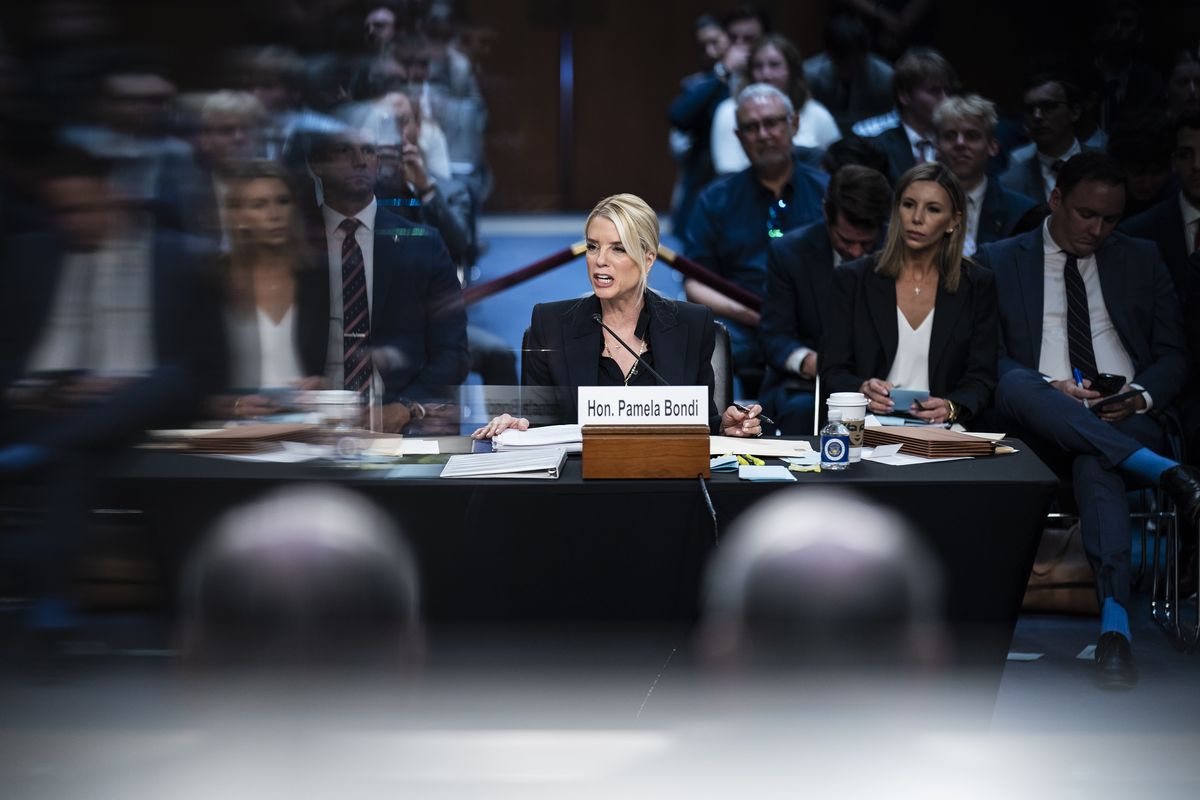
According to the legislation, records cannot be kept secret because of “embarrassment, reputational harm, or political sensitivity.” But Attorney General Pam Bondi can redact or keep hidden materials that include “personally identifiable information” or medical files relating to victims, as well as any content that depicts child sexual abuse, the legislation states.
Before his death, Epstein had been a politically connected figure with a web of associations and contacts that spanned the heights of media, finance, politics and other industries. He had also drawn the repeated scrutiny of law enforcement officials, although he long avoided any serious legal fallout.
Nearly two decades ago, Epstein reached an agreement with officials in Florida to resolve allegations that he molested dozens of girls. Under that deal, Epstein was able to plead guilty in 2008 to two state charges of soliciting prostitution, including one involving a minor, but he avoided federal charges and served just over a year behind bars, with ample work-release privileges.
That plea agreement generated extensive public outrage, especially after the Miami Herald in 2018 reported details of victims’ allegations of abuse by Epstein and how federal officials had agreed to such lenient terms a decade earlier.
Alexander Acosta, the top federal prosecutor in South Florida when the deal was struck, later defended the agreement as necessary to ensure Epstein would serve time. Acosta subsequently served as Trump’s first labor secretary and resigned in July 2019 amid criticism of the Epstein deal.
Days earlier, federal prosecutors in New York opened a new case against Epstein, charging him with sex-trafficking. The indictment said Epstein had “sexually exploited and abused dozens of minor girls” and had intentionally targeted young girls, seeking out young people who were “particularly vulnerable to exploitation.”
Trump is not accused of any wrongdoing related to Epstein. The two had been friends for years before having a falling-out. In a 2002 New York magazine profile of Epstein, Trump was quoted calling Epstein a “terrific guy” and saying: “It is even said that he likes beautiful women as much as I do, and many of them are on the younger side.”
This year, Trump said their friendship ended when Epstein poached young female spa workers from Mar-a-Lago, Trump’s Florida home and club. White House press secretary Karoline Leavitt also said that Trump had kicked Epstein out of Mar-a-Lago for “being a creep.”
Epstein-related issues have repeatedly roiled the second Trump administration. Some of the president’s political allies had long depicted Epstein as the center of a wide-ranging conspiracy and had predicted that Trump would act swiftly to uncover the wrongdoing.
Bondi in February touted the release of what she called “the first phase” of the Epstein files, then endured widespread criticism when they turned out to be material that was already public. She also went on Fox News that month and said Epstein’s “client list” was on her desk awaiting her review.
In July, the Justice Department and FBI released a memo saying that there was no client list and that no more documents would be released. That prompted a new wave of outrage directed at the administration.
Soon after, Blanche traveled to Florida to interview Maxwell, Epstein’s imprisoned associate, a highly unusual move for such a high-ranking Justice Department official. She was later moved from a federal detention center in Florida to a minimum-security prison camp in Texas.
Trump has bristled at the Epstein-related headlines and controversies that have buffeted his administration this year, including a backlash from Republicans. He has criticized Republicans questioning his administration’s handling of the issue and called the focus on Epstein a “hoax” fueled by Democrats.
The Washington Post has reported that Trump and White House officials tried to persuade congressional Republicans to abandon an effort to demand the files be released. When it became clear that the House would defy his wishes, Trump eventually changed course.
Trump has also sought to direct Epstein-related attention toward his perceived political foes. Before announcing that he had signed the bill, Trump ordered Bondi to investigate relationships between Epstein and prominent Democrats, including former president Bill Clinton. Bondi quickly acceded to the request, announcing that she had tapped the top federal prosecutor in Manhattan to lead the inquiry.
It is not clear whether that investigation led the department to withhold any Epstein records. The legislation directed Bondi to provide Congress with a summary within 15 days of any redactions in the records that were handed over, along with the legal basis for those omissions.